



Day 1: Pune and the Lion's Fort
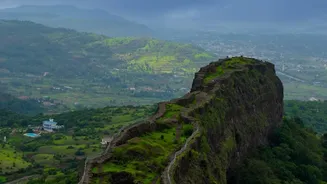
Your journey begins in Pune, the cultural capital of Maharashtra. After settling in, head 30 kilometres southwest to Sinhagad Fort. Perched atop a cliff in the Sahyadri mountains, this fortress is steeped in history. Originally known as Kondhana, it was
famously captured by Chhatrapati Shivaji's general, Tanaji Malusare, in a daring 1670 battle against the Mughals. Upon hearing that his trusted commander had fallen, Shivaji renamed the fort Sinhagad, meaning 'Lion's Fort', in his honour. Explore the two main gates, Kalyan Darwaza and Pune Darwaza, see the memorial to Tanaji, and take in the panoramic views. The trek to the top is popular, but a road also leads directly to the summit. Don't leave without trying the local delicacies like Pithla-Bhakri and crispy Kanda Bhaji served by small eateries at the top.
Day 2: The Invincible Daulatabad Fort
Today involves a scenic drive of about five to six hours from Pune to Aurangabad, your base for the next few days. En route, stop at the formidable Daulatabad Fort, once known as Devgiri or 'Hill of the Gods'. This 12th-century fortress, built on a 200-metre-high conical hill, is a marvel of medieval military engineering. It was considered one of India's most invincible forts, with ingenious defences like multiple fortification walls, spiked gates to deter war elephants, and a labyrinthine dark passageway known as the Andheri designed to confuse and trap invaders. Climbing the roughly 750 steps to the top is a challenge but rewards you with breathtaking views and a true sense of the fort's strategic brilliance. You'll also see the 30-metre-high Chand Minar, a victory tower built in the Persian style.
Day 3: The Kailasa Temple and Ellora Caves
Prepare to be awestruck. A short 30-kilometre drive from Aurangabad brings you to the Ellora Caves, a UNESCO World Heritage site. This incredible complex features 34 caves carved from a basalt cliff, representing Hindu, Buddhist, and Jain faiths, a symbol of the religious harmony of the era. The undeniable centrepiece is Cave 16, the Kailasa Temple. It's the world's largest single monolithic excavation—a full temple complex carved top-down from a single rock, a feat that took over 200 years to complete. After marvelling at Kailasa, explore the serene Buddhist 'Viharas' (monasteries) and the intricate detail of the Jain caves. Nearby is the Grishneshwar Temple, one of the 12 sacred Jyotirlinga shrines in India, making for a spiritually enriching end to the day. Remember that Ellora is closed every Tuesday.
Day 4: The Painted Halls of Ajanta
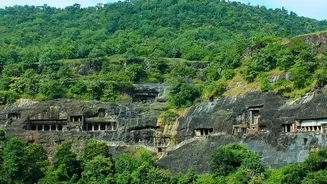
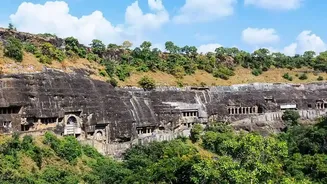
Today is dedicated to another UNESCO masterpiece, the Ajanta Caves, located about 100 kilometres from Aurangabad. Unlike Ellora, Ajanta is exclusively Buddhist and renowned for its magnificent paintings and murals, which are among the finest surviving examples of ancient Indian art. The 29 caves were carved into a horseshoe-shaped gorge overlooking the Waghora River. Rediscovered by a British officer in 1819 after being hidden by the jungle for centuries, these caves served as secluded monasteries and prayer halls. The paintings depict tales from the Jatakas, stories of the Buddha's previous lives. Caves 1, 2, 16, and 17 are particularly famous for their vibrant and well-preserved murals, while Cave 26 features a stunning sculpture of a reclining Buddha. Note that the Ajanta Caves are closed every Monday.
Day 5: Aurangabad's 'Mini Taj' and Departure
On your final day, explore the key sights within Aurangabad itself. The most famous is Bibi Ka Maqbara, a beautiful mausoleum commissioned in the 17th century by the Mughal emperor Aurangzeb's son for his mother. With its large dome, four minarets, and intricate marble screens, it bears a striking resemblance to the Taj Mahal, earning it the nickname 'Taj of the Deccan'. Another fascinating site is Panchakki, an ancient water mill that used an underground channel to power grinding stones for grain, showcasing the advanced engineering of the time. Depending on your schedule, you can revisit a favourite spot or browse local markets before departing from Aurangabad, concluding a journey through the monumental history of Maharashtra.