



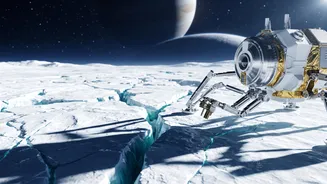

The Hunt for Hidden Water
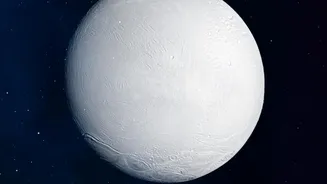
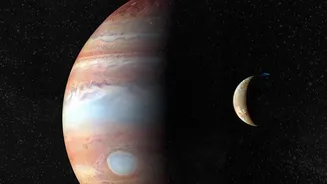
For decades, astronomers have gathered compelling evidence that several moons in our solar system hide global oceans of liquid water beneath thick shells of ice. Jupiter's moon Europa and Saturn's moon Enceladus are the most famous examples. Data from
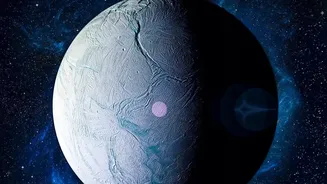
missions like the Galileo probe showed disturbances in Jupiter's magnetic field around Europa, strongly suggesting the presence of a global, salty, and therefore electrically conductive, ocean. Likewise, the Cassini mission famously flew through plumes of water vapor erupting from great fissures in Enceladus's surface, directly sampling the contents of its hidden sea. These are not small ponds; Europa's ocean may contain more than twice the amount of water found in all of Earth's oceans combined. This abundance of liquid water, a critical ingredient for life as we know it, makes these moons a top priority.
A Recipe for Life
Liquid water is just one piece of the puzzle. To be considered 'habitable', an environment needs three key things: liquid water, essential chemical elements (like carbon, hydrogen, nitrogen, and oxygen), and a source of energy. The icy surfaces of these moons protect their oceans from the harsh radiation of space. More importantly, scientists believe these oceans are in direct contact with a rocky seafloor. This interaction could create hydrothermal vents, similar to those on Earth's ocean floors. Such vents can provide both a source of chemical energy and a rich supply of minerals and organic compounds, all without sunlight. Life on Earth thrives in these dark, deep-sea environments, leading astrobiologists to believe that similar ecosystems could exist on moons like Europa and Enceladus.
Prime Suspects: Europa, Enceladus, and Titan
While several moons are of interest, a few stand out. Europa is a primary target due to the sheer volume of its likely ocean and signs of interaction between the water and the seafloor. Its relatively smooth, young surface suggests constant geological activity, perhaps slushy ice or water pushing up from below. Enceladus is smaller, but its dramatic geysers offer a tantalizing opportunity to sample its ocean directly without having to drill through miles of ice. Then there's Saturn's largest moon, Titan. It is unique for having a thick atmosphere and lakes of liquid methane on its surface. But below its surface, it is also thought to harbor a liquid water ocean. Titan's complex carbon-rich chemistry on the surface makes it an ideal laboratory for studying the building blocks of life.
The Missions Making It Happen
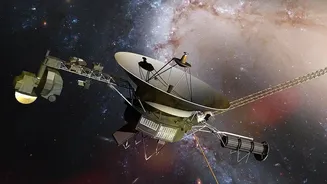
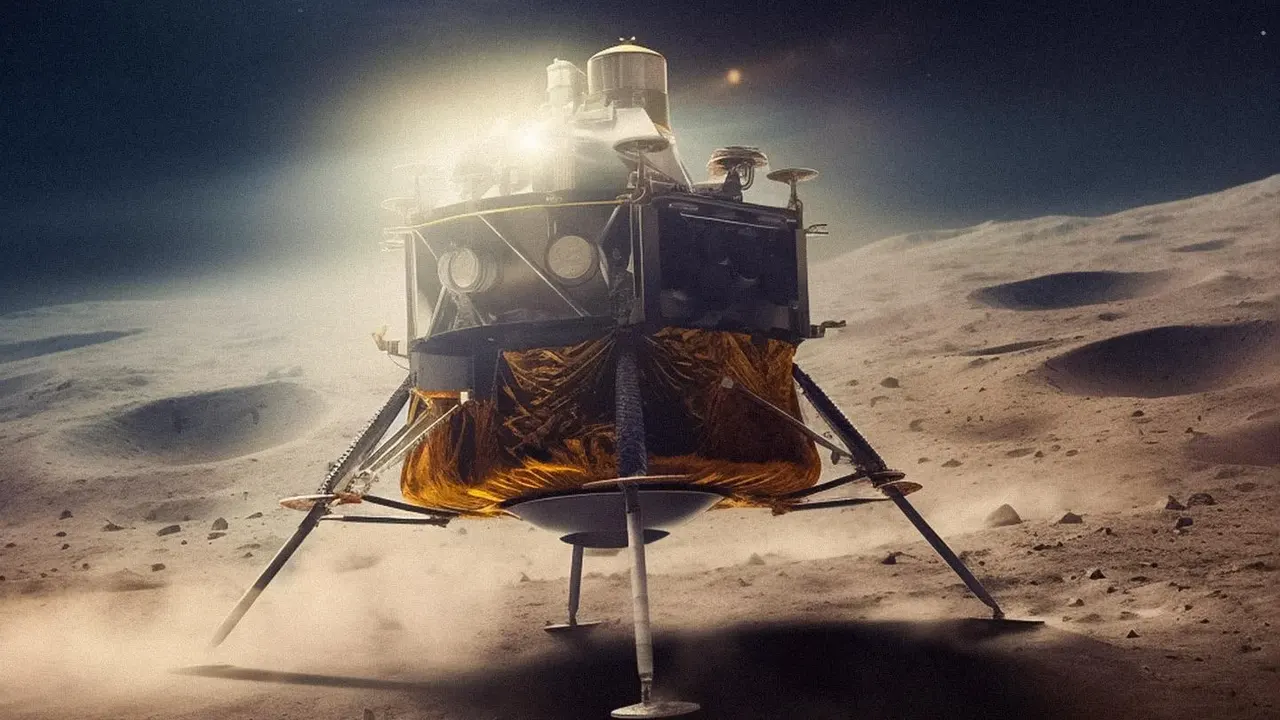
This scientific curiosity is driving a new generation of space exploration. NASA's Europa Clipper mission, which launched in 2024, is currently en route to Jupiter. It will perform dozens of close flybys of Europa, using radar to measure the thickness of the ice shell and other instruments to analyze its composition and search for potential plumes. The goal isn't to find life directly, but to assess Europa's habitability. Another ambitious mission is Dragonfly, a rotorcraft lander set to launch for Titan in 2028. This car-sized drone will fly to multiple locations on Titan's surface, studying its prebiotic chemistry and geology to understand how far the process of creating life can go. These missions, along with Europe's JUICE probe, represent a concentrated effort to investigate these mysterious ocean worlds.