








The End of the Traditional Career Ladder
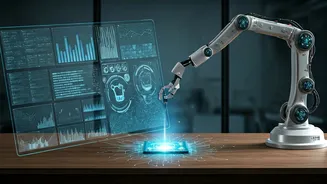
For decades, the concept of a career was a predictable, linear climb. You started in an entry-level position, mastered a set of tasks, and gradually moved up within a single company or industry. That model is becoming obsolete. The rapid advancement of AI
means that job roles are no longer static; they are evolving entities. Tasks that are repetitive or based on data processing are increasingly being automated. This doesn't necessarily mean mass job displacement, but it does mean a fundamental restructuring of what jobs look like. The World Economic Forum has noted that while millions of jobs may be displaced by automation, millions of new roles will also be created. This churn makes a “climb the ladder” approach risky. The rung you’re aiming for might not exist in five years. The pressure is on to stop thinking about a single, fixed career path and start thinking about building a resilient professional life that can adapt to change.
Shifting Focus From Job Security to Skill Security
In this new landscape, true security comes not from your job title, but from your portfolio of skills. Deliberate career planning is less about the next promotion and more about the next valuable skill. Experts suggest that hiring is becoming increasingly skills-based, with employers prioritising demonstrable capabilities over formal education alone. The key is to build a combination of skills that makes you difficult to replicate. This involves looking at your current role and identifying which tasks AI can handle and which require a human touch. The goal is to become the person who uses AI as a tool to solve bigger problems, not the person who competes with it on routine tasks. This pivot from job-centric to skill-centric thinking is the very definition of deliberate career planning in the AI age.
The New Premium on 'Human' Skills
As AI handles more technical and repetitive work, skills that are uniquely human have become more valuable than ever. Employers are increasingly seeking professionals who complement AI's efficiency with human judgment. These so-called 'soft skills' are now core professional competencies. They include critical thinking, creativity, emotional intelligence, and complex problem-solving. While AI can generate answers, it takes a person to ask the right questions, interpret the data with empathy, and communicate the findings in a compelling way. Someone with strong technical skills who can also build empathetic client relationships or inspire a team is far more valuable than a pure technician. Deliberate career planning now involves actively cultivating these human-centric abilities, as they provide a durable advantage in an automated world.
Embracing a Mindset of Lifelong Learning
The single most important strategy for future-proofing your career is embracing continuous learning. The ability to learn, unlearn, and relearn is essential in a constantly shifting job market. This doesn't necessarily mean going back to university for another degree. It means adopting a growth mindset and being proactive about upskilling. This can involve taking online courses to gain AI literacy, attending workshops, or seeking out projects at work that force you to develop new competencies. The idea is to build an 'agile career roadmap' that you regularly review and adjust based on industry trends. AI itself can be a powerful partner in this process. AI-powered platforms can help you identify skill gaps based on market demand and suggest personalised learning paths to fill them. By making learning a consistent habit, you move from a passive passenger to an active driver of your career.