
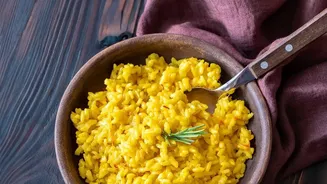
First, A Tip for Cooking with Saffron
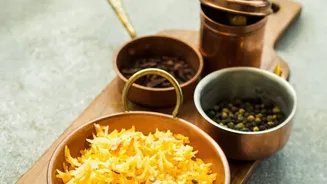
To get the most out of this precious spice, don't just toss the threads into your pot. Saffron's flavour and colour need to be awakened. The best way to do this is by 'blooming' it. Gently crush the threads in a mortar and pestle and let them steep in a few
tablespoons of warm (not boiling) water, broth, or milk for at least 15-20 minutes. This infused liquid will distribute the saffron's essence evenly, ensuring every grain of rice shines with colour and flavour.
Persian Tahdig: The Crispy Golden Crown
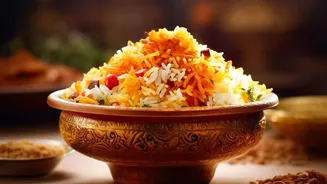
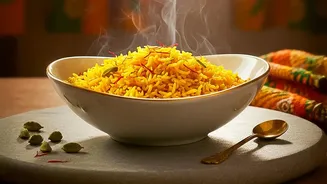
In Persian cuisine, the most fought-over part of the meal is often the 'tahdig', which translates to 'bottom of the pot'. It is a magnificent layer of crispy, golden-fried rice that forms at the base of the pan. The technique involves par-boiling long-grain basmati rice, then steaming it over a layer of oil or butter. A portion of the par-cooked rice is often mixed with bloomed saffron and sometimes yoghurt or an egg yolk, then spread in the bottom of the pot to create an even more decadent and flavourful crust. The rest of the fluffy rice is mounded on top and left to steam gently until the bottom becomes irresistibly crunchy. The final flip onto a platter reveals the stunning, edible crown.
Spanish Paella: A Taste of Celebration
More than just a dish, paella is an event. Originating from Valencia, this famous Spanish creation is traditionally cooked in a wide, shallow pan over an open fire. Saffron is the soul of paella, giving the short-grain rice its signature golden colour and a subtle, aromatic flavour that balances the other ingredients. While recipes vary widely—from chicken and rabbit in the traditional Paella Valenciana to a mix of seafood—the method is key. The rice is simmered in a saffron-infused broth and, crucially, left unstirred to allow the 'socarrat', a prized toasted layer at the bottom, to form. It is a dish meant to be shared directly from the pan.
Italian Risotto alla Milanese: Elegant and Creamy
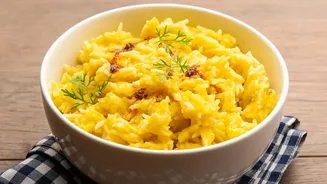
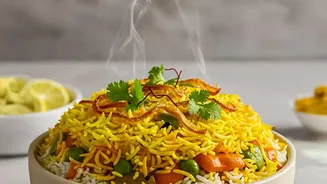
Hailing from Milan, this risotto is a masterclass in elegant simplicity. Its vibrant yellow hue and velvety texture come from two key ingredients: saffron and the slow, patient process of cooking. The dish starts with finely chopped onion softened in butter. A high-starch rice like Arborio or Carnaroli is toasted before white wine is added. Then, warm saffron-infused broth is ladled in bit by bit, with constant stirring, until the rice is creamy and 'al dente'—tender with a slight bite. Finished with butter and grated Parmesan cheese, Risotto alla Milanese is a comforting and luxurious dish.
Indian Zarda: A Sweet and Fragrant Jewel
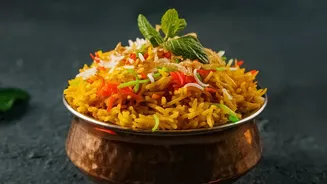
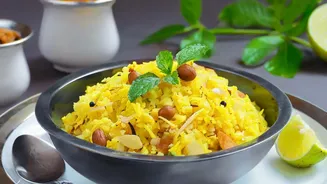
In India and Pakistan, saffron (known as kesar or zafran) graces both savoury and sweet dishes. Zarda, or 'meethe chawal', is a traditional sweet rice often made for festivals and celebrations. The name comes from the Persian word for 'yellow', referencing the beautiful colour imparted by saffron. Basmati rice is cooked with sugar, ghee, and whole spices like cardamom and cloves. The bloomed saffron is added, along with nuts like almonds and pistachios and sometimes raisins, creating a dish that is as fragrant as it is delicious. It is a royal dessert that showcases saffron's versatility.