



The Forgotten Phase of Road Safety
A traffic stop on a busy Indian road is a multi-stage event. There's the signal to pull over, the interaction with authorities, and then, the departure. While significant attention is given to the conduct of the stop itself, the final phase—safely merging
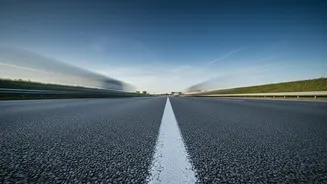
back into the flow of traffic—is dangerously overlooked. Re-entering a highway from a stationary position on the shoulder is one of the riskiest manoeuvres a driver can make. Traffic may be moving at speeds exceeding 80-100 km/h, while your vehicle is starting from zero. This speed differential is a recipe for disaster. A misjudged gap or a moment's hesitation can lead to catastrophic side-swipe or rear-end collisions. The shoulder of a highway is an inherently hazardous place, with data suggesting a significant number of highway fatalities involve vehicles that were stopped on the side. The danger isn't just about the merging vehicle; it's about the ripple effect it creates, causing other drivers to brake suddenly and unpredictably.
Why Our Current Procedures Fall Short
Currently, the focus of roadside checks, whether conducted by police or other authorities, is almost entirely on the stop itself. Cones may be used to channel traffic, and officers are trained on how to approach a vehicle. But once the check is complete, the driver is often left to their own devices. The official guidance is typically to "re-enter the roadway only when it is safe to do do." While well-intentioned, this puts the entire onus on a driver who is likely stressed and may have a poor vantage point. On narrow shoulders, a driver must simultaneously try to accelerate, check mirrors, find a blind spot, and judge the speed of fast-approaching vehicles. This is a complex task even for a seasoned driver. For a nervous one, it can lead to fatal hesitation or a premature merge. The lack of a formal, managed procedure for re-entry is a critical gap in our road safety protocol. We meticulously manage the stop but essentially abandon the driver at the most kinetically dangerous point.
What a Safe Rejoining Protocol Looks Like
Implementing a safe route rejoining plan isn't complicated or expensive. It’s about standardising a set of simple, effective procedures. First, authorities conducting the stop should, where possible, choose a location with a long, clear shoulder that allows for acceleration. After the check is complete, one officer could act as a spotter, helping to signal to the driver when a safe gap in traffic appears. Police procedures in some regions already recommend that officers should "allow the stopped vehicle to reenter traffic first, then safely reenter traffic," implicitly acknowledging their role in managing the situation. This can be formalized. Using a few extra cones to create a temporary, extended acceleration lane would give the driver precious seconds to match the speed of traffic before merging—the single most important factor in a safe merge. Clear hand signals from an officer can remove the guesswork for the driver, providing the confidence needed to execute the manoeuvre decisively and safely.
A Universal Principle for All Roadside Stops
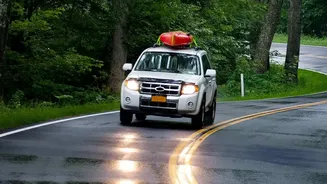
This isn't just about police checkpoints. The same logic must be applied to every situation that forces a vehicle to stop on the shoulder of a high-speed road. This includes vehicle breakdowns, tyre changes, and even temporary stops by road maintenance crews. Every year, hundreds of people are injured or killed while on the shoulder of a highway. Highway patrol vehicles attending to a disabled car should make it standard practice to assist that vehicle in rejoining traffic once it's mobile. Road construction and maintenance plans should not just account for diverting traffic, but also for how their own vehicles will safely re-enter the main carriageway. By adopting safe rejoining as a universal principle, we address a fundamental hazard of our road system. It requires a shift in mindset: seeing the stop as incomplete until the vehicle is safely integrated back into the traffic flow.