







The Two Types of Unwanted Noise
To understand how sound gets in, it helps to know what you're dealing with. Unwanted noise generally falls into two categories. The first is airborne noise, which travels through the air. Think of sounds like conversations, televisions, or traffic from
outside. When these sound waves hit a surface like a wall or window, they cause it to vibrate, transmitting the sound to the other side. The second type is structure-borne noise, also known as impact noise. This is caused by a direct impact on the building's structure—things like footsteps from the apartment above, a dropped object, or a washing machine's vibrations. This energy travels through solid materials like concrete, wood, and steel beams, re-emerging as audible sound far from its origin point.
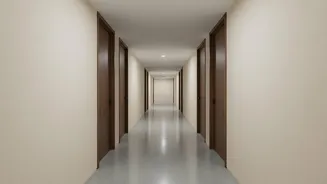
Corridors: The Main Artery for Sound
Shared hallways are a primary source of noise. Conversations, closing doors, and foot traffic can easily bleed into your living space. The main culprit is often your own front door. Many apartment doors are hollow-cored to save on cost, making them poor barriers against sound. More significantly, sound waves are like water; they will find the path of least resistance. Tiny gaps around the door frame and the space underneath are major entry points for noise. Even a small gap can significantly compromise a room's quiet. This flanking noise, as it's known, bypasses the structure of the door itself and delivers sound directly into your home.
Plumbing: The Hidden Sound Network
The network of pipes inside your walls is another efficient sound-delivery system. The noise from rushing water, flushing toilets, and draining sinks in other units travels in two ways. There's the airborne sound of the water itself, but the more intrusive noise is structure-borne. As water moves through pipes, especially at high pressure or around bends, it causes the pipes themselves to vibrate. If those pipes are in direct contact with the building's wooden or steel frame, the vibrations are transferred directly into the structure. This energy then travels through the floors and walls, radiating as sound into your apartment. Plastic PVC pipes can be particularly prone to this kind of vibration.
Shafts and Voids: Echoes in the Emptiness
Buildings are filled with hidden cavities. Ventilation shafts, utility chases for electrical and plumbing lines, and the space above a drop ceiling create connected pathways that span multiple floors and units. These voids can act like echo chambers, carrying airborne sounds from one apartment to another. A neighbour's kitchen exhaust fan, for example, can create noise that travels up a shared ventilation duct and enters your home through your own vent. Gaps around pipes and conduits where they pass through walls and floors create further opportunities for both airborne and structure-borne noise to flank what would otherwise be a solid wall. Sealing these penetrations is a critical step in effective soundproofing.
Practical Steps for a Quieter Home
While you can't rebuild your walls, you can take steps to disrupt these sound pathways. For corridor noise, sealing the gaps around your front door with weatherstripping and adding a door sweep at the bottom can make a huge difference. Inside, focus on absorption. Soft materials soak up sound and reduce echo. Thick rugs with dense pads, heavy curtains, upholstered furniture, and even large, full bookcases can absorb sound energy and add mass to your walls. For plumbing noise, if you have access to the pipes, you can wrap them in specialized sound-damping material. Even sealing the small gaps where pipes enter the room can help reduce the transmission of vibrations.