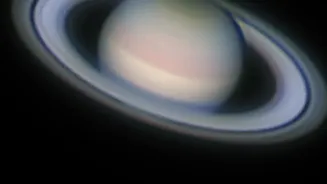






November offers a brilliant opportunity for stargazers across India to witness one of the solar system's greatest marvels: the rings of Saturn. The post-monsoon clarity offers prime viewing conditions to spot the majestic planet.
Why November Is Prime Time for Saturn Viewing
Following its opposition
in early October 2026, Saturn remains exceptionally well-placed for viewing in the evening sky throughout November. An opposition occurs when Earth passes directly between the Sun and an outer planet, making that planet appear at its biggest and brightest for the year. For observers in India, this period is doubly blessed, as the retreat of the monsoon washes dust from the atmosphere, leading to exceptionally clear and stable skies. While Saturn was at its absolute peak on October 4, the entire window from September to November provides nearly ideal conditions for observation. In November, look for Saturn in the evening sky; it will be visible for most of the night, rising in the east around sunset and reaching its highest point in the southern sky later in the evening.
Finding Saturn in the Indian Night Sky
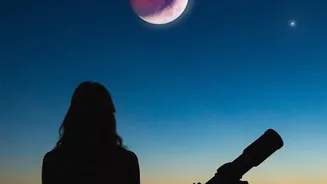
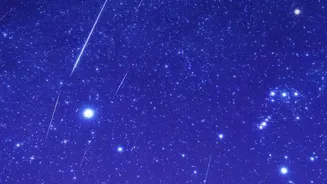
Finding the ringed planet is simpler than you might think. After sunset, look towards the east-southeast. Saturn will be located in the constellation Pisces, appearing as a bright, steady, golden-hued point of light that doesn't twinkle like a star. During November, it will be well below the Great Square of Pegasus. To get your precise bearings, it's highly recommended to use a free stargazing app like Stellarium or Sky Safari on your smartphone. These apps use your phone's location to show you a real-time map of the sky, allowing you to point your phone upwards and instantly identify Saturn's exact position. On November 20, the waxing gibbous Moon will be located near Saturn, making for an attractive pairing that can help you locate the planet with the naked eye.
Choosing the Right Telescope
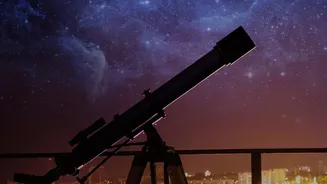
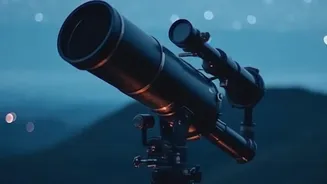
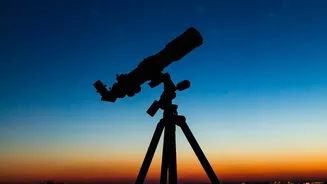
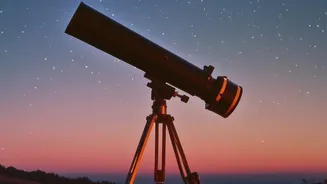
The good news is that you don't need an observatory-grade telescope. Even a small beginner telescope with at least 60mm of aperture can reveal Saturn's rings as a distinct structure. However, for a more rewarding view that might show the gap between the rings, known as the Cassini Division, a telescope with an aperture of 100mm (4 inches) or more is recommended. Reflector telescopes, particularly Dobsonian models, offer the best aperture for your money and are excellent for planetary viewing. Refractor and Cassegrain telescopes are also fantastic choices. The key is to avoid cheap, toy-like telescopes often sold for under ₹10,000, as their poor optics can lead to frustrating and blurry views.
Nailing the Essential Settings: Magnification
Magnification is crucial, and it's determined by your telescope's focal length and the eyepiece you use. To calculate it, simply divide the telescope's focal length by the eyepiece's focal length (both are measured in mm). For example, a telescope with a 1000mm focal length paired with a 10mm eyepiece yields 100x magnification.
For viewing Saturn, a good range to aim for is between 75x and 150x. You can start with a low_power eyepiece (like a 25mm) to easily find and center Saturn in your view. Once centered, switch to a higher_power eyepiece (such as a 9mm or 7mm) to zoom in on the planet and its rings. Pushing magnification above 200x is possible with larger telescopes but often results in a dimmer, blurrier image unless the atmospheric conditions ('seeing') are exceptionally steady.
Tips for a Sharper View
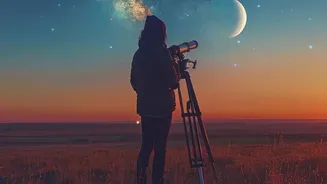
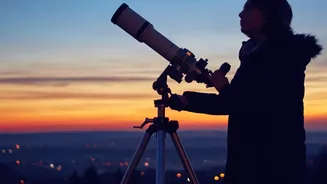
First, let your telescope acclimate. Set it up outside for at least 30 minutes before you plan to observe. This allows the optics to cool to the ambient air temperature, preventing image distortion from heat currents inside the tube. Second, allow your eyes to 'dark adapt' for 20--30 minutes away from bright lights, which significantly improves your ability to see faint details. If you need a light, use a red flashlight, as red light is less damaging to your night vision. Finally, be patient at the eyepiece. The Earth's atmosphere is constantly in motion, causing the view to shimmer. Wait for brief moments of stillness when the image will suddenly snap into sharp focus, revealing stunning detail on the planet and its rings.