






The Sun's Turbulent Nature
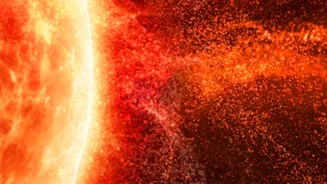
Our Sun is not the perfectly calm, steady star it might appear to be. It is a dynamic, churning ball of hot gas with a powerful magnetic field. Occasionally, this magnetic energy builds up and is released in colossal explosions known as solar flares —
intense bursts of radiation. These are often accompanied by Coronal Mass Ejections (CMEs), which are massive clouds of plasma and magnetic fields hurled into space. While Earth's atmosphere and magnetic field protect life on the surface from this onslaught, our technological civilisation is far more vulnerable. As we approach the peak of Solar Cycle 25, an approximately 11-year cycle of solar activity, the frequency and intensity of these events are increasing, making the study of space weather more critical than ever.
Why Our Digital World Is Vulnerable
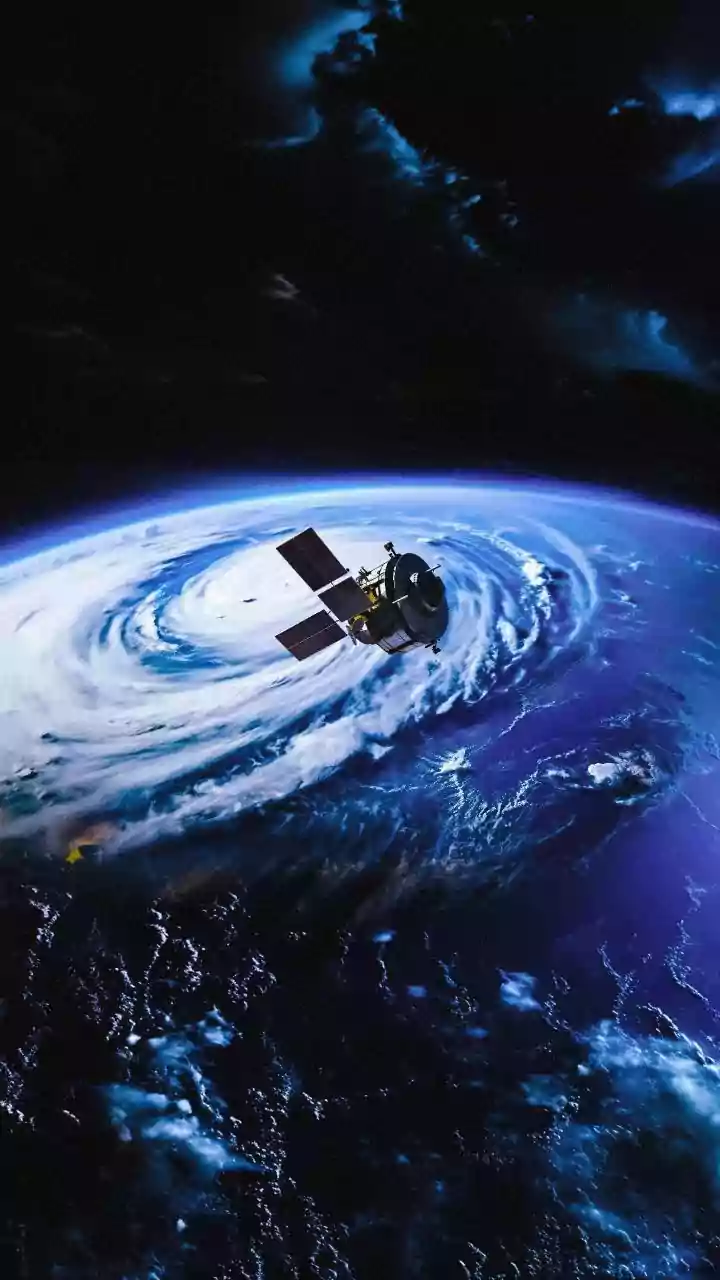
When a solar flare or CME is directed at Earth, it can have serious consequences for our technology. The X-rays and ultraviolet radiation from a flare can reach Earth in minutes, altering the ionosphere — the upper layer of our atmosphere. This can disrupt high-frequency radio signals, causing blackouts for aviation and maritime communications. The charged particles that follow can directly damage satellite electronics, degrade solar panels, and increase atmospheric drag on satellites in low-Earth orbit, causing them to lose altitude. Geomagnetic storms, caused by CMEs interacting with Earth's magnetic field, can induce currents in ground-based systems, potentially overloading power grids and corroding pipelines. Furthermore, these disturbances can significantly degrade the accuracy of GPS and other navigation systems, affecting everything from shipping and farming to everyday map applications.
Earth’s Early Warning System
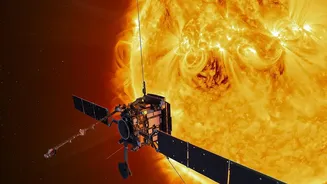
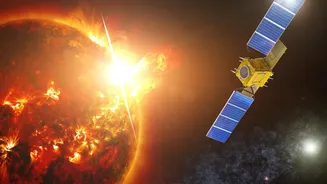
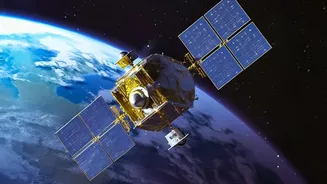
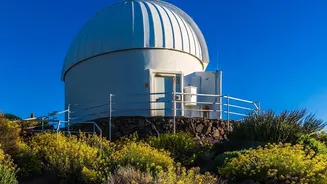
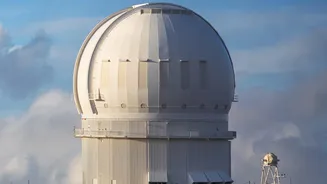
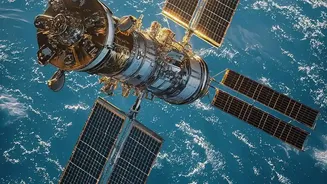
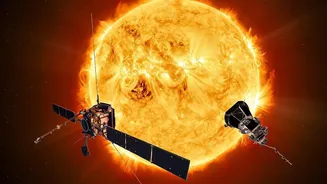
To protect our infrastructure, a global network of monitoring stations, both on the ground and in space, keeps a constant watch on the Sun. Ground-based observatories use instruments like magnetometers and radio telescopes to track changes in Earth's magnetic field and solar radio noise. Space-based observatories, however, offer the most significant advantage: an unobstructed, real-time view of the Sun. Satellites operated by agencies like NASA and the European Space Agency are positioned at key vantage points to detect solar flares and CMEs as they happen. These observatories act as an early warning system, giving authorities on Earth precious time — from minutes to hours — to prepare for incoming space weather.
India’s Vigilant Eye: The Aditya-L1 Mission
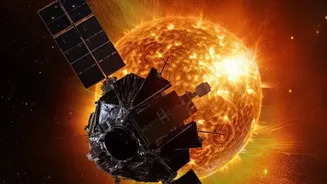
India has firmly established its presence in this critical field with the Aditya-L1 mission, the country's first dedicated solar observatory. Launched by the Indian Space Research Organisation (ISRO), Aditya-L1 is strategically positioned at Lagrange Point 1 (L1), about 1.5 million kilometres from Earth. This unique location provides a continuous, uninterrupted view of the Sun. The spacecraft carries seven indigenously developed payloads. Instruments like the Visible Emission Line Coronagraph (VELC) study CMEs, while others like the Solar Ultraviolet Imaging Telescope (SUIT) observe the Sun's photosphere and chromosphere. By studying solar phenomena before they interact with Earth's magnetic field, Aditya-L1 provides crucial data for predicting space weather events, bolstering India's capability to protect its own critical space and ground infrastructure.
From Prediction to Proactive Protection
When a significant solar event is detected, space weather prediction centres around the world spring into action. They analyse the data and issue alerts to government agencies, satellite operators, airlines, and power grid managers. This warning allows them to take protective measures. Satellite operators can put their spacecraft into a 'safe mode,' pointing sensitive components away from the incoming radiation and temporarily shutting down non-essential systems. Power grid operators can redirect power loads and prepare for potential surges to prevent widespread blackouts. Airlines can reroute flights, particularly those over polar regions where the Earth's magnetic field offers less protection. This proactive approach, made possible by our solar sentinels, is the key to mitigating the worst effects of the Sun's powerful outbursts.