



In December 1996, India and Bangladesh signed a historic treaty on sharing the waters of the Ganges, a landmark in regional diplomacy. Now, as the 30-year pact approaches its expiry in 2026, a host of new challenges are testing this crucial relationship.
A Treaty Born from Necessity
The Ganges Water-Sharing Treaty, signed on December 12, 1996, was designed to end decades of disagreement over water rights. The primary point of contention was the Farakka Barrage, a structure India completed in 1975 just upstream of the border to divert water into the Hooghly River and preserve the functionality of the Kolkata port. This diversion drastically reduced the downstream flow into Bangladesh, particularly during the critical dry season from January to May, affecting agriculture, fisheries, and navigation for millions. The 1996 treaty established a 30-year formula for sharing the water at Farakka during these lean months, bringing a degree of predictability and a framework for cooperation that had been sorely missing.
Successes and Lingering Disagreements
For three decades, the pact has largely held, serving as a cornerstone of India-Bangladesh relations and a testament to cooperative problem-solving. It created a transparent mechanism, managed by a Joint Rivers Commission (JRC), for monitoring flows and addressing anomalies. However, the treaty was never a panacea. It only covers the Ganges at a single point, leaving the management of 53 other shared rivers unresolved. The most prominent of these is the Teesta River, a proposed water-sharing deal for which has been stalled since 2011, largely due to opposition from the state of West Bengal. This long-standing failure complicates the Ganges renewal talks, as Bangladesh increasingly views a resolution on Teesta as a precondition for broader water cooperation.
New Pressures: Climate Change and Domestic Needs
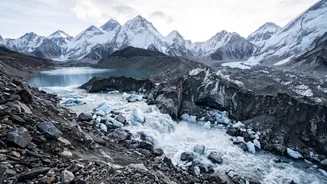
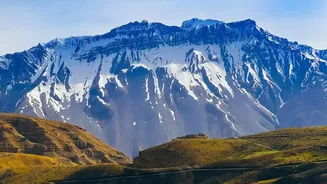
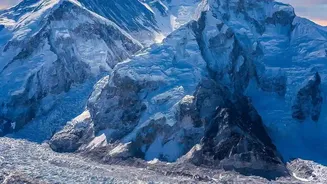
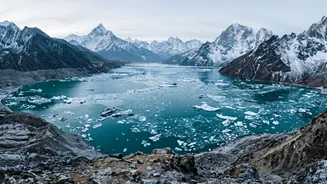
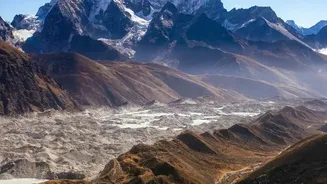
The world of 2026 is vastly different from that of 1996. The most significant new variable is climate change. Himalayan glaciers that feed the Ganges are retreating at an alarming rate, and monsoon patterns have become more erratic. This has led to a paradox of more intense flooding in the wet season and more severe droughts in the dry season, making the fixed allocation formulas of the 1996 treaty seem outdated. Both countries are also facing immense domestic pressures. India's own water demand has surged due to population growth, industrialisation, and agriculture. States like Bihar have voiced concerns that their needs are not being met and have demanded a seat at the negotiating table, arguing that the Farakka Barrage has caused significant siltation and flooding upstream.
Bangladesh's Push for a 'Guarantee'
As renewal talks loom, Bangladesh is pushing for significant revisions. A key demand is the reintroduction of a 'minimum guarantee' clause, similar to what existed in a prior 1977 agreement. This would ensure Bangladesh receives a guaranteed percentage of water even if the total flow at Farakka falls below a certain threshold. The 1996 treaty, signed by Sheikh Hasina's government, instead calls for immediate consultations if flows drop critically low. The current government in Dhaka argues that without a firm guarantee, its agricultural heartland remains vulnerable, a position that has become a hot-button political issue domestically. India, wary of committing to a fixed amount amid increasing hydrological uncertainty, has so far resisted this demand.
The Geopolitical Shadow of China
Adding another layer of complexity is China's massive damnding activity on the upper reaches of the Brahmaputra River, known as the Yarlung Tsangpo in Tibet. This river flows from China through India and into Bangladesh, where it is a crucial water source. China's plan to build what could be the world's largest hydropower dam gives it immense leverage over downstream water flows to both India and Bangladesh. While not directly part of the Ganges pact, Beijing's actions create a broader strategic anxiety. It pushes Bangladesh to seek Chinese investment for its own river management projects, and it complicates India's position as the dominant lowerriparian state in the Ganges basin, now finding itself a middleriparian nation in the context of the Brahmaputra.