




The Cosmic Appointment
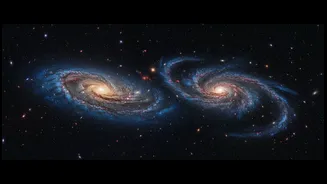
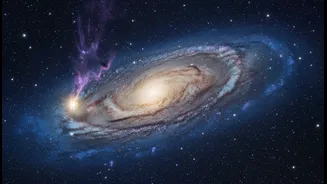
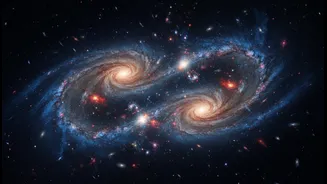
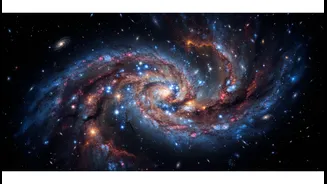
Our Milky Way galaxy is on a collision course with its nearest large galactic neighbor, the Andromeda galaxy. Pulled together by their mutual gravity, these two colossal spirals are hurtling toward each other at about 400,000 kilometers per hour. While
that sounds fast, the immense distance of 2.5 million light-years between them means the main event is still a long way off. Scientific consensus, based on extensive data from the Hubble Space Telescope, places the initial collision in about 4 to 4.5 billion years. This isn't a crash in the earthly sense; because galaxies are mostly empty space, it's highly unlikely that individual stars will collide. Instead, it's a gravitational dance that will reshape both galaxies forever.
Act I: The Approach (Now to 2 Billion Years)
For now, Andromeda is a faint, fuzzy patch in our night sky, visible to the naked eye under dark conditions. But as the millennia roll by, its appearance will change dramatically. Over the next 2 billion years, Andromeda will grow noticeably larger and brighter from our perspective on Earth. It will transform from a distant smudge into a magnificent, sprawling celestial object, a clear sign of the impending merger. This slow, inexorable approach is the long opening act of our cosmic drama, a visual crescendo building over an unimaginable timescale.
Act II: First Contact (Around 4 Billion Years)
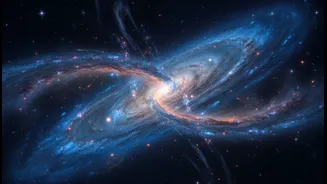
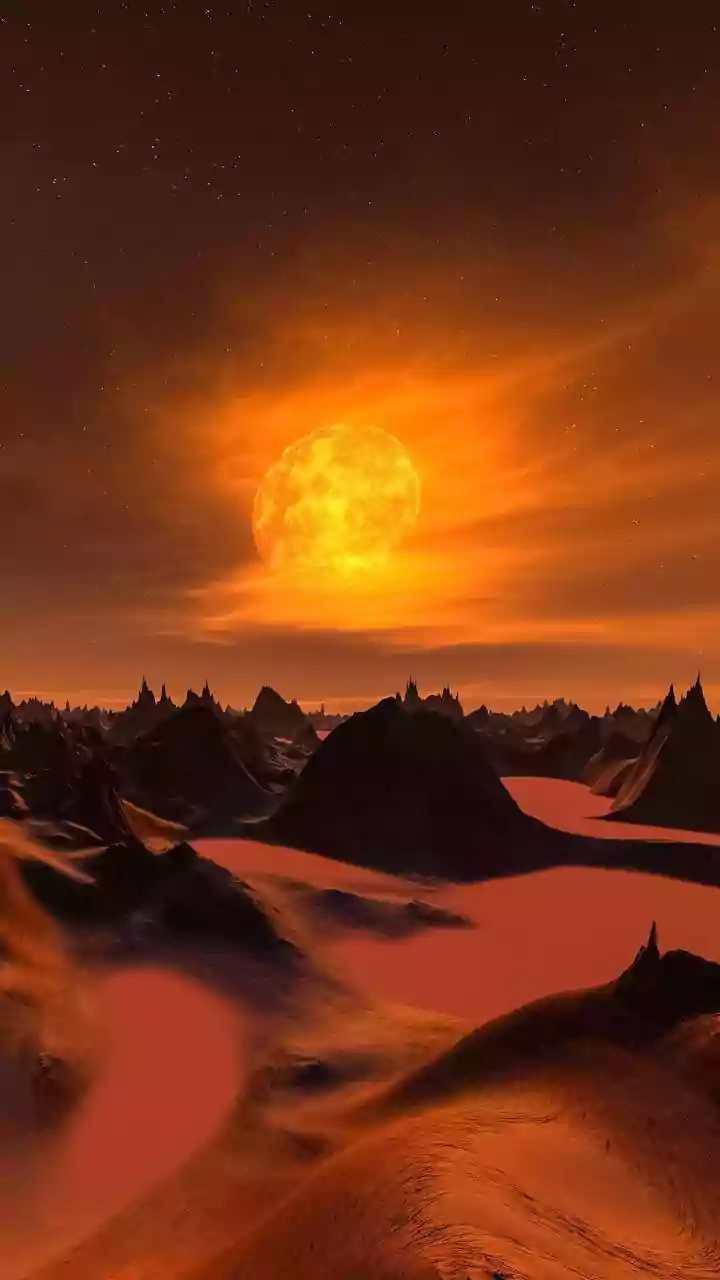
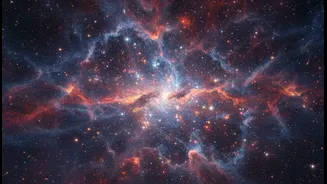
Around the 4-billion-year mark, the show truly begins. The outer gaseous halos of the Milky Way and Andromeda will start to intermingle. From Earth, the night sky would be spectacular. Andromeda will fill the entire field of view, and the gravitational tug-of-war will begin to distort the familiar band of the Milky Way. As the galaxies pass through each other for the first time, the vast clouds of hydrogen gas within each will be compressed. This compression will trigger a massive burst of star formation, a brilliant fireworks display igniting countless new stars and illuminating the sky with glowing nebulae.
Act III: The Gravitational Dance (4 to 6 Billion Years)
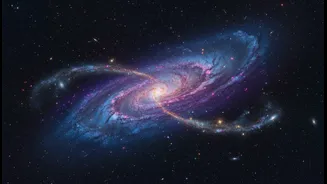
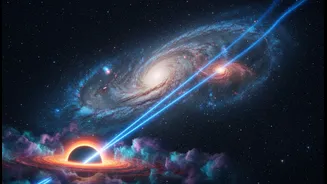
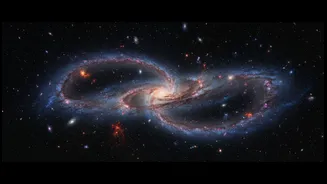
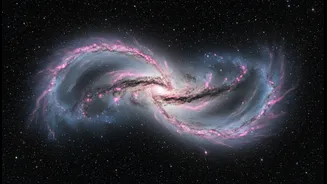
The first pass is not the end. The immense momentum of the two galaxies will carry them past each other, but their gravitational bond is too strong to break. They will slow, stop, and fall back together for a series of subsequent collisions. This period will be one of beautiful chaos. The once-elegant spiral arms will be stretched and flung out into long tidal tails, and streams of stars will be cast across intergalactic space. The two supermassive black holes at the centers of each galaxy will begin a long spiral toward each other, destined to eventually merge millions of years later. The cores of both galaxies will appear as two bright lobes in the sky before they finally combine.
Act IV: A New Beginning (Beyond 6 Billion Years)
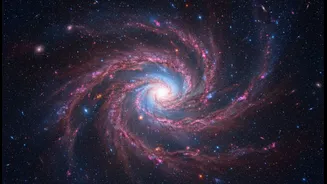
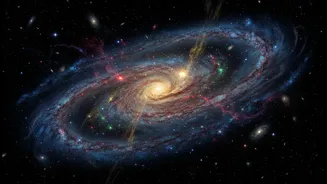
After roughly 2 billion years of merging, the chaos will subside. Around 6 billion years from now, the Milky Way and Andromeda will have settled into a single, massive new galaxy. This new creation, sometimes nicknamed "Milkomeda," will likely be a giant elliptical galaxy—a vast, roundish ball of older, reddish stars, lacking the distinct spiral arms of its parents. Its bright, combined core will dominate the night sky. The era of the Milky Way will be over, but its stars will live on in this new cosmic metropolis.
What is the Solar System’s Fate?
What about our own cosmic address? The good news is the solar system itself is unlikely to be destroyed. The chances of a direct hit from another star are negligible. However, our position will almost certainly change. Models suggest a high probability that the Sun and its planets will be pushed much farther out from the new galactic core, possibly to the outer fringes of Milkomeda. There's also a smaller, 12% chance that our solar system could be ejected entirely, sent wandering alone into the vast emptiness of intergalactic space. It’s a sobering thought, but one we need not worry about personally. By the time the collision occurs, our Sun will have already expanded and brightened to the point where Earth's surface will have become too hot for liquid water, and thus for life as we know it.