
The Sun's Violent Transformation
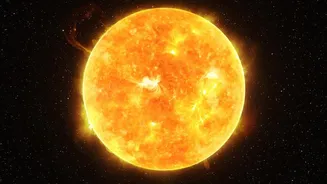
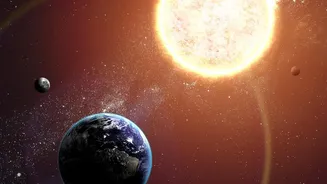
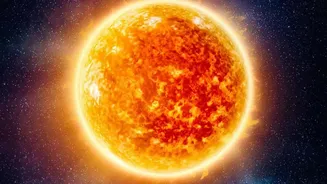
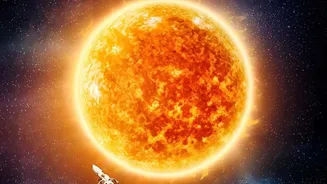
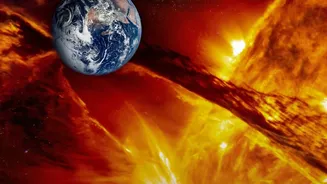
The end begins not with a whimper, but a bang. In its final stages of life, the Sun will run out of the hydrogen fuel that has powered it for billions of years. Its core will shrink, but its outer layers will expand dramatically, transforming it into
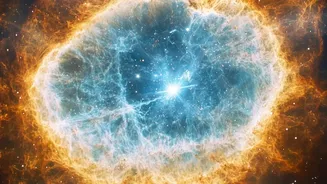
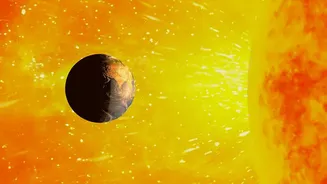
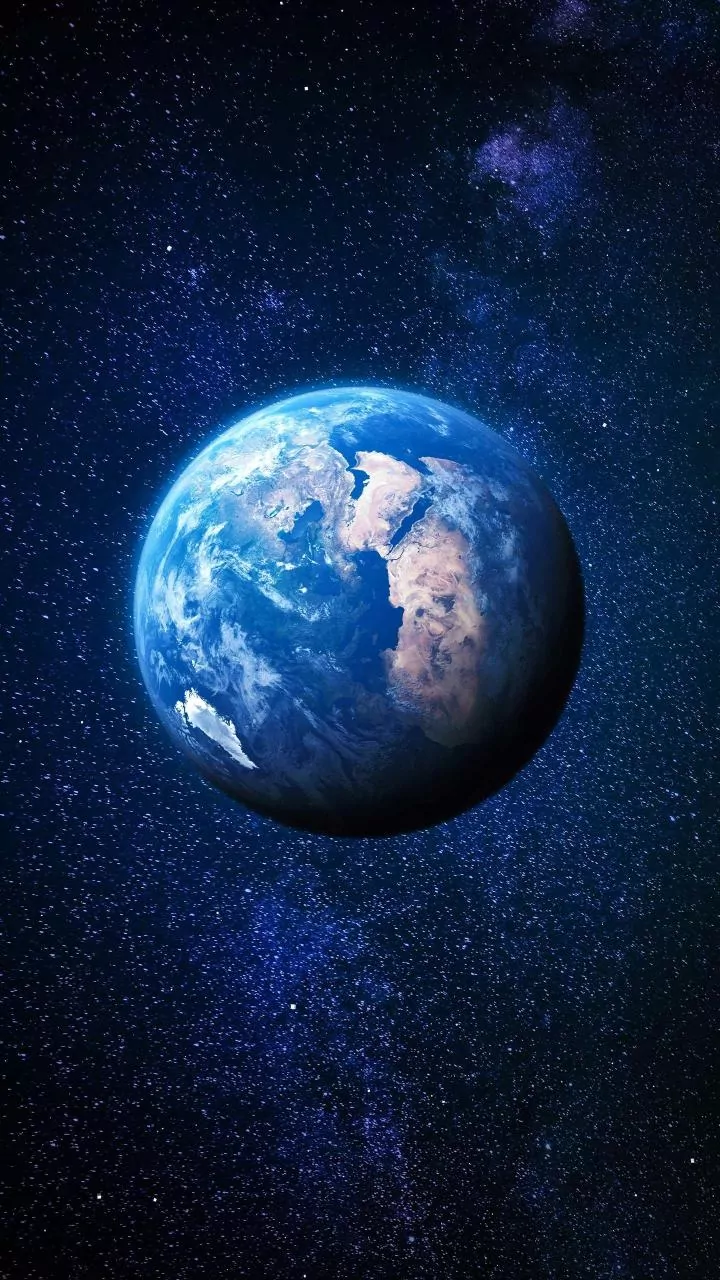
a 'red giant'. This bloated version of our star will be enormous, likely swallowing Mercury and Venus whole. Earth's fate hangs in the balance; it could be engulfed, or if it survives, it will be scorched beyond recognition, its oceans and atmosphere boiled away. After about a billion years in this state, the Sun will shed its outer layers into space, leaving behind its hot, dense core: a white dwarf. This stellar remnant, roughly the size of Earth but with about half the Sun's current mass, will be the new centre of a radically altered solar system.
Jupiter, the new System's Architect
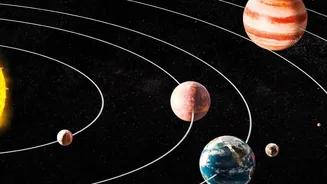
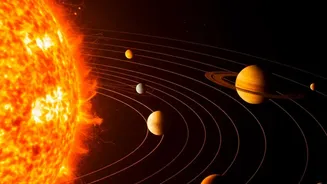
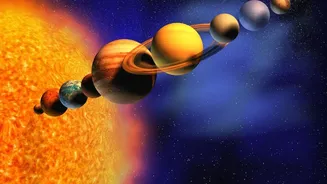
Once the Sun becomes a white dwarf, the dynamics of our solar system will change forever. With the Sun having lost nearly half its mass, its gravitational pull on the remaining planets will weaken. This is where Jupiter, the system's largest planet, takes on a new, crucial role. Its immense gravity, which already shapes the orbits of asteroids and comets, will become the dominant force in the outer solar system. Simulations suggest that as the Sun loses mass, the outer planets like Jupiter, Saturn, Uranus, and Neptune will drift into wider, more distant orbits. However, this new configuration may not be stable. The intricate gravitational dance orchestrated by Jupiter could lead to a surprisingly chaotic future.
A Chaotic Cosmic Dance
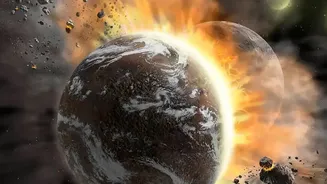
For a long time, scientists believed the outer planets would serenely orbit the white dwarf Sun for trillions of years. However, recent and more complex simulations paint a much more violent picture. These new models, which factor in the chaotic and burst-like way the Sun might shed its mass, suggest the system could become unstable far sooner. In many simulations, the delicate gravitational balance is thrown into disarray within just a few billion years. This can lead to dramatic outcomes: planets being ejected from the solar system entirely, or giant planets like Uranus and Neptune swapping orbits in a cosmic shuffle. Jupiter’s gravitational nudges could send asteroids, comets, and even the moons of other planets hurtling towards the dead Sun.
The 'Polluted' Star and Planetary Debris
Astronomers have long been puzzled by 'polluted' white dwarfs—dead stars whose atmospheres contain heavy elements like calcium, magnesium, and silicon. These elements should quickly sink below the star's surface, so their presence means the white dwarf is actively consuming rocky material. The latest models provide an answer: the surviving giant planets, like Jupiter, are the culprits. They act as gravitational slingshots, flinging the debris from shattered asteroids and planets inward. By studying the chemical makeup of this planetary debris falling onto distant white dwarfs, scientists are essentially performing galactic archaeology, learning about the composition of now-destroyed worlds. In some cases, the specific elements can even change the colour of the white dwarf's glow, with one recent model suggesting a star consuming sodium-rich debris would appear green.
Could New Worlds Form From the Ashes?
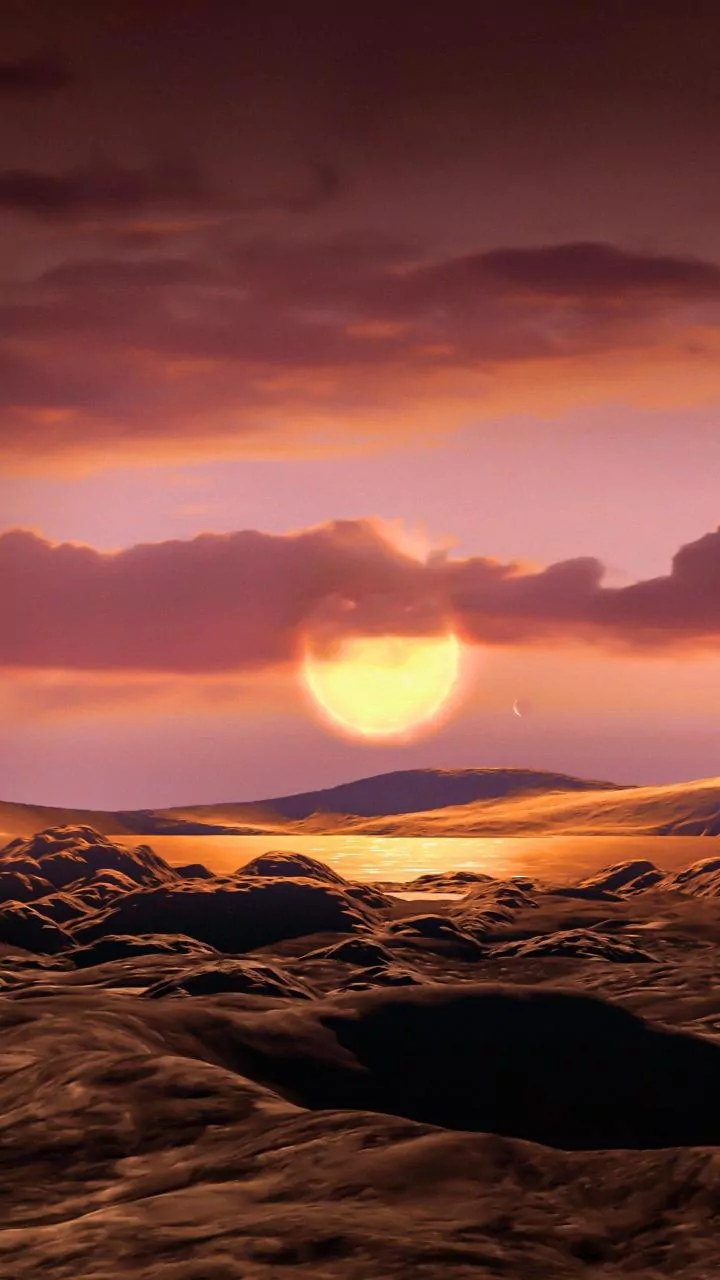
While the Sun's death will mean the end of our solar system as we know it, it might not be the end of planets altogether. Astonishingly, recent observations have found evidence of what might be a 'second-generation' planet. This is a world that didn't survive the star's death but instead formed from the disc of gas and dust that was shed during the red giant phase. This raises the tantalising possibility that even after our Sun dies and the inner planets are gone, new worlds could coalesce from its ashes. While life as we know it would be impossible on a planet orbiting close to a hot young white dwarf, it is thought that such planets could survive for millions of years as the star cools, eventually settling into a stable, albeit faint, habitable zone.