



A Digital Lifeline Under Strain
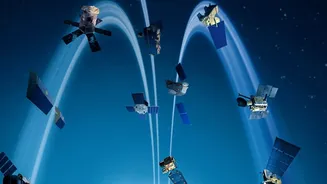
Since the full-scale Russian invasion in 2022, Starlink has been more than just an internet service for Ukraine; it's been a critical lifeline. When conventional communication networks were destroyed, SpaceX's satellite constellation provided vital connectivity
for the Ukrainian military, government, and civilians. This network underpins everything from battlefield communications to the operation of sophisticated drones. However, this dependence on a private company for wartime infrastructure has recently come under intense scrutiny amid reports of unexpected service limitations. These are not signs of a total shutdown, but rather a series of restrictions and contentious negotiations about the service's future and funding.
The Core Issue: Speed Caps and Drones
The heart of the recent controversy is a newly imposed speed restriction on Starshield, the military-grade version of the service used by Ukrainian forces. Around October 14, 2026, Ukraine reported that terminals on vehicles or drones moving faster than approximately 160 kilometres per hour (100 mph) were losing connectivity. Ukrainian President Volodymyr Zelensky confirmed these limits remain in place, stating they directly hinder Ukraine's ability to use its fastest interceptor drones to shoot down Russian jet-powered drones. While other air defence systems are still functional, this specific capability has been compromised, leading to what Zelenskyy termed 'painful and unpleasant' consequences. He dismissed explanations of a 'technical issue', calling it a 'planned operation' after tests showed the speed cap was active in Ukraine but not in the EU.
Who is Responsible? A Tangle of Claims
Pinpointing who ordered the restrictions has become a key point of contention. SpaceX CEO Elon Musk has publicly stated that Starshield systems are owned and controlled by the U.S. government, and therefore any limits are decided by the U.S. military and the President. However, reports have emerged, citing sources familiar with the matter, suggesting Musk himself proposed the idea of speed restrictions to the White House. In response, U.S. officials, including Secretary of State Marco Rubio, have denied that the White House ordered a slowdown, suggesting any disruption was accidental and that service had been restored—a claim contradicted by Ukrainian officials. This public back-and-forth highlights a significant fracturing of trust and communication between Kyiv, Washington, and SpaceX.
Geofencing and 'Scope Creep'
Beyond the speed caps, the broader issue relates to the 'scope' of Starlink's use. SpaceX has long maintained that its commercial service is for civilian and defensive activities, not offensive military action, which would put it under stricter export control laws. The company has previously used 'geofencing'—creating virtual geographic boundaries—to prevent the service from being used in Russian-occupied territories like Crimea. The current friction appears to stem from Ukraine's use of Starlink for increasingly offensive roles, such as guiding long-range strike drones, which may go beyond what SpaceX or its government partners originally intended. The debate is no longer just about providing internet, but about how much control a private firm has over a sovereign nation's ability to wage war.
What Happens Next: A Shift, Not a Shutdown
Despite the alarming headlines, a complete shutdown of Starlink service in Ukraine appears unlikely. The situation is better understood as a forceful renegotiation of terms. The Pentagon has a contract with SpaceX for the Starshield service, giving it a degree of control. Discussions are ongoing about the exact nature of this contract and what capabilities will be available to Ukraine. Meanwhile, U.S. lawmakers have called for an investigation into the disruptions, signaling the political stakes involved. The incident has starkly revealed the vulnerability that comes with military reliance on commercial technology and set a complex precedent for future global conflicts where private companies may act as powerful geopolitical players.