



The Promise of Self-Watering Planters
Self-watering planters, often called reservoir pots, are a modern marvel for gardeners. They operate on a simple, brilliant principle: a water storage area at the bottom and a wicking system that allows the soil to draw moisture up as needed. This technology
is designed to eliminate the guesswork of watering, preventing both the stress of drought and the danger of overwatering. For busy plant owners or those with thirsty plants, they seem like the perfect solution for maintaining steady hydration and promoting healthy, consistent growth. The system is demand-driven, meaning the plant takes only the water it requires, creating an ideal environment for roots to thrive.
Why the Wrong Soil Mix Causes Problems
The success of a self-watering system hinges entirely on the quality of the potting medium. If the soil mix is too dense, it defeats the purpose of the pot. Dense mixes, often containing heavy garden soil, too much fine compost, or unamended peat moss, become compacted over time. Instead of allowing air to circulate, these dense mixes become saturated. The capillary action that is supposed to gently pull water upwards instead creates a column of sodden, oxygen-deprived soil. This waterlogged environment is the leading cause of root rot, a condition where roots literally drown and begin to decompose.
Understanding Soil Aeration and Capillarity
To work correctly, a reservoir pot relies on a perfect balance of moisture retention and aeration. Capillary action is the force that pulls water upwards through the tiny spaces, or pores, between soil particles, defying gravity. An ideal potting mix has a range of pore sizes. Water wicks up through the smaller pores, while the larger pores remain filled with air, which roots need to breathe. A dense mix has very few large pores. It acts like a sponge, holding onto water and leaving no room for air. This leads to anaerobic conditions where harmful bacteria thrive, causing roots to turn mushy, brown, and foul-smelling.
How to Identify a Waterlogged Pot
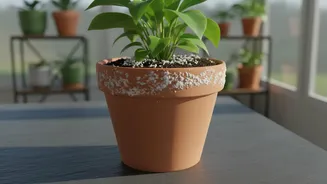
The signs of a waterlogged reservoir pot can be misleading, as they often mimic the symptoms of underwatering. Look for persistent wilting or drooping leaves, even when the reservoir is full. This happens because the damaged roots can no longer absorb water effectively. Other telltale signs include the progressive yellowing of lower leaves, stunted or slow growth, and a musty or sour smell coming from the soil. In some cases, you might see mold or fungus growing on the soil surface. If you suspect a problem, the best way to be sure is to gently remove the plant and inspect the roots directly. Healthy roots are firm and pale, while rotten roots are dark and soft.
Crafting the Perfect Lightweight Mix
The key to success with reservoir pots is a lightweight, fluffy, well-aerating soil mix. Never use soil directly from your garden, which is far too heavy and compacts easily in a container. Instead, create or purchase a mix designed for containers. The best formulas combine a base for moisture retention, like coco coir or peat moss, with an aeration component. Perlite and vermiculite are the most common additions for creating air pockets and improving drainage. A simple and effective recipe is two parts peat moss or coco coir, two parts compost, and one part perlite. This combination provides moisture, nutrients, and the crucial airflow that roots need to thrive in a self-watering system.
Rescuing a Plant from a Dense Mix
If you realize your plant is suffering in a dense, wet mix, it's time for an emergency intervention. First, stop filling the water reservoir immediately to prevent further saturation. If the soil is only moderately compacted, you can try to gently aerate it with a thin stick, creating channels for air to penetrate. However, in most cases, the best solution is to repot the plant completely. Carefully remove the plant, and if you find any dark, mushy roots, trim them away with clean scissors. Repot the plant into a fresh, lightweight, and well-aerated potting mix. For the first week or two, water from the top to encourage the new roots to establish and to help activate the wicking connection before you begin using the reservoir again.