

The Industrial Refining Process
Most cooking oils available in supermarkets are refined. This is an industrial process designed to create a product with a neutral taste, a long shelf life, and a high smoke point. It typically involves several stages. First, the oil is extracted from
the seeds, often using chemical solvents like hexane, a petroleum byproduct, to maximize yield. Following this, the crude oil undergoes a series of treatments including degumming, neutralization with alkaline substances, bleaching to lighten the colour, and finally, deodorization with high-temperature steam to remove any aroma or flavour. While efficient for mass production, this intensive process fundamentally alters the oil.
The Nutritional Cost of Refining
The high heat and chemical treatments involved in refining come at a significant nutritional cost. This harsh process strips the oil of many of the beneficial compounds naturally present in the seed. Heat-sensitive vitamins, essential minerals, and powerful plant compounds called antioxidants are significantly reduced or destroyed. The result is a 'clean' looking oil that is largely composed of fat but is devoid of the micronutrients that offer protective health benefits. Furthermore, the high temperatures can lead to the formation of undesirable compounds, including trans fats, which are known to negatively impact cardiovascular health.
The Gentle Art of the Wooden Ghani
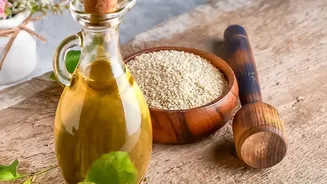
In stark contrast to industrial methods is the traditional wooden-ghani, also known as 'kachi ghani' or 'chekku' in different parts of India. This age-old technique uses a large wooden pestle that rotates slowly inside a wooden mortar to crush the seeds. This process is purely mechanical and, crucially, generates very little heat, typically keeping the temperature of the oil below 40-45°C. This low-temperature pressing is why it is called 'cold-pressed'. No chemical solvents are used for extraction, and the oil is often only lightly filtered through cloth to remove seed particles, bypassing any chemical bleaching or deodorizing.
Preserving Nature’s Goodness
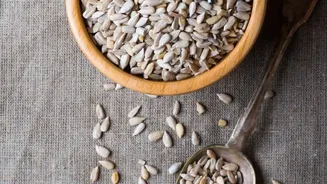
The gentle, low-heat nature of the wooden-ghani method is key to preserving the oil's nutritional integrity. By avoiding high temperatures and chemical interference, the oil retains the natural vitamins, minerals, and antioxidants from the original sesame seed. The final product is an unrefined oil that carries the authentic colour, nutty aroma, and rich flavour of sesame. This method ensures that the oil is not just a cooking medium, but a source of valuable micronutrients. Studies suggest that cold-pressed oils can retain significantly more antioxidants compared to their refined counterparts.
Sesame Oil’s Micronutrient Powerhouses
Cold-pressed sesame oil is particularly valued for its unique profile of micronutrients. It is a rich source of Vitamin E (specifically gamma-tocopherol) and Vitamin K. More importantly, it contains potent lignans—a type of antioxidant—named sesamin and sesamolin. Research has linked these compounds to a range of health benefits, including anti-inflammatory properties and the potential to support cardiovascular health by helping manage cholesterol and blood pressure levels. These powerful compounds, which protect the oil from turning rancid quickly, are largely lost during the high-heat refining process, leaving refined oil without these protective qualities.