





A New Digital Ally Against Superbugs
For decades, the pipeline for new antibiotics has been running dry, while bacteria evolve resistance at an alarming rate. This has created a global health threat where routine procedures could become life-threatening. Enter artificial intelligence. AI,
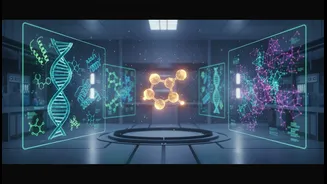
specifically machine learning and deep learning, is revolutionizing the initial stages of drug discovery. Instead of manually screening thousands of chemical compounds in a lab—a slow and expensive process—AI models can computationally assess billions of molecules in days. These algorithms are trained on vast datasets of chemical structures and their known effects on bacteria. They learn to identify the molecular features that make a compound effective, allowing them to pinpoint promising candidates with incredible speed and accuracy. Generative AI models are even designing entirely new molecules from scratch, creating potential drugs that evolution has never produced.
From Virtual Promise to Physical Proof
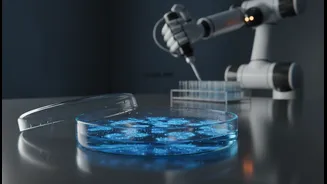
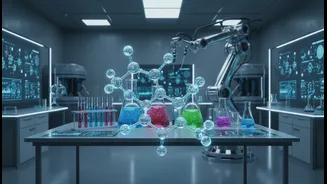
Identifying a potential antibiotic on a computer is a monumental first step, but it is far from the end of the story. A molecule that looks perfect in a simulation may be ineffective or toxic in reality. This is where the headline's call to 'follow the evidence' becomes critical. The first checkpoint is the lab bench. Scientists must synthesize the molecules proposed by the AI and test them against bacteria in petri dishes. This in-vitro testing provides the first real-world data point: does the compound actually kill the targeted pathogen? Promising candidates that emerge from this phase, like those identified for the resistant bacteria MRSA and Acinetobacter baumannii, have demonstrated the power of this AI-to-lab workflow. In some cases, AI has boosted the efficiency of identifying active compounds by a staggering amount compared to traditional screening alone.
The Challenge of the 'Black Box'
One of the key challenges with many advanced AI models is their 'black box' nature. They can make incredibly accurate predictions without always revealing how they arrived at their conclusions. In drug discovery, this is a significant hurdle. Regulators and scientists need to understand a drug's mechanism of action to ensure its safety and efficacy. Encouragingly, researchers are developing 'explainable AI' (XAI) techniques that shed light on the model's reasoning. These methods can highlight which parts of a molecule's structure the AI believes are responsible for its antibacterial activity, providing crucial insights for scientists and building confidence in the AI-generated candidates before they move toward more expensive and complex trials. This transparency is essential for bridging the gap between computational prediction and clinical trust.
The Ultimate Test: The Path to the Clinic
Even after a compound proves effective in the lab, the journey to becoming an approved medicine is long and fraught with failure. The process involves preclinical testing in animal models to evaluate efficacy and, crucially, safety. Many candidates that work in a dish fail at this stage due to unforeseen toxicity. Compounds that successfully pass preclinical hurdles can then proceed to human clinical trials, a multi-phase process that tests for safety in healthy volunteers (Phase I), efficacy in small patient groups (Phase II), and effectiveness in large-scale trials (Phase III). This rigorous, evidence-based pathway is non-negotiable. While AI can drastically shorten the initial discovery phase from years to months, it does not offer a shortcut through the essential validation required to ensure a drug is safe and effective for humans. The success of AI in medicine will be measured not by the number of molecules it discovers, but by the number of validated, approved drugs that ultimately reach patients.