






The Billion-Tonne Problem
Each harvest season, farmers across India are faced with a monumental challenge: what to do with the millions of tonnes of leftover crop residue, or stubble. With a tight window to prepare fields for the next crop, the fastest and cheapest method has
traditionally been to set it ablaze. This practice, however, comes at a severe environmental cost, releasing vast clouds of smoke and particulate matter that contribute significantly to the hazardous air quality in states like Punjab, Haryana, and the Delhi-NCR region. The environmental fallout is matched by an economic loss, as a potentially valuable resource is literally turned to ash. While government initiatives and machinery subsidies have aimed to curb the practice, the core challenge remains: finding a scalable and profitable alternative for farmers.
Nature's Ultimate Binder: What is Mycelium?
Enter mycelium, the silent engine of the fungal kingdom. Mycelium is the intricate, web-like root structure of fungi that grows beneath the soil. Think of it as a natural, self-assembling glue. This network of fine white filaments, called hyphae, spreads through organic matter, secreting enzymes to break it down and absorb nutrients. In the process, this tenacious network binds the substrate's loose particles together, forming a solid, lightweight composite material. This natural binding ability is what makes mycelium a game-changer for bio-materials. It grows quickly, requires minimal energy, and can feed on a wide range of agricultural byproducts that would otherwise be discarded.
From Farm Waste to Building Blocks
The process pioneered by Indian startups is a masterclass in circular economy principles. It begins by collecting agricultural waste like paddy straw, sugarcane bagasse, or corn stover directly from farmers. This stubble is chopped, cleaned, and sterilized to eliminate competing microorganisms. Next, it's inoculated with the spores of a specific fungal species, often from the Pleurotus (oyster mushroom) family, known for its vigorous growth. Placed in moulds of the desired shape—such as a panel or brick—the mixture is left in a controlled environment for several days. During this time, the mycelium feeds on the stubble, growing throughout the waste and binding it into a solid form. The final step involves gently heating or drying the panel to halt the fungal growth, resulting in a rigid, inert, and durable bio-composite material ready for use.
The Indian Innovators
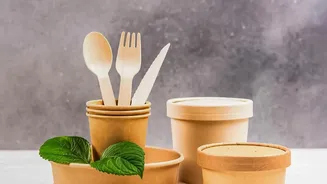
Several Indian startups are at the forefront of this movement, turning theory into tangible products. Delhi-based Dharaksha Ecosolutions, founded by Arpit Dhupar, is a notable player, converting paddy straw into biodegradable packaging material that can replace thermocol. The company procures hundreds of tonnes of stubble from farmers in Punjab and Haryana, directly tackling the hotspots of crop burning. Other innovators like GreenJams create carbon-negative building bricks from crop residues. Companies such as Roha Biotech and ReshaCelium are also developing a range of mycelium composites, from packaging to insulation, by upcycling agricultural waste. These companies aren't just creating a product; they are building a new supply chain that gives economic value to farm stubble, incentivizing farmers to collect it rather than burn it.
Performance Beyond Sustainability
Mycelium insulation is not just an eco-friendly novelty; it's a high-performance material. Its dense network of fibres gives it excellent thermal and acoustic insulation properties, comparable to traditional materials like XPS foam. This can significantly reduce a building's energy needs for heating and cooling. Furthermore, these panels are naturally fire-resistant, moisture-resistant, and non-toxic, with no volatile organic compounds (VOCs) that are common in synthetic insulators. At the end of its life, a mycelium panel doesn't end up in a landfill for centuries. Instead, it can be broken up and returned to the earth as compost, completing its natural cycle.