



A Perfect Balance of Flavor
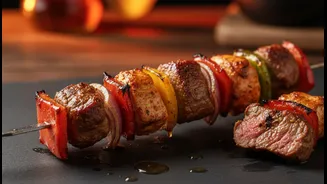
At its heart, the magic of pairing kebabs with chutney lies in the science of taste. Kebabs, especially those grilled over charcoal, are rich, fatty, and packed with umami. The smoke itself imparts complex phenolic compounds that our senses register as deeply
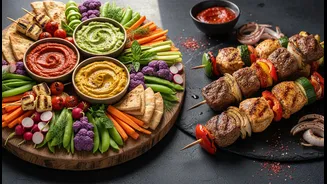
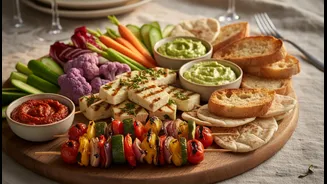
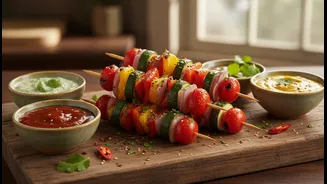
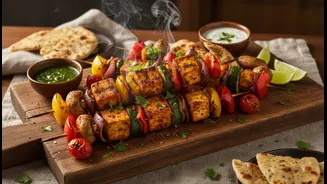
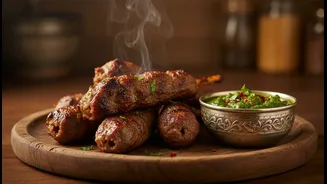
savoury. But richness without a counterpoint can be overwhelming. This is where chutney comes in. Chutneys, with their base of fruit, herbs, or vegetables, provide the essential acid, sweetness, or spicy heat needed to cut through the fat. A classic mint and coriander chutney, for example, uses the sharp freshness of herbs and the tang of lemon to cleanse the palate, making each bite of the rich kebab as satisfying as the first. This contrast isn't just delicious; it’s a fundamental principle of great cuisine: creating a balanced experience that keeps you coming back for more.
A Tale of Two Histories
The story of kebabs and chutneys is also the story of India's composite culture. Kebabs, in their modern form, are largely traced back to the influence of Persian, Turkish, and Central Asian culinary traditions that arrived in India and flourished under the Delhi Sultanate and later the Mughal Empire. Cooks in royal kitchens refined the rustic tradition of grilling meat on swords into an art form, introducing sophisticated marinades with yoghurt and spices, and pioneering slow-cooking methods. Chutneys, however, have a much older, indigenous history on the subcontinent, a way of preserving seasonal produce and enhancing meals with a burst of flavour. The fusion of the two represents a beautiful culinary dialogue: the immigrant kebab meeting the native chutney, creating a pairing that is now quintessentially Indian.
The Art of Smoke
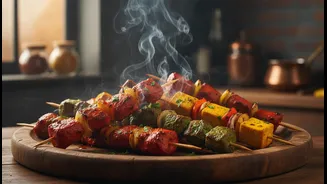
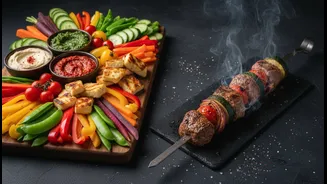
The 'smoky' aspect of the kebab is no small detail. It is a flavour element deliberately and skillfully applied. Many traditional kebabs are cooked in a tandoor or over a sigri (open charcoal grill), which imparts a natural, unmissable char and smokiness. But another layer of artistry comes from the ancient dhungar technique. This method involves placing a piece of hot charcoal in a small bowl, pouring ghee over it to create an aromatic smoke, and trapping this smoke with the cooked food for a short period. This technique, introduced during the Mughal era, doesn't cook the food but perfumes it, adding a final, ethereal layer of buttery smoke that infuses into the fat of the meat, elevating a simple grilled dish into something truly special.
A Journey Across Regional Pairings
India’s true culinary genius is revealed in its regional diversity, and the kebab-chutney story is no exception. Each region tells this tale with its own unique accent. In Lucknow, the home of delicate Awadhi cuisine, the legendary Galouti kebab, so soft it melts in the mouth, is often paired with a subtly spiced mint chutney that complements, rather than overpowers, its complexity. In Hyderabad, with its bolder flavours, you might find a robust boti kebab served with a tangy tamarind chutney to stand up to its spice. The tandoori traditions of Punjab give us firm, boldly spiced kebabs that are perfectly matched with a cooling yoghurt-based raita or a sharp, onion-heavy chutney. Down south, coastal regions might pair grilled seafood kebabs with a chutney that incorporates coconut and curry leaves. Each pairing is a reflection of local ingredients and tastes.
More Than Just an Accompaniment
It’s easy to dismiss the chutney as a mere side dish, but that would be missing the point entirely. A great chutney doesn’t just sit next to the kebab; it completes it. It is the bright, acidic, or sweet counter-narrative to the smoky, fatty, and savoury hero. Think of a spicy garlic chutney that adds a fiery kick to a milder Reshmi kebab, or a sweet and sour tamarind chutney that brings out the underlying spices in a lamb seekh. The chutney provides textural contrast, flavour balance, and a final flourish that elevates the entire experience from simply eating to true dining. It is the indispensable partner that helps tell the whole story.