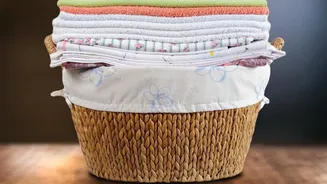








There's nothing more frustrating than opening a box of seasonal clothes only to be hit by a wave of musty odour. That stale 'storage smell' is a common problem, but it isn't inevitable. Your path to fresh, ready-to-wear garments starts here.
The Science of Stale Smells
Before you
can win the battle, you must understand the enemy. That musty smell is primarily caused by two things: moisture and bacteria. When clothes are stored in a dark, enclosed space with limited airflow, even a tiny amount of dampness can create an ideal breeding ground for mildew and mould. These microscopic fungi release gasses that produce the tell-tale stale odour. Invisible residues like body oils, sweat, and food particles left on seemingly clean clothes can also feed this bacterial growth over time, worsening the problem. Therefore, effective storage is all about controlling moisture and starting with a truly clean slate.
The Most Important Step: Prep Your Clothes
Your choice of container is important, but it can't perform miracles. The most critical step happens before anything gets packed away. Every single item must be thoroughly cleaned and, just as importantly, completely dry. Wash or dry-clean all garments according to their care labels to remove dirt and body oils that attract pests and fuel odours. Pay extra attention to cuffs, collars, and underarm areas. After cleaning, ensure everything is bone-dry. Thicker items like sweaters and jeans can feel dry on the surface while still holding moisture deep within their fibres. It's wise to let them air out for an extra 24 hours after laundering before you even think about packing them. Storing even slightly damp clothing is a guaranteed recipe for mustiness.
Container Showdown: Airtight vs. Breathable
When it comes to containers, there are two main schools of thought: airtight and breathable. Airtight plastic bins with secure, latching lids are excellent for protecting clothes from external threats like water, dust, and pests. This makes them ideal for storage in potentially damp areas like basements or garages. However, their downside is that they also trap any moisture that's already inside. Breathable containers, such as those made from canvas, linen, or organic cotton, allow for air circulation. This constant airflow helps any residual moisture escape, which is great for preventing mustiness from developing inside the container. The trade-off is that they offer less protection from external humidity and pests. Your choice depends entirely on your storage environment.
The Case for Plastic Bins
If you need maximum protection from the outside world, choose high_quality, clear plastic bins with gasket_sealed lids. The airtight seal is your best defence in a humid climate or less_than_ideal storage space. The clear design allows you to see the contents without having to unstack and open every box. To mitigate the risk of trapping moisture, make sure your clothes are perfectly dry and consider adding a desiccant, like silica gel packets, inside the bin to absorb any ambient humidity that gets sealed in with your garments. This combination gives you the best of both worlds: external protection and internal dryness.
When to Choose Fabric Bags and Bins
If you're storing clothes inside your home in a climate_controlled, dry space like a closet or under a bed, breathable fabric containers are an excellent option. Natural fibres like wool and silk in particular benefit from the airflow that fabric bags provide. Look for containers made from canvas, cotton, or linen. These materials protect your clothes from dust while allowing them to breathe, significantly reducing the risk of stale smells. However, be aware that fabric offers minimal protection against pests or a major water leak, so they are only suitable for clean, dry indoor environments.
A Word on Vacuum_Sealed Bags
Vacuum_sealed bags are fantastic space_savers, reducing the volume of bulky items like sweaters and jackets by up to 80%. They also offer complete protection from moisture and dust. However, they should be used with caution for long_term storage. The intense compression can cause deep_set wrinkles and may damage the structure of delicate or natural fibres like wool and down, which need to breathe to maintain their loft. These bags are best reserved for short_to_medium_term storage of durable, synthetic items or for travel. Never store items for more than one season in a vacuum bag.
Add a Natural Freshener
For an extra layer of protection, tuck a natural odour_absorber and pest_repellent into your storage containers. Cedar blocks or balls are a classic choice ; they absorb moisture and their scent naturally deters moths. Sachets filled with dried lavender can also lend a pleasant , subtle fragrance to your clothes while helping to repel insects. For pure odour absorption without adding a scent , consider using activated charcoal packets or even an open box of baking soda in the storage area. These items help maintain a fresh environment inside the container.