






The Unseen Forces Shaping Your Dinner
Public health campaigns frequently urge citizens to choose fruits, vegetables, and whole grains. Yet, these well-meaning initiatives often overlook a fundamental truth: for many Indians, choice is a luxury they cannot afford. The problem isn't a lack
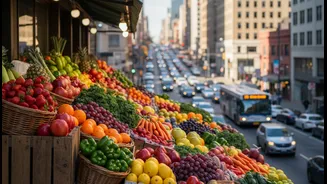
of desire for healthy food, but a lack of access. This gap is not accidental; it is a direct consequence of urban planning and economic pressures. The concept of a 'food desert'—an area with limited access to affordable and nutritious food—is not just a foreign problem. In India, it manifests as urban neighbourhoods where fresh produce is scarce and expensive, while processed, unhealthy options are plentiful and cheap. This is often compounded by 'food swamps', where fast-food outlets and convenience stores saturate an area, making unhealthy choices the easiest ones.
When Rent Pushes Out Vegetables
The single biggest factor shaping local food environments is often the cost of commercial real estate. High street rents in major Indian cities have surged, making it difficult for businesses with low profit margins to survive. A small, independent grocer selling fresh vegetables operates on thin margins and is highly sensitive to spoilage. In contrast, a fast-food franchise or a store selling packaged snacks has a longer shelf life and higher profit per square foot. As rents rise, they squeeze out the very businesses that communities need for a healthy diet. For large-format stores, rent can account for 6-8% of total sales, a significant overhead that must be covered. This economic pressure means that in many prime urban and even suburban locations, the business case for selling chips is simply stronger than the one for selling bhindi.
The Last-Mile Hurdle for Fresh Food
Even when fresh produce is available, getting it to the consumer is a major challenge. India’s supply chain for fresh fruits and vegetables is notoriously inefficient, with significant losses due to poor infrastructure, lack of cold storage, and fragmented transport networks. Roughly one-third of fresh produce is wasted before it even reaches a consumer's plate. The final leg of this journey, the 'last mile' to your local shop or doorstep, is the most expensive part of the logistics chain, accounting for over half of the total shipping cost. Delivering perishable goods that require temperature control, like dairy and many vegetables, can cost significantly more than standard parcels. In a price-sensitive market like India, these high logistics costs are inevitably passed on to the consumer, making fresh, healthy food an expensive proposition.
Policies That Miss the Point
Current government policies, while ambitious, often fail to connect these dots. Programs like the Public Distribution System (PDS) and PM POSHAN are crucial for food security, focusing on providing subsidised grains and school meals. These are vital safety nets against hunger. However, they primarily address calorie availability rather than nutritional diversity. Other initiatives focus on awareness campaigns or food fortification, adding micronutrients to staples. While beneficial, these approaches do not fundamentally alter the food environment. They don't make it easier for a family to buy fresh vegetables if the nearest sabzi wala has been replaced by a convenience store, or if the cost of those vegetables is inflated by a broken supply chain. Simply telling people to eat better is ineffective when the system makes it difficult and expensive to do so.
A More Grounded Approach to Health
A truly effective healthy-diet policy must be an economic and urban planning policy first. It means looking at zoning laws to see how we can incentivise or protect space for fresh food vendors in high-rent areas. It could involve creating tax incentives for landlords who lease to grocers instead of fast-food chains. We need greater investment in farm-to-market infrastructure, particularly cold chains and rural roads, to reduce spoilage and cost. Supporting urban agriculture initiatives, from rooftop gardens to community farms, can also help shorten supply chains and increase local availability. The rise of quick-commerce delivery apps shows that logistics can be solved, but their current model is built around high-value, small-basket orders, which remains expensive. Policy could help create a model that makes delivering fresh, affordable produce just as viable.