




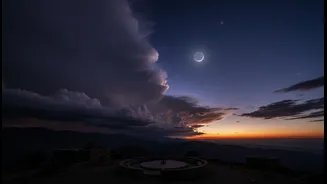
The Moon: A Beautiful Spoiler
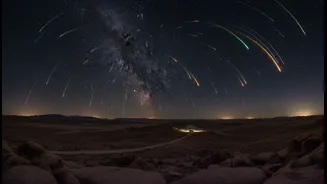
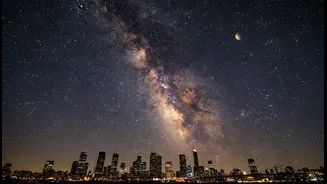
The Moon doesn't produce its own light; it reflects sunlight. When it’s full, it’s incredibly bright—so bright that it creates a natural form of light pollution. This 'sky glow' washes out fainter objects, dramatically reducing the number of stars you
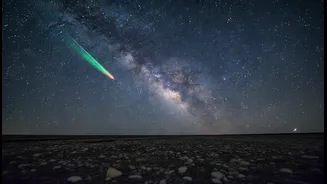
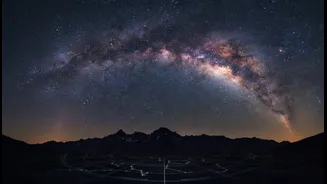
can see. On a dark, moonless night, you might spot around 3,000 stars with the naked eye, but during a full moon, that number can plummet to just 300. Faint wonders like the Milky Way, distant galaxies, and nebulae become nearly invisible. The bright light also prevents your eyes from fully 'dark-adapting', which is the process that allows them to become more sensitive in low light. Even a quick glance at the bright moon can reset this process, which takes about 20-30 minutes.
Your Guide to Moon Phases for Stargazing
The Moon's 29.5-day cycle is the key to your planning. The best time for stargazing is always around the New Moon. This is when the moon is positioned between the Earth and the Sun, making it invisible in our sky and ensuring the darkest possible conditions. The few days before and after the new moon are also excellent.
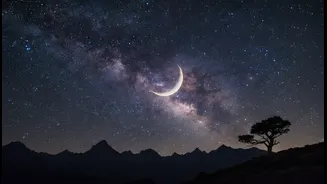
A Waxing or Waning Crescent moon, when only a sliver is lit, provides a great compromise. It offers a largely dark sky for most of the night, as the moon sets early or rises late. Quarter moons present a trade-off; half the moon is lit, so you can plan your stargazing for the hours when the moon is below the horizon. The phases to avoid for deep-sky viewing are Waxing Gibbous and, especially, the Full Moon, when the sky is brightest.
What if You Must Travel During a Full Moon?
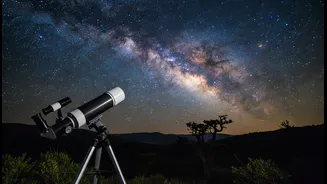
Don't cancel your trip just because the moon will be full. While faint stars and the Milky Way will be off the table, a full moon night offers its own unique attractions. First, the Moon itself becomes the main event. With a pair of binoculars or a small telescope, its fully illuminated surface reveals stunning detail, including its vast 'seas' (dark basaltic plains) and bright ray systems radiating from craters like Tycho and Copernicus.
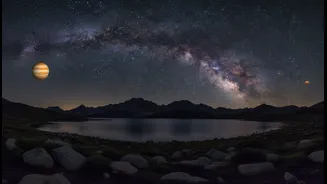
Bright planets such as Jupiter and Saturn remain excellent targets and are largely unaffected by moonlight. You can also focus on bright star clusters like the Pleiades and the most prominent constellations. A full moon is also perfect for a moonlit walk, where the landscape is bathed in a soft, ethereal glow.
Planning Your Perfect Night-Sky Adventure
Once you have the moon phase sorted, other factors come into play. Your location is critical. To truly escape light pollution, consider a trip to a designated dark-sky location. In India, places like the Rann of Kutch in Gujarat, high-altitude areas in Ladakh and Uttarakhand, and Astroport Sariska in Rajasthan offer incredibly dark and clear skies.
Several digital tools can make planning effortless. Apps like SkyView, Star Walk, and Stellarium provide detailed moon phase calendars, moonrise/moonset times, and interactive star maps. This allows you to see exactly when and where the moon will be, helping you schedule your viewing window perfectly. Remember to also check the weather forecast for cloud cover. A new moon won't help if the sky is hidden by clouds.