








Meet the Internet's Newest Star
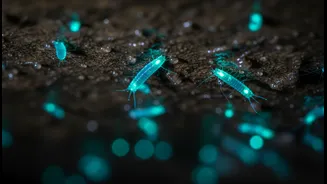
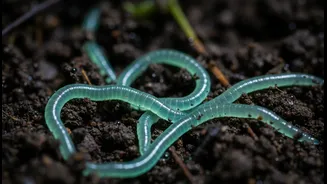
They’re being shared in mesmerising videos and photos, often showing what looks like a starry night sky, but underground. These are glow-worms, and while the term is used for various glowing insects, the ones likely filling your feeds are a species called
Arachnocampa luminosa, found exclusively in New Zealand. Despite the name, they aren't actually worms. They are the larvae, or maggot stage, of a small flying insect called a fungus gnat. The larval stage can last for up to a year, which is when they produce their famous glow. The adult fungus gnats, by contrast, live for only a few days, with just enough time to mate and lay eggs before their life cycle ends.
The Science Behind the Spectacle
The magical glow is a natural phenomenon called bioluminescence, a chemical reaction that produces 'cold light' within a living organism. The glow-worm produces this blue-green light in a special organ in its tail. The chemical process involves a substance called luciferin and an enzyme called luciferase, which react with oxygen to create light without generating heat. But this stunning light show has a deadly purpose. The glow is a hunting mechanism. Small flying insects, like mosquitoes and moths, are drawn to the light, mistaking it for the stars they use to navigate.
A Web of Deception
Once an insect is lured in by the light, it gets trapped in a series of sticky silk threads, or 'snares', that the glow-worm hangs from its nest on a cave ceiling or damp bank. These snares, which can look like a beaded curtain, are coated in mucus. When prey gets stuck, the vibrations alert the glow-worm, which then reels in the thread like a fishing line and consumes its catch. The hungrier the larva, the brighter it glows. This intricate and slightly gruesome method of hunting is what allows the larva to eat enough to sustain it through its entire life cycle, as the adult fly has no working mouthparts and cannot feed.
From Dark Caves to Bright Screens
These creatures thrive in dark, damp, and sheltered environments with high humidity, which is why caves like the famous Waitomo Caves in New Zealand are perfect habitats. For over a century, tourists have floated through these caves to witness the spectacle. So why the sudden viral fame? The rise of high-quality smartphone cameras and the shareable nature of short-form video on platforms like TikTok and Instagram have allowed this remote natural wonder to be broadcast globally. Stunning visuals of tourists gliding under a ceiling of thousands of lights create perfect fodder for viral content, bringing the otherworldly beauty of these caves directly into our digital lives and, inevitably, our group chats.