


The Starlight Sieve Technique
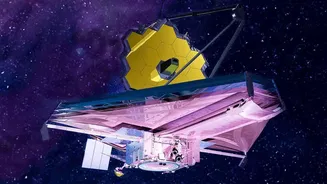
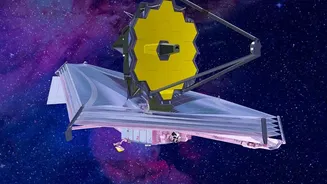
To find water on a planet hundreds of light-years away, scientists need to be clever. They can’t visit, so they rely on the light from the planet's parent star. The primary method used by the JWST is called transmission spectroscopy. It sounds complex,
but the concept is quite elegant. When an exoplanet passes in front of its star from our point of view—an event called a transit—a tiny fraction of the starlight filters through the planet's atmosphere. This atmosphere acts like a sieve, absorbing some of the light. By precisely measuring the starlight before and during the transit, astronomers can figure out exactly what was absorbed by the planet's atmosphere.
An Atmospheric Barcode
Different gases absorb light at very specific colours, or wavelengths. Think of it like a unique barcode for every molecule. Water vapour, for example, has a very distinct absorption pattern in the infrared part of the spectrum. The JWST is specifically designed to be incredibly sensitive to this infrared light. When starlight passes through a watery atmosphere, the water molecules trap certain infrared wavelengths. This leaves a tell-tale gap in the light that reaches the telescope's detectors. By analysing this 'barcode,' scientists can confidently say they have detected water vapour. The more light the telescope gathers, the more detailed this barcode becomes, allowing for a more confident identification.
Why Webb Is a Game-Changer
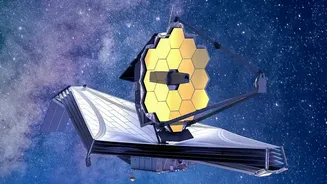
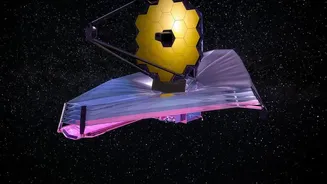
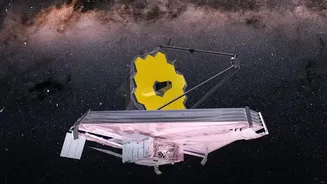
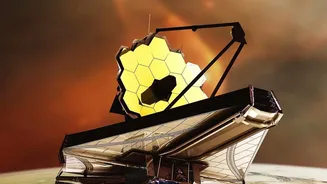
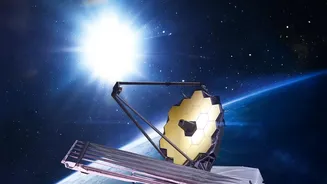
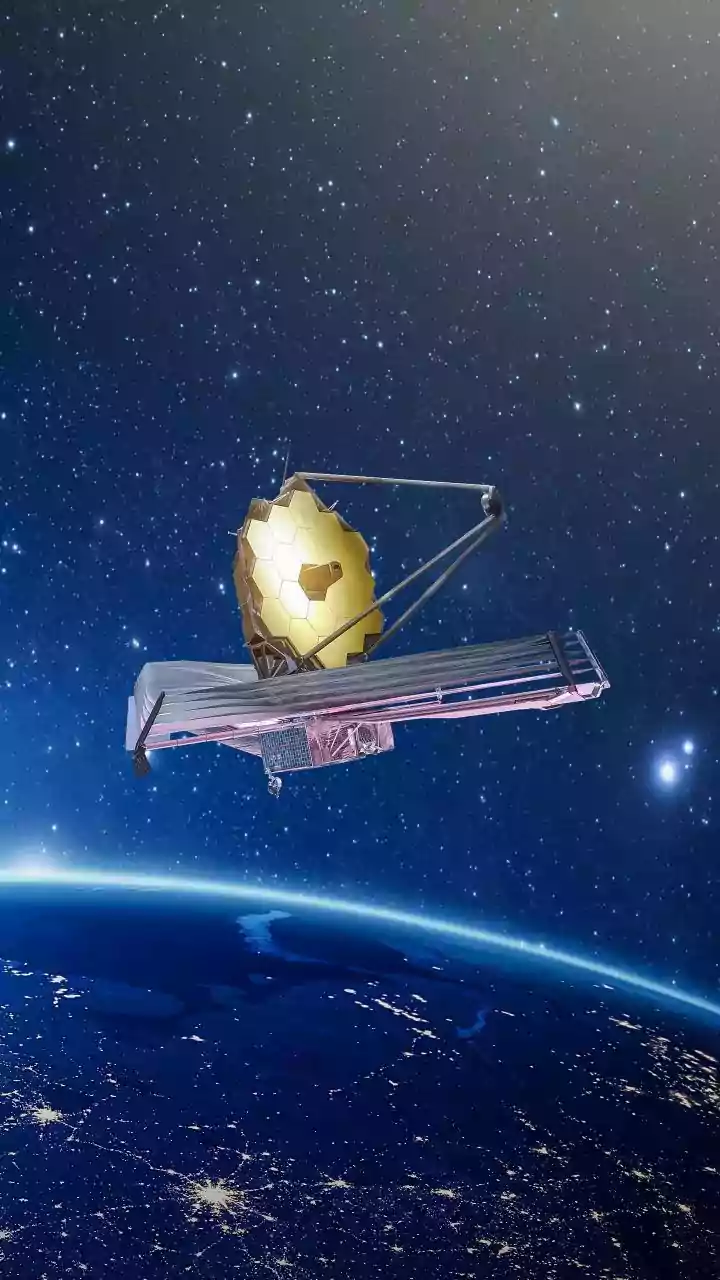
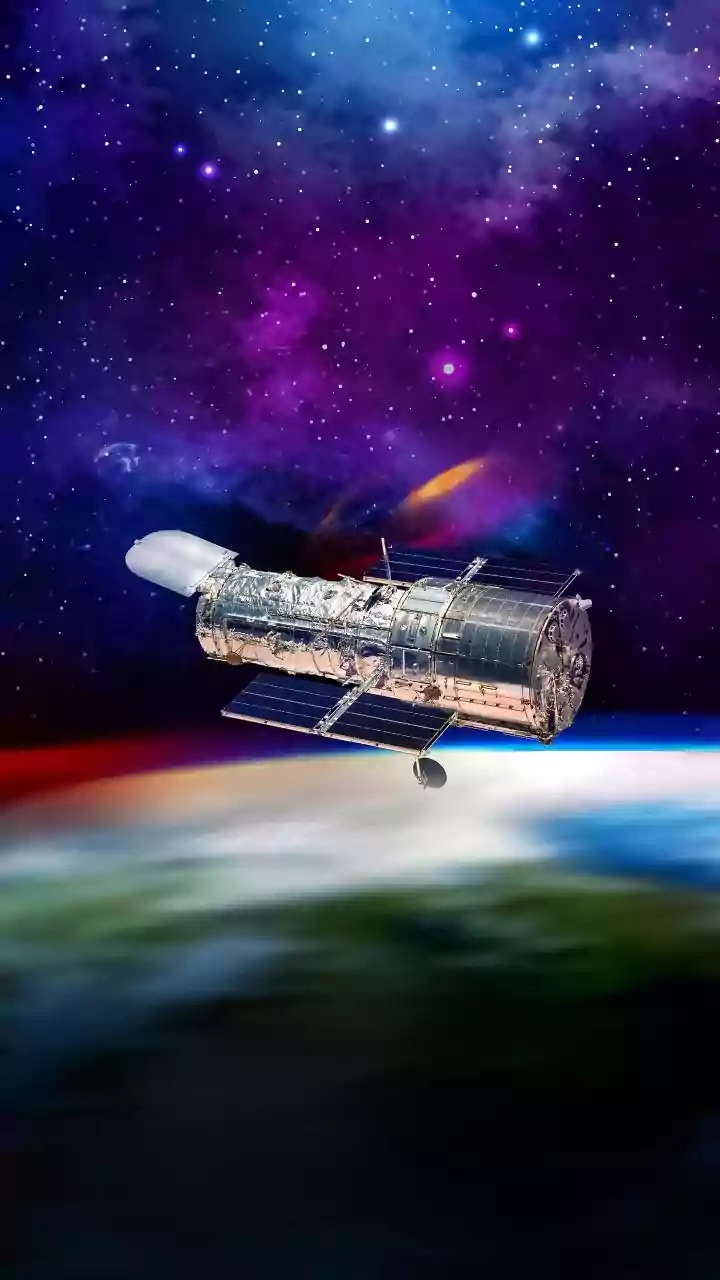
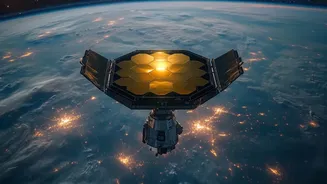
While the Hubble Space Telescope first detected water on an exoplanet, the JWST has revolutionized the field. Its massive 6.5-metre primary mirror collects far more light than Hubble's 2.4-metre mirror, allowing it to see much fainter signals with greater precision. More importantly, its suite of advanced instruments, like the Near-Infrared Spectrograph (NIRSpec) and the Mid-Infrared Instrument (MIRI), are tuned to the exact infrared wavelengths where molecules like water, methane, and carbon dioxide leave their strongest signatures. This allows JWST not just to detect these molecules but to begin to quantify them, something that was incredibly difficult before.
From Detection to Characterization
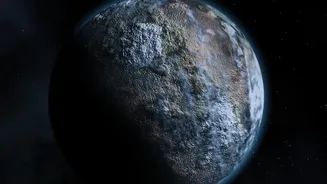
Finding water is just the first step. The power of JWST's instruments lies in their ability to move beyond simple detection to detailed characterization. The strength of the water signal can tell scientists about its abundance in the atmosphere. Is it a trace amount, or is the atmosphere saturated with vapour? Recent discoveries, like the detection of water vapour on planets such as K2-18b or WASP-80 b, showcase this capability. On K2-18b, a candidate 'Hycean' (hydrogen-rich, ocean-covered) world, the data suggests a planet potentially covered by a massive ocean under a hydrogen-rich atmosphere. However, scientists are careful. On another rocky planet, GJ 486 b, they detected water vapour but are still working to determine if it belongs to the planet or its cool star, which can also host water in its starspots. This demonstrates the complexity and rigour of the scientific process.
The Search for Habitable Worlds
Ultimately, the detection of water vapour is a critical piece of a much larger puzzle: assessing an exoplanet's potential habitability. Finding water vapour in the atmosphere of a rocky planet located in its star's 'habitable zone'—the region where temperatures could allow for liquid water on the surface—is a major milestone. It doesn't guarantee life, but it confirms the presence of a key ingredient. The JWST's scans help scientists build a complete picture of a planet's environment, including its temperature, other atmospheric gases, and the potential for clouds. These detailed atmospheric portraits are transforming our understanding of how planets form and evolve, bringing us closer than ever to answering the question of whether we are alone in the universe.