





An Annual Agricultural Rush
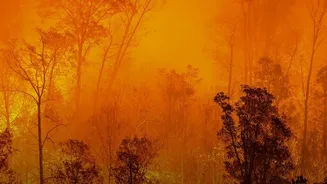
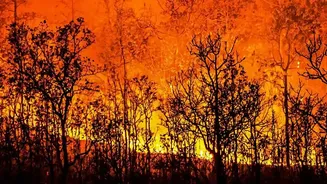
The smoke that chokes North India each year is largely a result of a tight agricultural schedule. Researchers point out that farmers in Punjab and Haryana have a very short window—often just 10 to 20 days—between harvesting their paddy (rice) crop and sowing
the next wheat crop. Burning the leftover rice stubble is the fastest and cheapest way to clear the fields. This practice became widespread with mechanised harvesting, which leaves behind taller stalks than manual methods. Legislation designed to conserve groundwater, such as Punjab's 2009 Subsoil Water Act, also inadvertently shortened this window by pushing the paddy sowing date later into the monsoon season.
The Toxic Cocktail in the Air
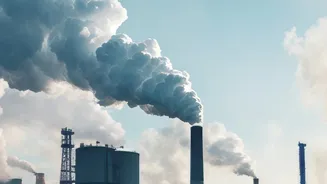
Scientific analysis of stubble smoke reveals a dangerous mix of pollutants. The most concerning is fine particulate matter, or PM2.5, tiny particles that can lodge deep in the lungs and enter the bloodstream. Beyond particulates, the smoke carries carbon monoxide, methane, and various volatile organic compounds. During peak burning season, studies have shown that agricultural fires can contribute significantly to Delhi's hazardous air quality, with some estimates suggesting its share of PM2.5 can range from 30% to as high as 78% on specific days, depending on fire intensity and wind patterns. This turns an existing urban pollution problem into a regional public health emergency.
Staggering Health and Economic Costs
The consequences of this seasonal smoke are severe. A study by the International Food Policy Research Institute (IFPRI) linked intense crop burning to a threefold increase in acute respiratory infections (ARI), particularly among young children. The study also estimated the annual economic loss from health costs and lost productivity in Punjab, Haryana, and Delhi to be around $35 billion. Another study attributed between 44,000 and 98,000 premature deaths annually to PM2.5 exposure from crop burning. Researchers are clear that the first victims are not just city dwellers, but the rural populations in and around the areas where the burning occurs.
The Search for Workable Solutions
Researchers are actively studying a range of solutions. One category is 'in-situ' management, where the stubble is incorporated into the soil. Subsidised machinery like the Happy Seeder and Super Seeder helps farmers sow wheat without needing to burn the residue first. Another approach is 'ex-situ' management, which involves removing the stubble to be used in biomass power plants or for ethanol production. However, logistical challenges and creating a stable market for the residue remain hurdles. Research has also shown that direct cash incentives, or Payments for Ecosystem Services (PES), can be effective, with one study finding that partial upfront payments reduced crop burning by 10 percentage points.
The Promise of Bio-Decomposers
A more recent innovation gaining attention is the Pusa bio-decomposer, a fungal solution developed by the Indian Agricultural Research Institute (IARI). When sprayed on fields, this solution can break down stubble into manure in about 20-25 days. Research trials have shown promising results, indicating it can achieve 70-80% decomposition rates while improving soil organic carbon. The technology is cost-effective, with an implementation cost far outweighed by benefits like improved soil fertility. However, experts note that challenges remain in scaling it up, primarily related to farmer awareness and a lack of on-ground technical support.