




Why Premium Isn't Standard
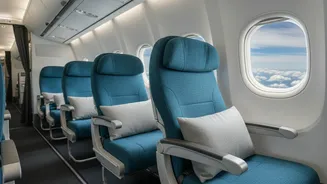
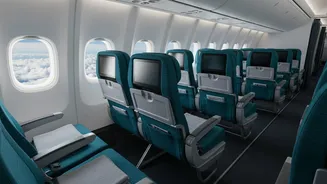
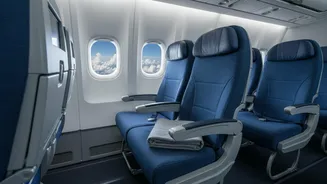
Premium Economy is one of the best things to happen to long-haul travel, offering a welcome compromise between the luxury of Business Class and the affordability of Economy. You get more legroom, a wider seat, better recline, and an enhanced meal service.
However, there is no global standard for what a Premium Economy cabin must offer. The experience can differ significantly not just between airlines, but also on different aircraft within the same airline’s fleet. An airline might use a Boeing 787 on a route one day and an Airbus A350 the next, each with a completely different seat layout. This is why a few minutes spent studying the seat map can be the most valuable part of your travel planning.
The 2-3-2 vs. 2-4-2 Puzzle
The most common difference you'll encounter on wide-body jets is the configuration, denoted by numbers like '2-4-2'. This refers to the number of seats in each block across a single row. A 2-3-2 layout, common on aircraft like the Boeing 787 Dreamliner, is generally preferred. In this setup, there's only one middle seat in the entire row. However, many newer aircraft, including the Airbus A350s used by airlines like Air India, feature a 2-4-2 configuration. This layout introduces two middle seats in the center block, which could mean a less-than-premium experience if you end up in one. Pairs travelling together often favour the '2' sections on either side for privacy.
The Bulkhead Dilemma
Seats in the first row of a cabin, known as bulkhead seats, are often a topic of debate. The primary advantage is clear: no one can recline their seat into your space, and you often get more legroom to stretch out. This can make it easier to get up without disturbing your neighbour. However, there are downsides. Bulkhead seats often have immovable armrests because that's where the tray table and entertainment screen are stored, which can make the seat feel slightly narrower. You also won't have any under-seat storage for your personal items during takeoff and landing. For some, especially those with infants, the bassinet attachment points at the bulkhead are a key feature; for others, it means a higher chance of being seated near a baby.
Location, Location, Location
Beyond the basic layout, a seat's position relative to other parts of the cabin is crucial. Seats near the galley (kitchen) or lavatories are subject to constant foot traffic, noise, and light, which can be disruptive, especially on an overnight flight. An aisle seat offers the freedom to get up whenever you like, but you may be bumped by service carts or fellow passengers. A window seat provides a view and a surface to lean on while sleeping, but you’ll have to ask your neighbours to move every time you want to stretch your legs. Seats in the last row of the cabin might have limited recline, so it pays to check before selecting.
How to Become Your Own Expert
Thankfully, you don’t have to guess. Websites like SeatGuru and AeroLOPA provide detailed seat maps for most airlines and aircraft. When you book your flight, find out the exact aircraft type you'll be on (e.g., Boeing 777-300ER, Airbus A350-900). Then, use these tools to look up the seat map. They use a colour-coded system to highlight the best seats (green), seats with some issues to be aware of (yellow), and the ones to avoid (red). Hovering over a seat can give you specific details, such as limited recline, proximity to a galley, or a misaligned window. Even if an airline auto-assigns you a seat, it’s always worth checking the map to see if a better option is available.