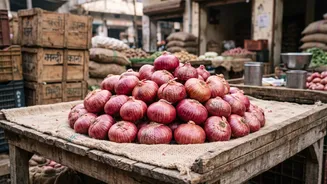






The Unquestionable Base of Indian Cooking
From the sizzling tadka for a pot of dal to the rich, slow-cooked base of a mutton curry or the simple goodness of a mixed sabzi, the onion is the unsung hero. It is nearly impossible to imagine Indian cuisine without its pungent flavour and thickening
prowess. This is precisely why its price is so politically and economically sensitive. It’s not a luxury item that can be easily substituted; it is a daily necessity. When onion prices surge, it’s not just an inconvenience—it directly impacts the household budget, forcing families to either spend significantly more on their food or compromise on the taste and texture of their everyday meals. India is the world's second-largest producer of onions, yet this staple often feels like a volatile commodity, with its price swings making headlines and causing widespread concern.
The Volatile Journey to Your Kitchen
The journey of an onion from a farm in Maharashtra or Karnataka to a kitchen in Delhi or Kolkata is fraught with uncertainty. The price you pay is a culmination of several factors. First is the weather. The monsoon's performance is critical; delayed or excessive rains can damage crops, leading to a drop in supply. For example, recent price hikes have been linked to a decline in production estimates and delayed Kharif crop arrivals due to poor rainfall earlier in the year. Second, the supply chain is notoriously inefficient. With multiple intermediaries or 'middlemen' between the farmer and the consumer, costs are added at every stage. Inadequate storage infrastructure, especially the lack of scientific cold storage, leads to significant spoilage, further squeezing supply and pushing prices up.
The Ripple Effect on Your Plate
So, how much does a price hike actually affect your meal? According to analysis by Crisil, the impact is significant. A recent report from September 2026 showed that a sharp, 89% year-on-year increase in onion prices was a major driver behind a 10% rise in the cost of a home-cooked vegetarian thali. On a monthly basis, a 34% jump in onion prices contributed to a 4% increase in the thali's cost. When prices soar, even buying one kilogram of onions can consume a huge portion of a household's weekly vegetable budget. This forces difficult choices: using onions sparingly, finding less effective substitutes, or simply absorbing the higher cost, which strains the budgets of middle-class and low-income families the most.
Government's Delicate Balancing Act
Given its impact on inflation and public sentiment, the government frequently intervenes in the onion market. These measures are a delicate balancing act. To control soaring retail prices, the government might release onions from its buffer stocks, often at subsidised rates. Recently, the government has used special trains and trucks to rush supplies to major cities to cool down prices. Another tool is trade policy. The government can ban exports or impose a Minimum Export Price (MEP) to ensure enough supply remains within the country. However, these interventions can sometimes have unintended consequences, affecting farmer incomes or failing to make a significant dent in market rates if the structural issues of storage and distribution are not addressed.