
A Deluge of Cosmic Data
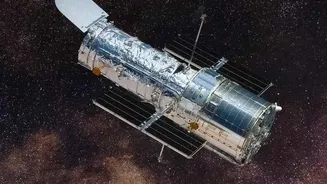
Modern astronomy faces a paradox of its own success. Telescopes like the Hubble Space Telescope have been gathering data for over three decades, creating archives with hundreds of millions of images. Upcoming projects like the Vera C. Rubin Observatory
are expected to generate petabytes of data, far exceeding what human experts can manually inspect. For years, a significant portion of this data remained unanalysed, not for lack of interest, but due to the sheer impossibility of the task. Just as a business might struggle with unmanageable inventory, astronomy was struggling with an unmanageable universe of information. This data overload created a critical need for a new kind of assistant, one that could work tirelessly, see patterns invisible to the human eye, and never get bored.
AI as the Ultimate Pattern Spotter
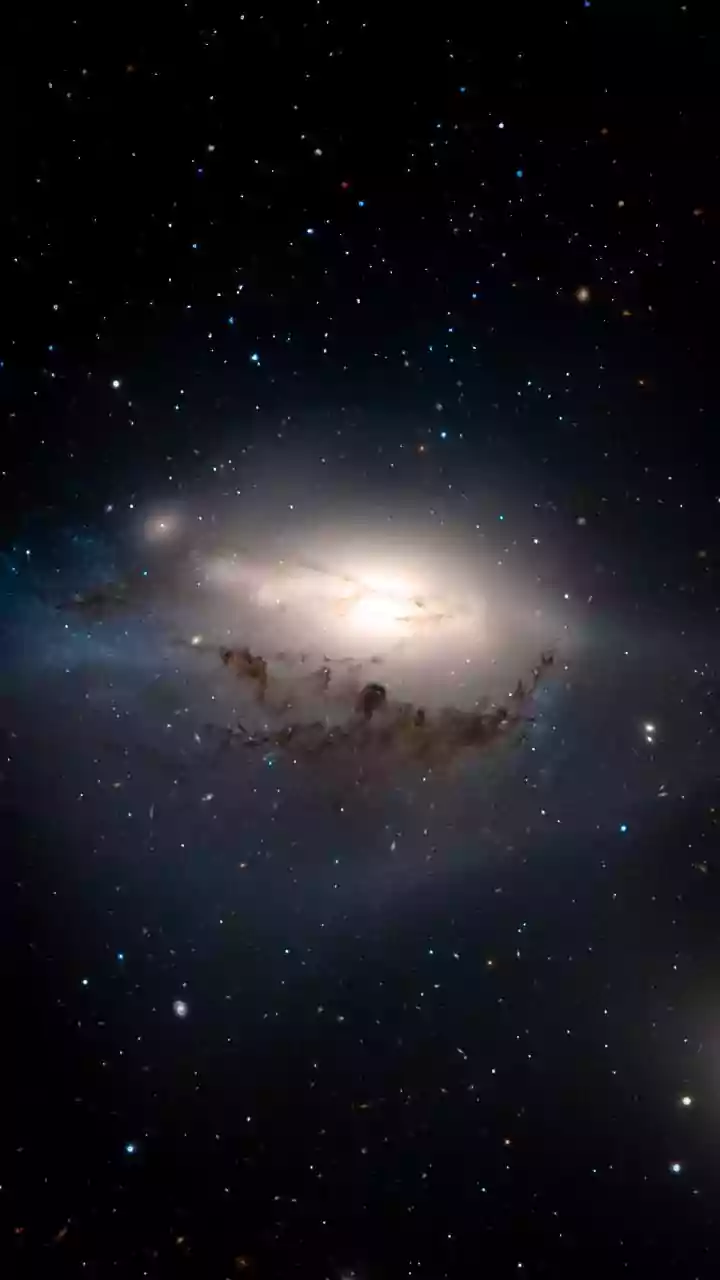
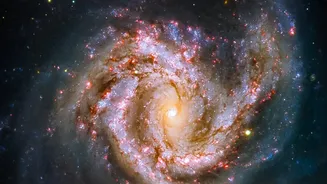
This is where artificial intelligence, specifically machine learning and neural networks, enters the picture. Think of these AI models as expert pattern-spotters. Instead of being explicitly programmed for every task, they are 'trained' on vast datasets. For example, by showing an AI millions of images of known galaxies, it learns to recognise the features of a spiral galaxy versus an elliptical one with incredible accuracy. But their true power lies in their ability to do this at an inhuman scale and speed. An AI can scan millions of image cutouts from an archive in a matter of days, a task that would take a team of scientists a lifetime. It’s the difference between asking one person to find a friend in a stadium photo and asking an AI to find every single person wearing a red hat in every photo ever taken of that stadium, instantly.
Finding Needles in Cosmic Haystacks
One of the most direct applications of AI is finding known, but rare or faint, objects. AI tools are now used to find exoplanets by detecting the minuscule dip in a star's light as a planet passes in front of it. One such AI, named RAVEN, recently confirmed over 100 exoplanets, including 31 entirely new worlds, by analysing data from NASA's TESS mission. Others are used to classify different types of supernovae or asteroids. An algorithm called THOR, for instance, connected faint points of light across massive telescope archives to identify them as the same moving objects, leading to the discovery of over 27,000 new asteroids in one year alone. These are objects the data for which often already existed, but the connections were missed by human eyes.
Discovering the 'Unknown Unknowns'
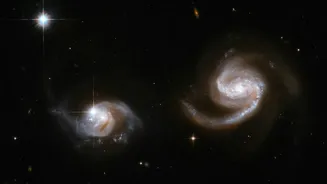
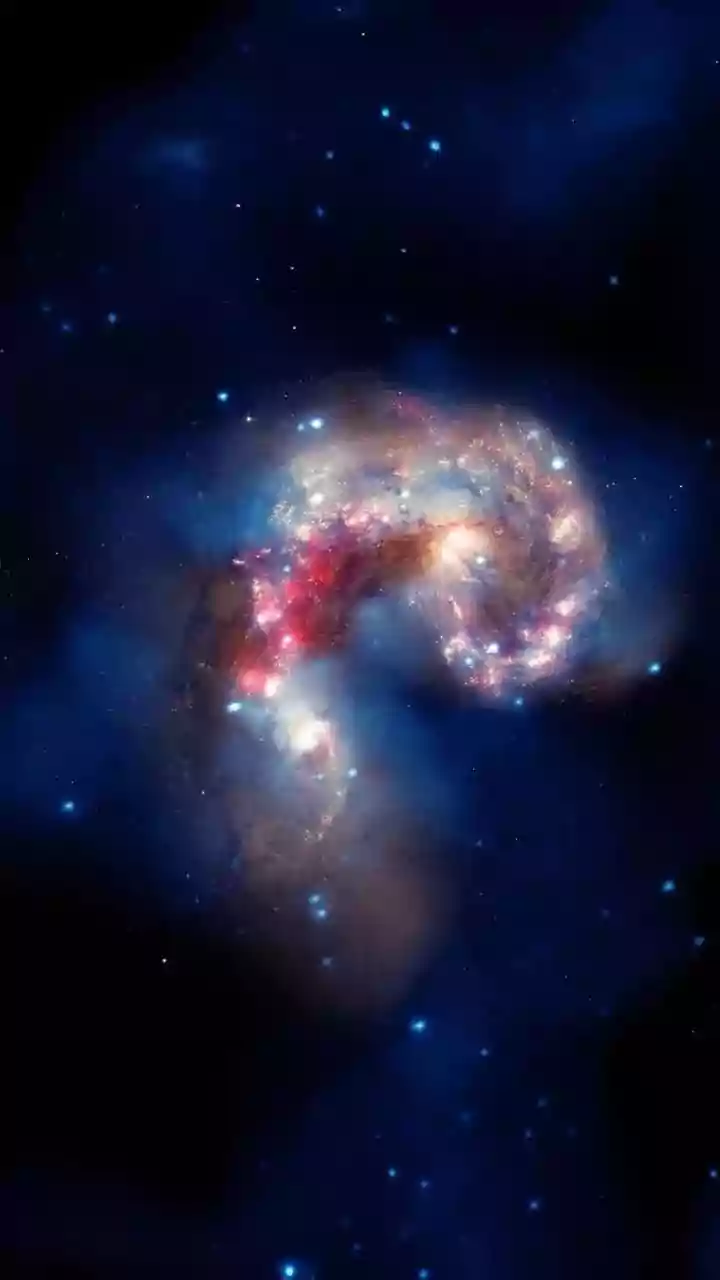
Perhaps the most exciting frontier for AI in astronomy is anomaly detection—finding things we didn't even know to look for. Rather than searching for a specific type of object, unsupervised learning models are trained to understand what is 'normal' in astronomical data. They then flag anything that deviates from that baseline as an anomaly. In early 2026, a team of European Space Agency researchers used an AI called AnomalyMatch to comb through 35 years of Hubble data. In just a few days, it flagged nearly 1400 unusual objects, over 800 of which had never been documented before. These included bizarre merging galaxies, rare 'jellyfish' galaxies with gaseous tentacles, and dozens of objects that defied any existing classification. This is the AI equivalent of a scientist saying, "I don't know what this is, but you should probably take a look."
A New Human-AI Partnership
Despite these advances, AI is not replacing astronomers. Instead, it is becoming an indispensable partner or 'copilot'. AI excels at the brute-force task of sifting and sorting, freeing up human scientists to do what they do best: interpret, investigate, and apply context. AI might flag a thousand anomalies, but it takes a human expert to determine their significance, whether it’s a gravitational lens that can help map dark matter or an entirely new astrophysical phenomenon. This collaborative approach is transforming astronomy from a science of patient, manual observation into a dynamic field where discovery is accelerated by the partnership between human intellect and the powerful perception of artificial intelligence. It allows scientists to focus on the questions, while AI helps to find the answers hidden in the light.