
How Yoga Creates Flexibility
Flexibility isn't just about stretching muscles until they lengthen; it's a complex interplay between your muscles, connective tissues, and nervous system. Yoga addresses all these elements. When you hold a yoga pose, you are doing more than just pulling
on a muscle. You are applying gentle, sustained stress that, over time, helps muscle fibres realign and lengthen. This process improves muscle elasticity, which is the ability to stretch and return to normal, and plasticity, the ability to maintain a new, longer length. Furthermore, yoga works on fascia, the web-like connective tissue that encases your muscles and organs. Sedentary lifestyles can make fascia stiff and sticky, restricting movement. The varied movements in yoga—forward bends, twists, and side stretches—hydrate this tissue, breaking up adhesions and improving your overall suppleness. Finally, yoga calms the nervous system through mindful breathing. When you're stressed, your muscles tense up. Deep, conscious breathing activates the body's relaxation response, telling your muscles it's safe to release, allowing for a deeper and safer stretch.
Cat-Cow Pose (Marjaryasana-Bitilasana)
This gentle, flowing sequence is one of the best ways to warm up the spine and is perfect for beginners. It improves spinal flexibility and helps relieve tension in the back and neck that builds up from sitting for long hours. To begin, position yourself on your hands and knees in a 'tabletop' position, with wrists aligned under your shoulders and knees under your hips. As you inhale, drop your belly towards the mat, lift your chest and tailbone, and look forward into Cow Pose. As you exhale, round your spine toward the ceiling, tuck your chin to your chest, and press into your hands to feel a stretch across your upper back in Cat Pose. Repeat this fluid movement for 5-10 breaths, letting your breath guide the pace.
Downward-Facing Dog (Adho Mukha Svanasana)
A foundational pose in most yoga styles, Downward-Facing Dog is a full-body stretch that lengthens the entire back of the body, from your calves to your hamstrings and spine. It strengthens the arms and shoulders while opening the chest. From your hands and knees, tuck your toes, lift your knees off the floor, and send your hips up and back, forming an inverted 'V' shape with your body. Keep your hands pressed firmly into the mat and your head hanging freely between your upper arms. If your hamstrings are tight, it's perfectly fine to keep a generous bend in your knees. This modification helps you maintain a long, straight spine, which is more important than having straight legs. Hold for 5-8 breaths.
Standing Forward Bend (Uttanasana)
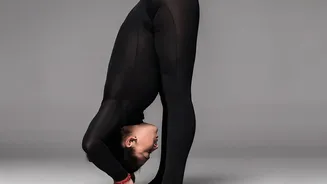
This pose provides a deep stretch for the hamstrings, calves, and hips while releasing tension in the spine and neck. It's also known to have a calming effect on the nervous system. Stand with your feet hip-width apart. As you exhale, hinge forward from your hips, not your waist. If you're a beginner, bend your knees generously to protect your lower back and allow your torso to rest on your thighs. Let your head and arms hang heavy toward the floor. You can rest your hands on blocks, your shins, or the floor, depending on your flexibility. The goal is to lengthen the spine, not necessarily to touch your toes. Stay in the pose for 30 to 60 seconds.
Triangle Pose (Trikonasana)
Triangle Pose is excellent for stretching the hamstrings, hips, and groin while also opening the chest and shoulders. It improves stability and balance. Start by standing with your feet about 3-4 feet apart. Turn your right foot out 90 degrees and your left foot in slightly. Extend your arms parallel to the floor. Hinge at your right hip and reach forward, then bring your right hand down to your shin, ankle, or a block. Extend your left arm toward the ceiling, keeping your chest open. Try to create one long line from your left fingertips to your right. Gaze can be up toward your left hand or forward. Hold for 5 breaths before switching sides.
Child's Pose (Balasana)
Child's Pose is a restorative posture that gently stretches the lower back, hips, and ankles while calming the mind. It's a perfect resting pose to take anytime you need a break during your practice. From a kneeling position, sit back on your heels, then fold your torso forward over your thighs. Rest your forehead on the mat. Your arms can be stretched out in front of you or resting alongside your body with the palms facing up. The gentle pressure on your abdomen in this pose can also help stimulate digestion. Breathe deeply into your back body, feeling the spine lengthen with each inhale, and relax for as long as feels good.