






Plan Before You Purchase
The most effective way to prevent overbuying is to go shopping with a clear plan. Before you even step into a market, take a walk through your home and decide which areas you want to decorate. The entrance, the living room, and the puja space are common
focal points. List the specific items you need for each spot, such as flowers for the pookalam, diyas for the corners, and a toran for the main door. Alongside your list, set a firm budget. Knowing exactly what you need and how much you're willing to spend makes it easier to resist impulse buys and tempting deals on items you don't actually require.
Prioritise the Pookalam Sensibly
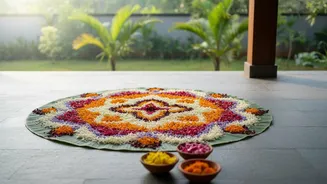
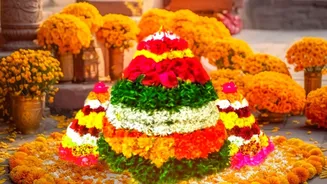
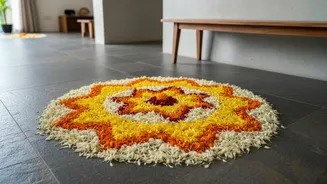
The pookalam, or floral carpet, is the heart of Onam decorations. However, the cost of fresh flowers every day for ten days can add up quickly. To manage this, plan your pookalam's design. You can start with a smaller design on the first day, Atham, and expand it with a new ring of flowers each day leading up to Thiruvonam. Buy flowers from local, early-morning markets instead of pre-packaged kits for better prices. You can also make your design more economical by using a higher ratio of less expensive flowers like marigolds and filling out patterns with colourful leaves, coloured rice, or turmeric powder.
Embrace DIY and Upcycling
Tap into your creative side to add a personal and budget-friendly touch to your decor. Instead of buying expensive ready-made hangings, you can create your own beautiful torans using mango leaves and marigolds. Engage the family in making paper lanterns or painting earthen diyas. Look at what you already own; an old silk dupatta can be repurposed as a festive table runner, and a collection of brass vessels can become stunning centrepieces when filled with water and floating flowers. These DIY efforts not only save money but also add a unique, heartfelt element to your celebrations.
Invest in Reusable Key Pieces
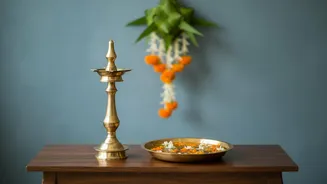
While fresh flowers are temporary, some decorations are long-term investments. Instead of spending a lot on disposable items each year, consider gradually building a collection of quality, reusable decor. A traditional brass nilavilakku (standing lamp), some elegant urulis (brass bowls), and a few good-quality Kathakali masks or wooden decorative items can be used year after year. These classic pieces form the foundation of your festive decor. Focus your budget on one or two such items per year, rather than trying to buy everything at once. This approach builds a meaningful collection over time and reduces annual expenditure.
Go Natural and Eco-Friendly
Onam is a harvest festival that celebrates nature, and your decorations can reflect this. Using natural, locally sourced materials is often more affordable and sustainable than buying plastic decor. Banana leaves are incredibly versatile and can be used as table runners, placemats for the Sadya, or even as a backdrop for your puja area. Earthen diyas are a cost-effective and traditional alternative to electric fairy lights. Adorning your entrance with garlands of jasmine and mango leaves creates a welcoming and fragrant atmosphere that is both beautiful and biodegradable.
Shop Smart, Not Last-Minute
Waiting until the last minute is a sure way to overspend. When you're in a rush, you're more likely to grab whatever is available without comparing prices. Start shopping for non-perishable items like lamps, textiles, and craft supplies a few weeks before the festival begins. This allows you to browse different shops, compare costs, and take advantage of pre-festival sales. For fresh items like flowers and banana leaves, plan to visit local markets where prices are generally lower than in supermarkets. A little bit of advance planning ensures you get the best value for your money.