





What is a Caretaker Government?
In Israel, a caretaker or interim government takes charge after an election that doesn't produce a clear winner, or following a prime minister's resignation. Its primary purpose is to prevent a governmental vacuum and ensure the state continues to function
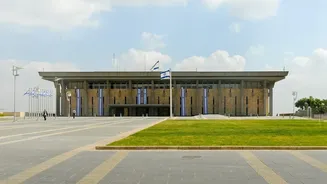
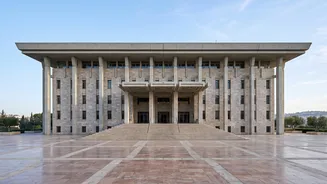
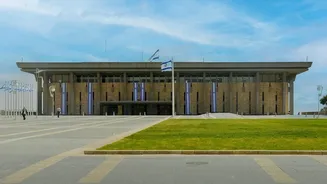
until a new, stable coalition can be formed and win the confidence of the Knesset, Israel's parliament. According to Israel's Basic Law, the outgoing government continues to exercise its responsibilities. This means that, on paper, a caretaker government has nearly the same authority as a regular one. However, this is where the law on the books meets political and judicial reality. The actual power is tempered by a principle known as the 'duty of restraint'.
The Principle of 'Restraint'
Because a caretaker government lacks a fresh democratic mandate from the public, Israel's Supreme Court has established that it must exercise restraint. This means it should avoid making major, irreversible decisions that could tie the hands of a future government. The court applies a stricter standard of reasonableness to a caretaker government's actions. This duty of restraint becomes even more stringent after an election has passed and before a new government is formed. Essentially, while the government can still run the country day-to-day, it is expected to avoid launching significant new policies, passing major legislation, or making high-level appointments that aren't urgently necessary.
Powers: What Netanyahu Can Still Do
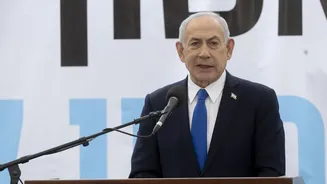
As caretaker Prime Minister, Netanyahu and his ministers retain their executive powers to manage the state's affairs. This includes overseeing government ministries, directing the civil service, and managing the country's finances. Critically, the government is also empowered to handle matters of national security and foreign relations. In fact, security matters are often considered the clearest exception to the duty of restraint, especially when there is a 'vital public need for action'. Historically, previous caretaker governments have launched major military operations, such as Operation Cast Lead in 2008 and Operation Guardian of the Walls in 2021, usually in response to direct attacks.
Constraints: What He Cannot Easily Do
The most significant limitations on a caretaker government lie in areas that have long-term consequences. This primarily includes making permanent, high-level appointments to sensitive posts like the Attorney General, the chief of police, or Supreme Court justices. Such decisions are generally deferred to the incoming permanent government. Major new legislative initiatives are also functionally off-limits, as is any legislation that could be seen as personally benefiting the prime minister, such as laws impacting his ongoing corruption trial. While he can make certain ministerial appointments without Knesset approval to fill vacancies, these are exceptions designed to ensure government continuity, not to reshape the cabinet.
The Question of War and Security
The authority to initiate military action is the most debated aspect of a caretaker government's power. According to Israeli law, a decision to go to war requires a vote by the full government or the smaller, delegated security cabinet; a prime minister cannot make such a decision alone. While a caretaker government is not legally barred from going to war, especially in response to an immediate threat, initiating a preemptive or non-urgent conflict is politically and legally fraught. Opposition leaders typically demand full parliamentary oversight for such a move, arguing that a government without a clear mandate should not make a decision with such profound consequences. However, the Supreme Court has historically avoided intervening in decisions related to war.
The Role of the Legal Gatekeepers
In Israel's system of checks and balances, the Attorney General plays a crucial 'gatekeeper' role. The Attorney General serves as the government's chief legal counsel, and their legal interpretation is considered binding on the executive branch. This independent office is tasked with ensuring the government acts within the bounds of the law and can challenge decisions that overstep the principle of restraint. Any controversial action by a caretaker government, from a major policy shift to a sensitive security operation, would face intense scrutiny from the Attorney General and could ultimately be challenged before the Supreme Court, which acts as the final arbiter of executive power.