


Venus: The Lost Twin
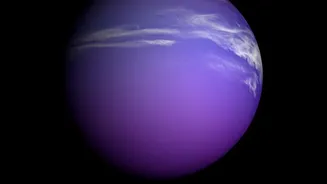
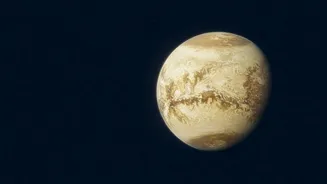
Venus and Earth are similar in size, mass, and composition, leading scientists to call them sister planets. Yet, they could not be more different. While Earth teems with life, Venus is a hellscape with surface temperatures hot enough to melt lead, a crushing
atmosphere 90 times denser than ours, and clouds made of corrosive sulfuric acid. Scientists believe Venus may have once been more Earth-like, with liquid water oceans. Understanding how it turned into a runaway greenhouse inferno is not just a planetary puzzle; it holds crucial lessons for understanding climate evolution on Earth-like planets. This is the mystery that the Indian Space Research Organisation (ISRO) aims to explore with its upcoming Venus Orbiter Mission, Shukrayaan-1.
The Telltale Signature of Sulfur Dioxide
One of the most intriguing questions about Venus is whether it is geologically active today. On Earth, sulfur dioxide (SO2) in the high atmosphere is a key indicator of recent volcanic eruptions. The same principle applies to Venus. However, in Venus's upper atmosphere, sunlight breaks down SO2 molecules in just a few days. This means that if a spacecraft detects significant amounts of SO2 high above the main cloud deck, the gas must have been recently supplied from below. Previous missions by NASA and the European Space Agency (ESA) have observed dramatic spikes and falls in upper-atmosphere SO2 levels, fueling strong suspicions that volcanoes on Venus are still erupting, powerfully blasting the gas upwards. Confirming this would be a monumental discovery in planetary science.
Enter VIRAL: ISRO’s Atmospheric Detective
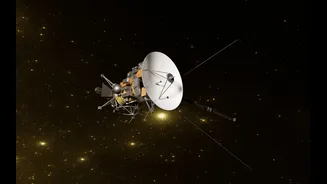
To hunt for these clues, ISRO's Shukrayaan-1 orbiter will carry a suite of scientific instruments, including a key payload designed for this very task: VIRAL, which stands for Venus Infrared Atmospheric Gases Linker. Co-developed with international partners including Russia's space agency and French research labs, VIRAL is an advanced spectrometer. Its job is to precisely measure the composition of the Venusian atmosphere, including trace gases like sulfur dioxide. By focusing on the chemical fingerprints of these gases, VIRAL will help build a detailed profile of the atmosphere's chemistry and dynamics, providing the data needed to spot the anomalies that could point to active volcanism.
How the Scan Will Work
VIRAL is designed to use a technique called solar occultation. As the Shukrayaan-1 spacecraft orbits Venus, it will watch the sun rise and set through the planet's atmosphere. When sunlight passes through the atmosphere on its way to the instrument, different gas molecules absorb specific colours, or wavelengths, of light. Sulfur dioxide, for example, absorbs a unique set of infrared wavelengths. VIRAL is an infrared spectrometer tuned to detect exactly these wavelengths. By analysing the sunlight that reaches it, the instrument can identify the chemical 'fingerprint' of SO2 and measure its concentration with very high precision. This method will allow it to create detailed altitude profiles, showing scientists exactly how much SO2 is present at different heights in the atmosphere, from above the clouds down into them.
A New Chapter in Indian Space Exploration
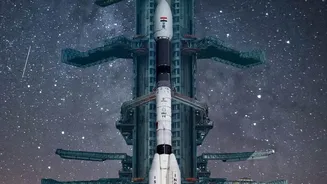
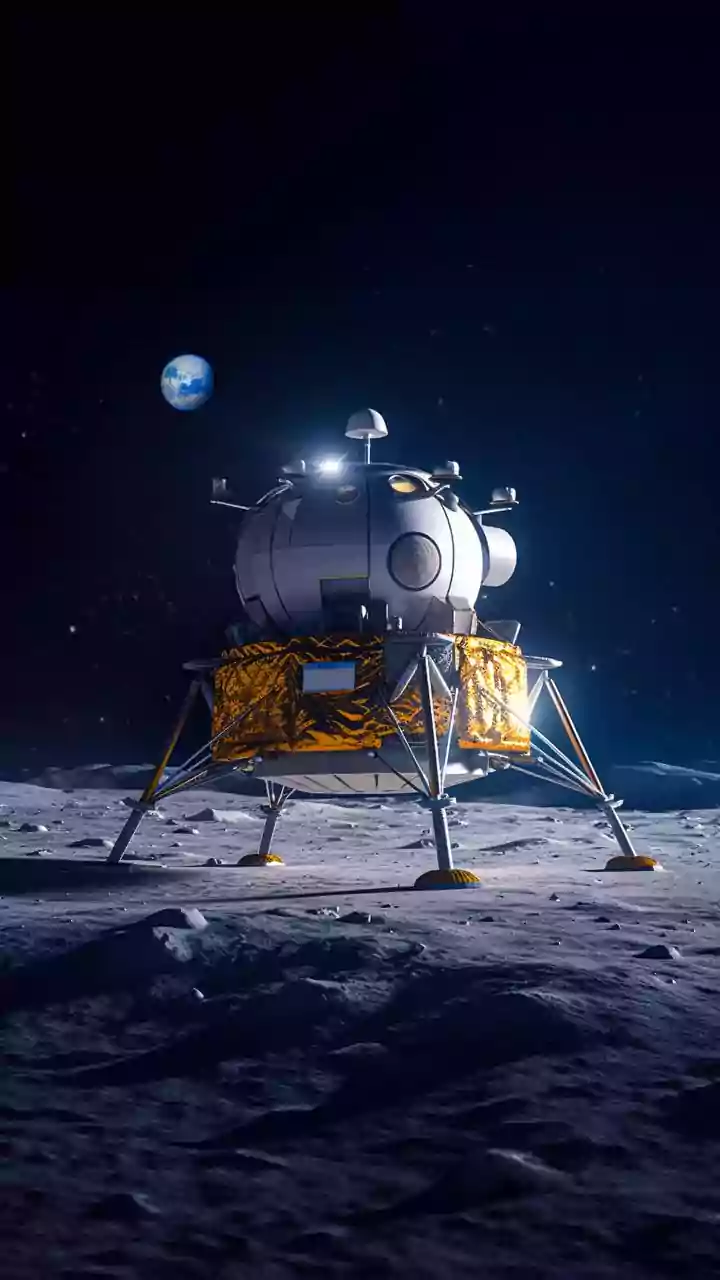
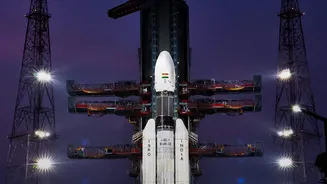
The Shukrayaan-1 mission, formally approved by the government in 2024 and targeting a 2028 launch, represents the next frontier for ISRO. Following the historic successes of the Chandrayaan missions to the Moon and the Mangalyaan mission to Mars, Shukrayaan-1 showcases India’s growing capability in deep-space exploration. The mission is not just about one payload; other instruments like a Synthetic Aperture Radar will peer through the thick clouds to map the surface in unprecedented detail, searching for lava flows and other volcanic features. Together, the instruments aboard Shukrayaan-1 will provide a comprehensive view of Venus, positioning India as a key player in solving some of the solar system's biggest mysteries.