






Why Ankle Stability Matters More Than You Think
We often don't think about our ankles until they cause a problem—a sudden twist on an uneven pavement, a feeling of weakness when we stand up, or lingering soreness after a long day. For many of us, especially those with desk jobs, a sedentary lifestyle
can lead to deconditioned muscles around the lower leg and foot. Weak ankles aren't just an athlete's problem; they can increase your risk of trips, falls, and sprains in everyday life. Strong, stable ankles provide the foundation for almost every movement, from walking and climbing stairs to simply standing with good posture. Building that stability is a crucial, yet often overlooked, part of overall health and injury prevention.
The Underrated Power of Your Calf Muscles
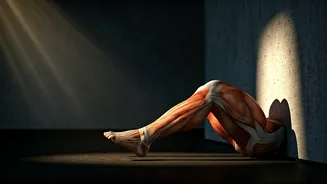
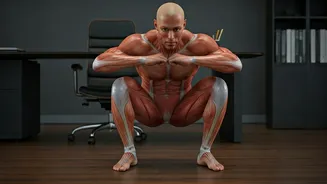
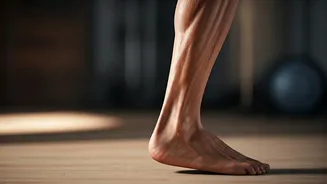
The secret to a more stable ankle lies just above it: in your calf muscles. The calf is primarily made up of two key muscles—the gastrocnemius (the larger, upper part) and the soleus (a smaller muscle underneath). These muscles don't just help you point your toes or jump; they act as powerful stabilisers for the ankle joint. When you walk, run, or even just stand, these muscles are constantly making micro-adjustments to keep your ankle aligned and prevent it from rolling inwards or outwards. When your calves are weak, this support system falters, leaving the ligaments of your ankle vulnerable to strain and injury. Therefore, strengthening your calves is one of the most direct and effective ways to fortify your ankles.
How to Do the Perfect Calf Raise
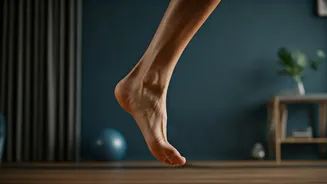
The calf raise is brilliantly simple but requires proper form to be effective. Forget bouncing up and down quickly. The key is slow, controlled movement. Here’s how: 1. **Stand Tall:** Stand with your feet hip-width apart, ensuring your weight is evenly distributed. You can lightly hold onto a desk or wall for balance, but don't lean on it. 2. **Lift Slowly:** Push through the balls of your feet to raise your heels as high as you can. Focus on moving straight up, not forward or backward. The movement should be deliberate, taking about two seconds to reach the top. 3. **Hold and Squeeze:** Pause at the peak of the movement for a second. Actively squeeze your calf muscles to maximise the contraction. 4. **Lower with Control:** Slowly lower your heels back to the floor. This downward phase, or eccentric movement, is just as important for building strength. Aim for a three-to-four-second descent. Start with two sets of 15 repetitions, focusing entirely on form over speed or quantity.
Level Up With Simple Variations
Once you've mastered the basic calf raise, you can challenge your muscles further with these variations. * **Stair or Step Raises:** Stand on the edge of a step with your heels hanging off. This allows for a greater range of motion, as you can lower your heels below the level of the step for a deep stretch before lifting up. This is excellent for both strength and flexibility. * **Single-Leg Calf Raises:** This is the gold standard for improving stability. Performing the exercise on one leg at a time not only doubles the load on the working calf but also forces the small stabiliser muscles in your ankle and foot to fire up to maintain balance. * **Bent-Knee Calf Raises:** To specifically target the soleus muscle, perform your calf raises with your knees slightly bent. This muscle is a crucial endurance player for posture and stability, and this variation ensures it gets the attention it needs.
The 'Work Call' Integration Strategy
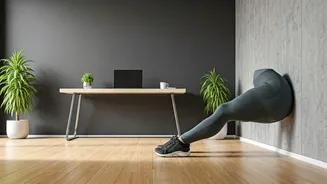
Here’s how to make this a seamless part of your workday. The best time is during audio-only calls or webinars where you're primarily listening. Simply stand up, move slightly away from your desk, and begin. * **Mute is Your Friend:** If you’re not speaking, stay on mute to avoid any background noise from your movement. * **Aim for Consistency:** Try to do a few sets during one or two calls per day. Consistency is far more important than intensity. A goal of 20-30 reps per leg, a few times a week, can make a significant difference. * **Alternate Legs and Styles:** Use one call to do standard two-legged raises and another to focus on single-leg raises. This keeps the muscles challenged and your mind engaged.