




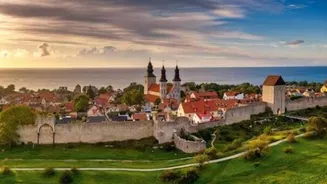
Visby: The Walled Hanseatic Wonder
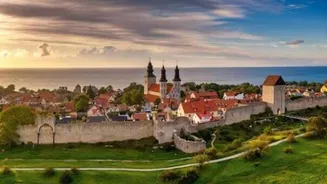
Step into a real-life fairy tale on the island of Gotland. Visby, a UNESCO World Heritage site, is arguably Scandinavia's best-preserved medieval city. Its most striking feature is the magnificent city wall, 'Ringmuren', which stretches for over three
kilometres. Built from the 12th to the 14th century, this defensive marvel still stands with most of its original towers intact. Within its embrace, a labyrinth of winding cobblestone streets leads you past ancient church ruins and steep-gabled merchant houses, reminders of Visby's past as a powerful hub in the Hanseatic League. The wall was not just for foreign invaders; it was also built to control trade and protect the town's wealth from the surrounding countryside, a tension that even led to a civil war in 1288.
Sigtuna: Where Sweden Began
A short trip from Stockholm lies Sigtuna, founded around 980 AD by Viking king Erik the Victorious. Considered Sweden's very first town, its history is etched into the landscape. Stroll along Stora Gatan, a main street that has followed the same path for over a thousand years. Sigtuna is famously rich in runestones, with more than any other town in the world, many of which can be seen along its streets and in its museum. The town is dotted with the romantic ruins of early stone churches, such as St. Peter's and St. Olof's, which tell the story of the shift from Viking beliefs to Christianity. Despite its profound history, Sigtuna offers a tranquil atmosphere on the shores of Lake Mälaren, blending ancient stories with scenic beauty.
Lund: A City of Faith and Knowledge
In the southern region of Skåne, Lund presents a unique blend of medieval heritage and vibrant university life. The city's history stretches back to around 990, and for centuries it was the ecclesiastical centre of the Nordic countries. Dominating the skyline is the awe-inspiring Lund Cathedral, a masterpiece of Romanesque architecture consecrated in 1145. Its imposing twin towers and historic crypt are must-sees. The area around the cathedral retains its medieval street plan, perfect for wandering. The city's academic heart, Lund University, was founded in 1666, with its early activities taking place within the cathedral itself. This creates a fascinating cityscape where ancient religious power sits alongside centuries of intellectual pursuit.
Ystad: Half-Timbered Charm on the Coast
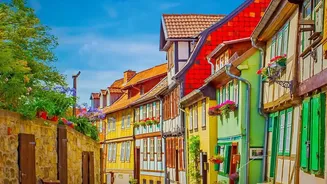
Fans of crime novels might know Ystad as the home of Inspector Wallander, but its real-life appeal lies in its remarkably preserved medieval centre. Located on the southern coast, the town is a picturesque collection of over 300 half-timbered houses and cobblestone streets. Key historical sites include the 12th-century Greyfriars Abbey, one of Sweden's best-preserved medieval monasteries, and the large St. Mary's Church (Sankta Maria Kyrka) on the main square. Walking through Ystad feels like stepping onto a film set, with pastel-coloured buildings and blooming roses creating a charming atmosphere that contrasts with the dramatic fictional crimes associated with the town.
Gamla Stan, Stockholm: The Capital's Historic Heart
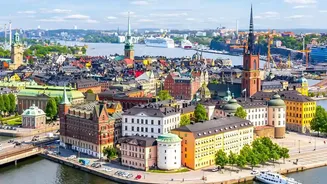
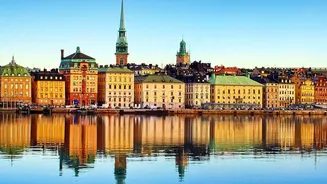
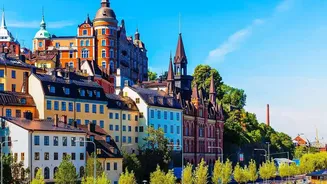
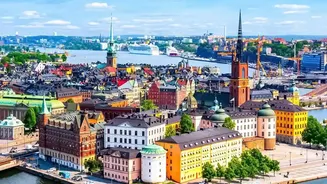
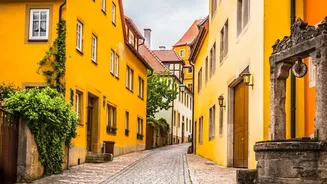
While not a separate town, no tour of medieval Sweden is complete without visiting Gamla Stan, Stockholm's Old Town. Founded in the 13th century on a small island, this is where the capital city began. It remains one of the largest and best-preserved medieval city centres in Europe, with a disorienting but delightful web of narrow cobblestone alleys, some barely wide enough for one person to pass. The main square, Stortorget, is lined with colourful old merchant houses and was the site of the infamous Stockholm Bloodbath in 1520. Despite being a major tourist hub, Gamla Stan has retained its architectural integrity, offering a vivid glimpse into the city's foundation centuries ago.