

Venus: The Star of the Evening Show
Throughout September, the planet Venus will be impossible to miss in the western sky shortly after the sun goes down. Often called the “Evening Star,” Venus isn’t a star at all, but our neighbouring planet. Its thick, reflective clouds make it the brightest
object in the night sky after the Moon. This month is particularly special because Venus reaches its “greatest brilliancy” on September 18. On this date, it will shine at its most luminous for its entire 2026 evening appearance, glowing at a dazzling magnitude of -4.8. While it will be exceptionally bright for several nights around this peak, the 18th is the date to circle on your calendar.
When and Where to Look
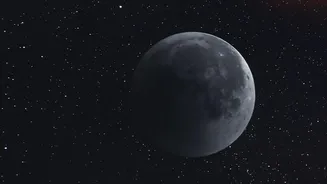
Finding Venus is simple. Look toward the western horizon as the sun sets and the sky begins to darken. That incredibly bright, unwavering point of light is Venus. It will be visible for about an hour after sunset before it, too, dips below the horizon. A particularly beautiful sight occurs on the evening of September 14, when a slender waxing crescent Moon will pass very close to Venus, creating a stunning pair in the twilight sky. This celestial meetup requires no special equipment to enjoy and offers a fantastic photo opportunity. Though Venus will appear as a brilliant point of light to the naked eye, a telescope will reveal a surprise: because it is moving closer to Earth, you won't see a round disk but a distinct and bright crescent phase.
More Sights in the September Sky
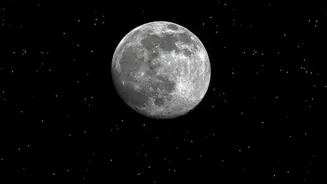
While Venus steals the spotlight, it’s not the only attraction this month. All five naked-eye planets—Mercury, Venus, Mars, Jupiter, and Saturn—will be visible at some point during September. Early risers can catch Mars and Jupiter in the eastern sky before sunrise. The Moon will guide you, passing near Mars on September 6 and Jupiter on September 8. On the 8th, the Moon will pass less than a degree from Jupiter, making for a tight and eye-catching pair before dawn. September also marks the end of summer and the beginning of autumn in the Northern Hemisphere with the autumnal equinox on September 22. This is the point when the Sun crosses the celestial equator, and day and night are of nearly equal length. Just a few days later, on September 26, be sure to look for the full Harvest Moon, which is the full moon closest to the equinox. The ringed planet Saturn will be visible nearby, accompanying the full moon as it travels across the night sky.
Tips for the Best Viewing Experience
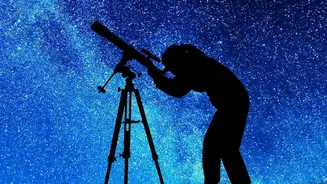
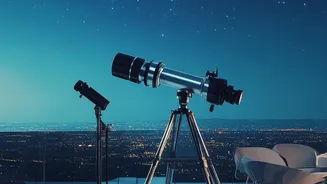
You don’t need expensive equipment to enjoy the September sky. Most of the month's main events are easily visible with just your eyes. To enhance your view, find a location away from bright city lights. Give your eyes about 15-20 minutes to fully adapt to the darkness. While a telescope reveals details like the phases of Venus or the rings of Saturn, even a simple pair of binoculars can bring star clusters and the lunar surface into better focus. For deep-sky objects like the Andromeda Galaxy, which is well-placed for viewing this month, the dark nights around the New Moon on September 11 are your best opportunity. Stargazing apps on your smartphone can also be an invaluable tool for identifying planets, stars, and constellations in real time.