






The Race Against the Clock
University life is a pressure cooker of deadlines. Students juggle multiple courses, part-time jobs, lab reports, and social commitments, making time the most valuable resource. Presentations are a constant requirement for lectures, group projects, and thesis
defenses. This high-pressure environment means that assignments like creating a slide deck, which can take hours of manual work, often get pushed to the last minute. The result is often rushed work that doesn't do justice to the underlying research. This is the primary driver behind the adoption of AI presentation tools: the desperate need for efficiency.
From Blank Page to Full Deck in Minutes
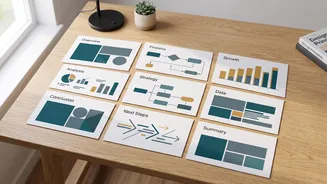
Enter AI presentation makers, often in the form of browser extensions or web apps like Gamma, Tome, and SlidesAI. These tools use large language models to transform a simple text prompt, a set of notes, or even a full document into a structured presentation almost instantly. A user might type, "Create a 10-slide presentation on the impact of climate change on Indian agriculture," and the AI will generate a deck complete with a title slide, an introduction, logically organized body slides with bullet points, and a conclusion. Many tools also suggest relevant images and apply a consistent, professional design theme, eliminating hours of formatting.
More Than Just a Time-Saver
The appeal of these AI tools goes beyond pure speed. For many students who lack a background in graphic design, they solve a major pain point: creating a visually polished presentation. Instead of struggling with fonts, colours, and layouts, students can rely on the AI to produce a professional-looking deck. This democratizes design, allowing anyone to create high-quality visuals. Furthermore, these tools are powerful weapons against the dreaded "blank page syndrome." They provide a solid first draft, giving students a structured starting point to build upon, which can be invaluable for overcoming creative blocks and organizing messy research notes.
Navigating the Ethical Gray Area
The rise of these tools has sparked a debate in academia about what constitutes original work. Is using AI to generate a presentation a form of cheating? The answer is complicated. Most institutions agree that submitting AI-generated content as one's own without disclosure is academic dishonesty. However, the line blurs when AI is used as a brainstorming partner or a design assistant. In response, many educators are moving away from outright bans and toward policies that demand transparency. Students may be required to cite the AI tool they used and explain how it contributed to their final work. The focus is shifting toward assessing a student's understanding of the material, perhaps through more rigorous Q&A sessions after presentations.
Are Students Learning New Skills or Losing Old Ones?
A key concern is whether an over-reliance on AI will erode students' critical thinking, research, and synthesis skills. If a machine can condense a research paper into talking points, is the student still learning how to identify key arguments and structure a narrative? The counterargument is that students are developing a new, essential skill: AI management. In the modern workplace, proficiency with AI tools is becoming a valuable asset. Learning to write effective prompts, critically evaluate AI-generated content for accuracy, and refine the output is a skill in itself. The challenge for educators is to teach students how to use these tools as a co-pilot that enhances their own intelligence, rather than a cruise control system that replaces it.