


Seeing the Unseeable
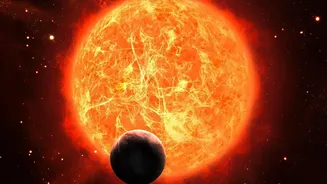
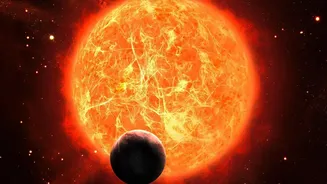
When you look at the night sky, you're seeing visible light from stars. But the planets orbiting them are another story. They are incredibly dim and completely overwhelmed by the glare of their parent star, like trying to spot a firefly next to a searchlight.
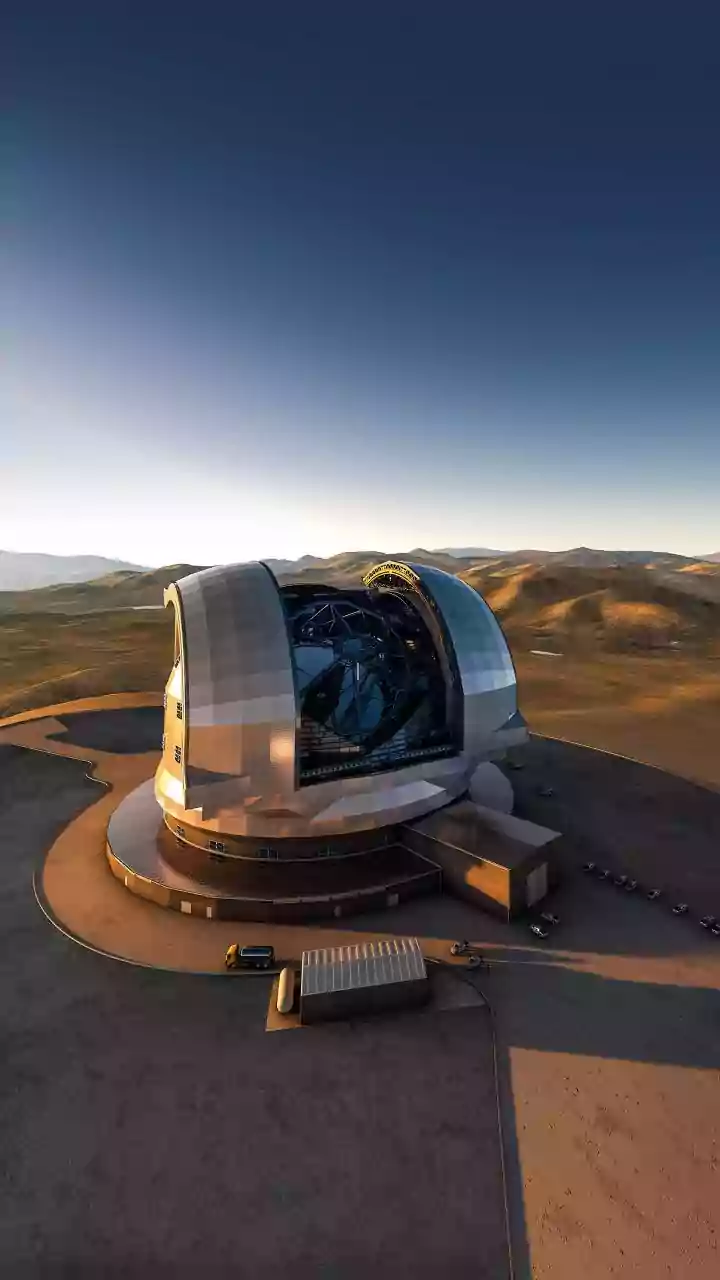
This is where infrared light comes in. Instead of trying to see the faint reflected light off a planet, astronomers use powerful telescopes to detect the heat the planet emits on its own. Everything with heat gives off infrared radiation, from your own body to a gas giant hundreds of light-years away. Telescopes like NASA’s James Webb Space Telescope (JWST) are exquisitely sensitive to this thermal glow, allowing them to effectively see a planet that would otherwise be invisible. It’s the cosmic equivalent of putting on a pair of thermal goggles to see in the dark, cutting through the stellar glare to focus on the planet itself.
The Science of a Planet's Glow
So how do you turn a faint infrared glow into a weather map? Scientists use a brilliant technique called phase curve spectroscopy. As a distant planet orbits its star, we observe it go through phases, much like our Moon. We see its day side, its night side, and everything in between. By continuously measuring the total infrared light from the star and planet system over a full orbit, astronomers can chart the subtle changes. When the planet disappears behind the star in an event called a secondary eclipse, the total light level dips slightly. That dip is the exact amount of light coming from the planet itself. By subtracting the star's constant brightness, scientists are left with only the planet's thermal emission. This data, collected over an entire orbit, allows them to construct a map of temperature variations across the planet’s surface.
A Universe of Extreme Weather
These techniques have revealed weather systems that make Earth's most violent storms look like a gentle breeze. Take WASP-43 b, a gas giant about 280 light-years away. Thanks to JWST's MIRI (Mid-Infrared Instrument), we know its permanently sun-facing dayside roasts at nearly 1,250 degrees Celsius—hot enough to vaporise rock. Its nightside is a cooler, but still blistering, 600 degrees Celsius. The massive temperature difference drives equatorial winds of over 8,000 kilometres per hour, whipping heat from the day side to the night side. The data also suggests the dayside has surprisingly clear skies, while the nightside is covered in a thick, high layer of clouds. Other planets show different quirks; observations of WASP-94A b revealed it has cloudy mornings and clear evenings, demonstrating that atmospheric conditions on these worlds can be incredibly dynamic and asymmetric.
Decoding the Atmospheric Barcode
Beyond just temperature, infrared light allows astronomers to figure out what an exoplanet’s atmosphere is made of. When a planet passes in front of its star, a tiny fraction of the starlight filters through its atmosphere. Different molecules in that atmosphere absorb specific wavelengths of light, leaving behind a unique chemical signature, like a barcode. By analysing this barcode using spectroscopy, scientists can identify the presence of water vapour, methane, carbon dioxide, and even clouds or haze. For example, JWST has confirmed the signature of water on planets like WASP-96 b and detected rich carbon dioxide reserves on the planets orbiting the star HR 8799. These chemical clues are vital for understanding not just a planet's current climate, but also how it formed and evolved over billions of years.