




The Revival of Ancient Wisdom
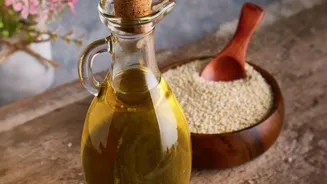
For generations, the rhythmic churning of a wooden press, or 'ghani', was a familiar sight, producing fragrant, nutrient-rich oils. Known as 'til ka tel' in Hindi and 'nallennai' in Tamil, sesame oil has been a cornerstone of Indian cooking and Ayurvedic
medicine for millennia. Today, a growing awareness around clean eating and the effects of industrial food processing is driving a remarkable comeback. Consumers are increasingly looking past the convenience of mass-produced refined oils and seeking out these traditionally made alternatives. This revival is part of a larger movement towards embracing time-tested ingredients that are perceived as more natural and wholesome.
Cold-Pressed vs. Refined: What’s the Difference?
The distinction between cold-pressed and refined oil lies entirely in the extraction process. Cold-pressing involves mechanically crushing sesame seeds at low temperatures, a method that preserves the oil's natural nutrients, flavour, and nutty aroma. It is a slow, minimal-intervention process that keeps the integrity of the oil intact. Refined oils, in contrast, are extracted using high heat and chemical solvents to maximize yield. This industrial process strips the oil of its natural colour, odour, and, crucially, many of its beneficial compounds, including vitamins and antioxidants. While refining creates a neutral-tasting oil with a long shelf life and a high smoke point for deep frying, it comes at a nutritional cost.
A Powerhouse of Nutrients
Cold-pressed sesame oil is prized for what it retains. It is a rich source of heart-healthy monounsaturated and polyunsaturated fats, which can help manage cholesterol levels. More importantly, it contains unique and powerful antioxidants called lignans—specifically sesamol and sesamin—which are not found in many other oils. These compounds are celebrated for their anti-inflammatory properties and their ability to fight oxidative stress in the body. The oil is also a source of Vitamin E, another potent antioxidant. This nutrient density is why it's not just a cooking medium but also a functional food that supports overall wellness.
More Than Just a Cooking Oil
In Ayurveda, sesame oil is revered as the 'queen of oils' for its warming, grounding, and nourishing properties, making it particularly useful for balancing Vata dosha. Its applications go far beyond the kitchen. For centuries, it has been the preferred oil for 'abhyanga' (self-massage) to lubricate joints and nourish the skin. It's also the classical choice for oil pulling ('gandusha'), an ancient oral health practice believed to reduce plaque and strengthen gums. This deep-rooted history in traditional wellness practices highlights its role as a therapeutic substance, not just an ingredient.
Making the Switch: How to Choose and Use It
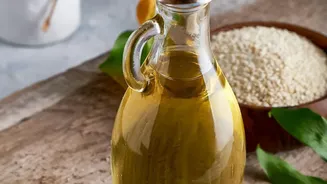
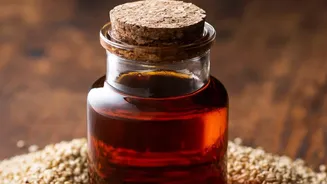
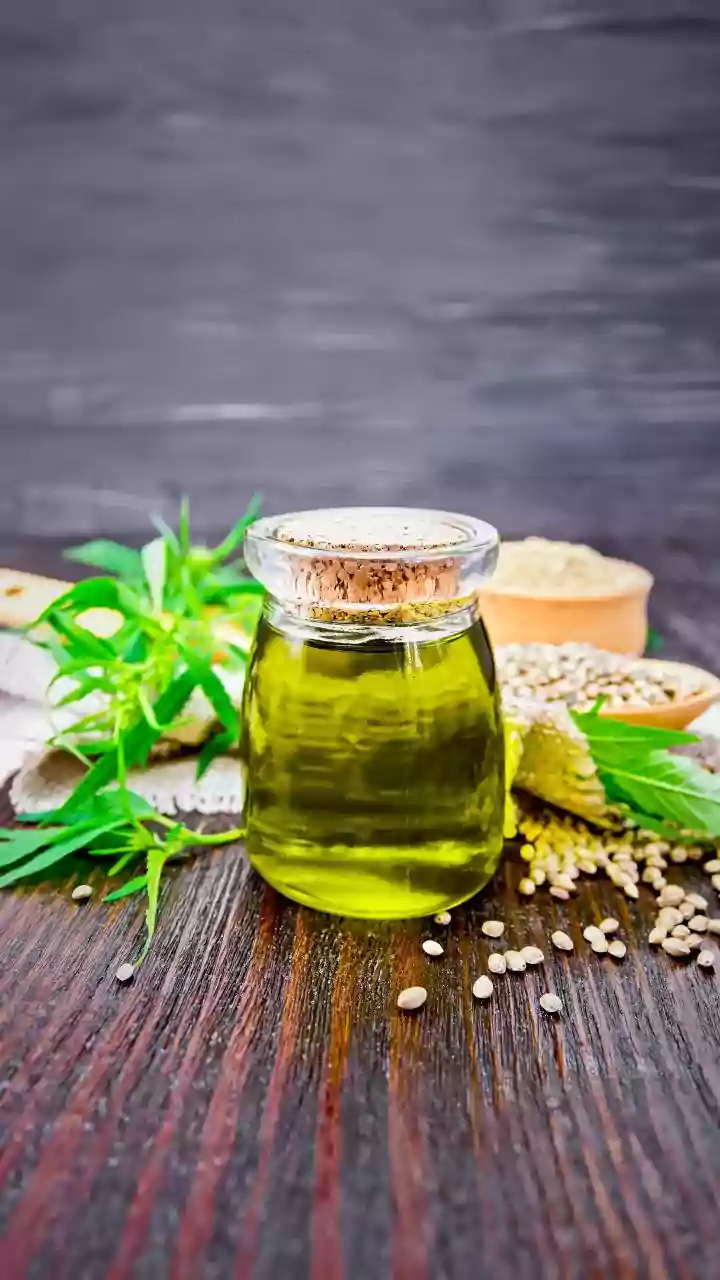
When shopping, look for oils labelled 'cold-pressed,' 'wood-pressed,' or 'chekku,' often sold in dark glass bottles to protect them from light. Cold-pressed sesame oil has a distinct, rich, nutty flavour that enhances dishes beautifully. While refined oils are better for high-heat deep frying, cold-pressed sesame oil is excellent for everyday cooking like sautéing, stir-frying, and preparing 'tadkas' (tempering spices). Its robust flavour also makes it a wonderful finishing oil to drizzle over idlis, dosas, or salads, adding a layer of aromatic richness that refined oils simply cannot match. It is not about completely replacing every oil but about reintroducing a flavourful, healthier option into your daily meals.