





A Major Milestone at Mahendragiri
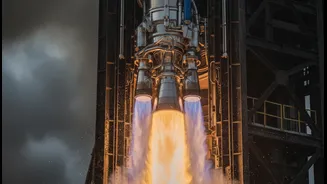
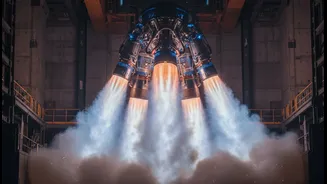
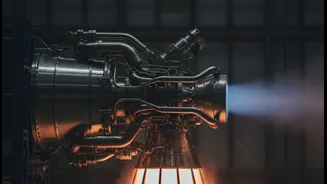
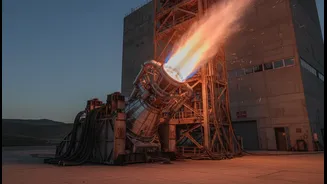
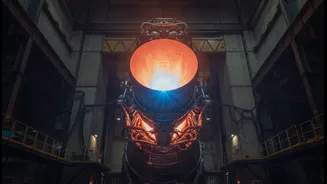
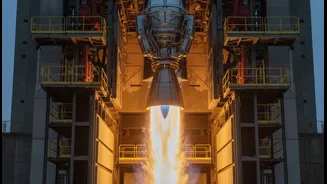
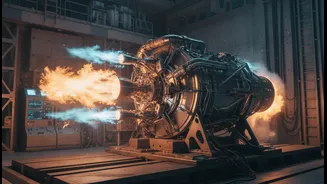
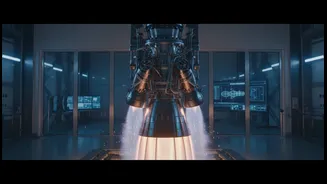
The Indian Space Research Organisation (ISRO) successfully conducted a crucial hot test of its semicryogenic engine's power-head on June 24, 2026, at the ISRO Propulsion Complex in Mahendragiri, Tamil Nadu. In this eighth test of the series, the engine assembly
was fired to a thrust level of 175 tonnes, which is about 88% of its full intended power. This achievement gives engineers significant confidence to proceed towards testing the engine at its full-rated thrust of 200 tonnes (or 2,000 kilonewtons). The tests validated the stable performance of critical components like the main turbopumps, which are responsible for feeding propellants into the engine at immense pressure.
What is a Semicryogenic Engine?
So, what makes this engine special? Think of a rocket needing two things to generate thrust: a fuel and an oxidiser (to help the fuel burn in the oxygen-free environment of space). ISRO's workhorse cryogenic engines use liquid hydrogen as fuel and liquid oxygen as the oxidiser. Both must be kept at extremely low (cryogenic) temperatures, which is complex and costly. A semicryogenic engine, however, uses a different combination: highly refined kerosene (called Isrosene) as fuel and liquid oxygen as the oxidiser. Since only the oxygen needs to be cryogenically cooled, the system is 'semi'-cryogenic. This makes the engine simpler, cheaper to operate, and easier to handle, as kerosene can be stored at normal temperatures.
The Quest for More Power
The primary benefit of this new engine, named the SE-2000, is its sheer power. It is designed to produce 200 tonnes of thrust, a significant upgrade over existing liquid engines. This increased thrust is essential for lifting heavier payloads into orbit. For example, a single SE-2000 engine will eventually replace the current L110 core stage of the Launch Vehicle Mark-3 (LVM3), which uses two Vikas engines. This upgrade will boost the LVM3's payload capacity to Geostationary Transfer Orbit (GTO) from 4 tonnes to 5 tonnes. This means India can launch heavier communication satellites, reducing its reliance on foreign launch services.
Paving the Way for Future Rockets
The SE-2000 engine is not just an upgrade; it's a foundational technology for ISRO's future ambitions. It is the key component for the new SC120 semicryogenic stage, which will be the workhorse for India's Next Generation Launch Vehicle (NGLV). The NGLV is envisioned as a modular and reusable rocket family designed to replace the PSLV and GSLV, making space launches more cost-effective and frequent. By mastering semicryogenic technology, ISRO is joining a select group of space agencies with this capability, ensuring self-reliance in a critical area of rocketry.
Boosting India's Commercial Edge
Beyond national missions, this development has significant commercial implications. The global market for launching satellites is massive, and India currently holds a relatively small share. By developing more powerful and cost-effective launchers like an upgraded LVM3 and the future NGLV, ISRO can compete more aggressively for international contracts. The ability to handle propellants more easily and launch heavier satellites more efficiently will help India increase its launch frequency and capture a larger portion of the lucrative global launch market.