





What Exactly Is PJ.2.1?
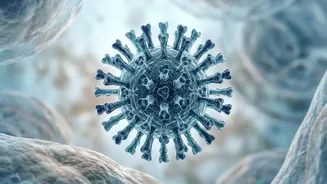
PJ.2.1 is a new lineage of SARS-CoV-2, the virus that causes COVID-19. First identified in Canada in May 2026, it has since been detected in several countries, including the US, parts of Europe, and Asia. Scientists are paying close attention because
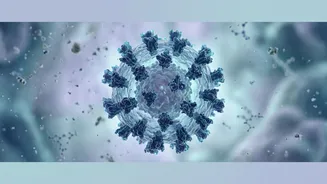
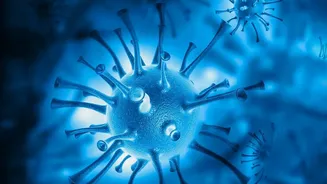
it's what they call a 'saltation variant'. This means that instead of gradually acquiring a few changes over time, it appeared with a large number of mutations at once, particularly in its spike protein. This spike protein is the key the virus uses to unlock and enter our body's cells. PJ.2.1 is a descendant of the JN.1 family of variants, which was dominant in late 2023 and early 2024.
Is It More Contagious?
This is the primary concern with any new variant, and early signs suggest PJ.2.1 may have an edge. Preliminary lab studies, including one published in the 'Journal of Infection', found that PJ.2.1's spike protein binds more efficiently to the ACE2 receptor on human cells. Think of it as having a stickier grip, potentially making it easier for the virus to establish an infection. This enhanced binding ability, rather than an ability to dodge our immune system, could be the reason for its apparent rapid spread in some regions. However, it is crucial to remember that these are laboratory findings. Real-world data is still needed to confirm if it truly spreads faster between people.
Are the Symptoms Different or More Severe?
So far, there is no evidence to suggest that PJ.2.1 causes more severe illness, hospitalisations, or deaths than its predecessors. The World Health Organisation (WHO) is monitoring the variant but has stated that current data shows no clear difference in severity. The symptoms associated with PJ.2.1 are largely the ones we've become familiar with: sore throat, cough, fever, body aches, congestion, and fatigue. Some early reports mentioned the possibility of more severe throat infections and prolonged fatigue, but this has not been widely established. Importantly, the symptoms can easily be confused with a common cold or flu, making diagnostic testing the only reliable way to confirm a COVID-19 infection.
How Does It Stack Up Against Vaccines?
The high number of mutations in a new variant always raises questions about vaccine effectiveness. Encouragingly, preliminary laboratory research indicates that PJ.2.1 does not seem to be substantially better at evading the antibodies generated by recent variant-adapted vaccines. One study found only a modest 1.8-fold reduction in neutralisation from antibodies from an updated vaccine, a drop that is not considered significant compared to other circulating variants. This suggests that current vaccines should still offer a good degree of protection against severe disease, which is their primary goal. While breakthrough infections can still occur, vaccination remains a critical tool for preventing serious outcomes, especially for vulnerable populations.
What Should We Do Now?
The emergence of PJ.2.1 is a reminder that the pandemic is not entirely in the rearview mirror. Health officials stress the importance of continued surveillance rather than alarm. For the public, this means sticking to the basics of good respiratory hygiene. Experts in India and abroad are not currently calling for new restrictions but are advising caution. This includes staying home when sick, testing if you have symptoms, and staying up-to-date with recommended vaccinations. These measures are particularly important for protecting the elderly and those with weakened immune systems or underlying health conditions, who remain at the highest risk for severe complications from any variant.