








The Foundation: Why Plants Keep It Cool
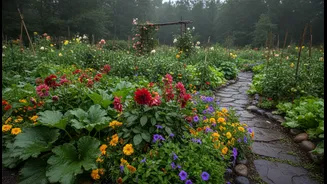
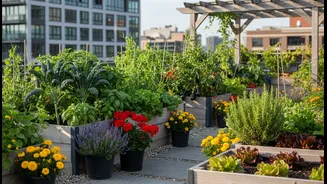
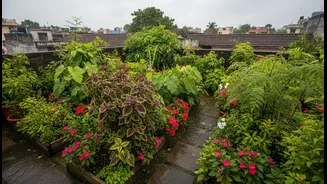
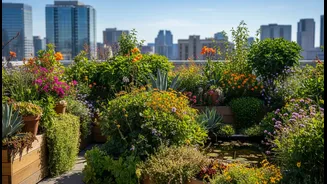
A green rooftop is more than just beautiful; it's a natural air conditioner. Plants absorb sunlight, preventing it from heating the concrete slab below. Through a process called transpiration, they release moisture into the air, creating a cooling effect
that can significantly lower the temperature of your terrace and the rooms beneath it. Covering your roof with greenery provides shade and helps combat the urban heat island effect, making your home more comfortable.
Essential Prep: Mastering Monsoon Drainage
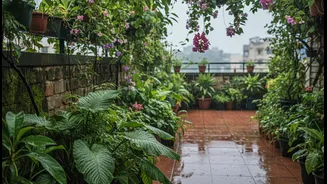
The single most important rule for monsoon gardening is ensuring excellent drainage. Heavy rains can quickly lead to waterlogged pots, which causes root rot and can kill your plants. Before you begin, check that all your containers have drainage holes at the bottom. Elevating pots on stands or bricks is a simple but effective way to prevent them from sitting in puddles. During the peak of the monsoon, it's wise to remove the saucers from under your pots entirely to stop stagnant water from collecting, which can also become a breeding ground for mosquitoes.
Choosing Your Monsoon Champions: Flowering Plants
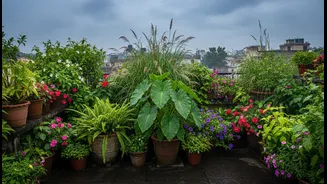
The high humidity and frequent watering of the monsoon can encourage spectacular blooms from plants that love these conditions. Hibiscus is a classic choice, producing large, vibrant flowers that thrive in moist weather. Jasmine and Mogra (Arabian Jasmine) are beloved for their intense fragrance, which is heightened by the humid air. For a pop of colour after a downpour, consider Rain Lilies (Zephyranthes), which are famous for flowering right after a shower. Hardy and cheerful options like Balsam (Gulmehndi), Periwinkle (Sadabahar), and Marigolds also perform exceptionally well, adding continuous colour to your rainy-day retreat.
Lush and Leafy: Hardy Foliage Options
Foliage plants create a sense of lushness and are often very resilient. Many tropical varieties that grow under rainforest canopies in the wild, such as Ferns, Money Plants (Pothos), and Peace Lilies, enter a period of rapid growth during the monsoon. The humidity is perfect for them. Snake Plants are another excellent, low-maintenance choice as they tolerate humidity well and add a modern, structural element. For covering walls or creating green screens, consider climbers like the Betel Leaf plant, which provides dense, cooling shade with its broad leaves.
Grow Your Own: Edibles for the Rainy Season
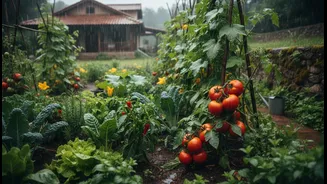
The monsoon is a surprisingly productive season for growing vegetables and herbs. Many gourds, such as Bottle Gourd (Lauki) and Ridge Gourd (Turai), grow explosively. Leafy greens like Amaranth (Chauli) and Spinach (Palak) also thrive. It's the perfect time to plant rhizomes like Turmeric (Haldi) and Ginger (Adrak). For fresh flavours in your kitchen, plant herbs like Mint (Pudina) and Lemongrass, which flourish in the moist conditions. However, it's best to avoid planting tomatoes, which are prone to fungal diseases in high humidity.
Smart Care During Downpours
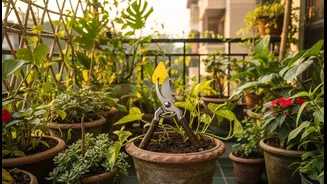
While the rains provide natural irrigation, some care is still needed. Always check the soil moisture before watering; on rainy days, you might not need to water at all. High humidity can encourage pests and fungal diseases like powdery mildew. Ensure good air circulation by not overcrowding your pots and consider a preventative spray of diluted neem oil every couple of weeks. To protect taller or more delicate plants from strong monsoon winds and heavy rain, you can provide support with stakes or move them to a more sheltered spot. Finally, take advantage of the season to prune your plants, as this encourages fresh, bushy growth.