




The Old Lunar Traffic Problem
For decades, navigating in deep space has worked one way: a spacecraft communicates with giant radio antennas on Earth, and mission controllers use that data to calculate the craft's position and trajectory. This system, primarily NASA's Deep Space Network
(DSN), is reliable but has limitations. It's like having the entire world's air traffic control run through a single, oversubscribed airport. As ambitions for the Moon grow, with NASA's Artemis program planning a sustained human presence, relying solely on Earth-based tracking creates a significant bottleneck. With more spacecraft—landers, orbiters, and the future Lunar Gateway space station—all needing to know where they are, the DSN would be overwhelmed. This reliance on Earth also introduces communication delays and means spacecraft can't operate fully on their own, a crucial requirement for complex future missions.
Enter CAPSTONE: A Small Satellite with a Big Job
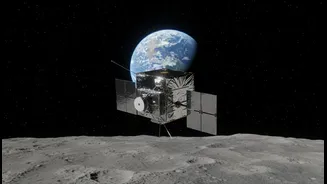
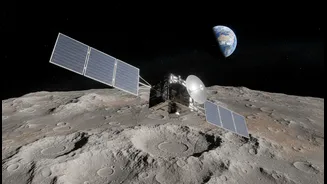
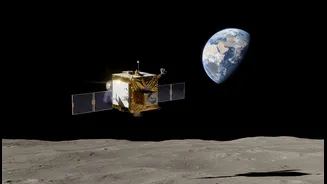
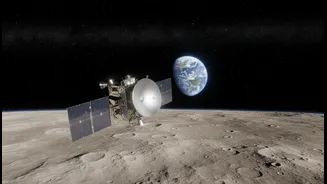
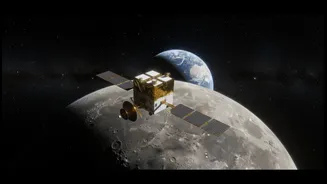
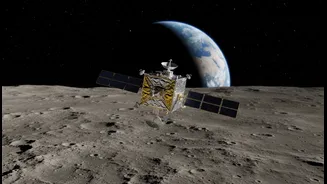
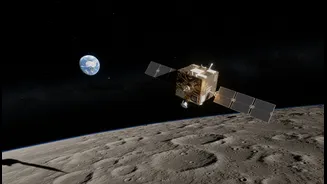
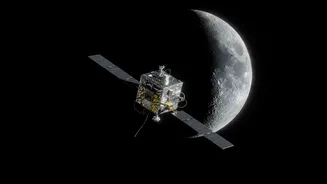
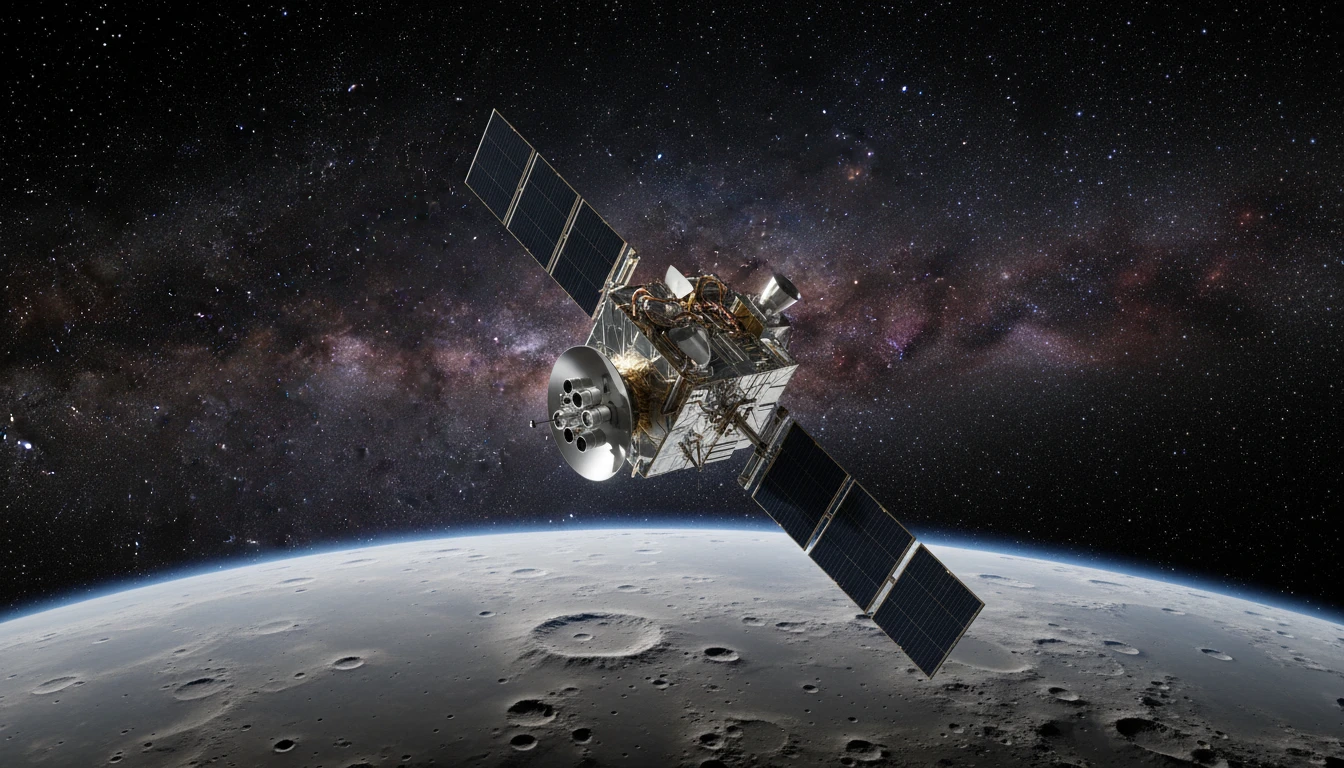
To solve this, NASA and its commercial partner, Advanced Space, launched the Cislunar Autonomous Positioning System Technology Operations and Navigation Experiment, or CAPSTONE. Launched in June 2022, this microwave-oven-sized, 55-pound CubeSat had a monumental task: to be a pathfinder for the Artemis program. Its mission was to test two critical new concepts. First, to fly in a completely new type of lunar orbit. And second, to test a new navigation technology that could work like a GPS for the Moon, allowing spacecraft to determine their position without constantly calling home to Earth. After completing all of its primary and extended mission objectives, NASA concluded its activities with the highly successful mission in June 2026, paving the way for future exploration.
Charting a New Path: The Halo Orbit
The first major innovation tested by CAPSTONE was its flight path—a near rectilinear halo orbit (NRHO). This unique, highly elongated elliptical orbit is located at a precise balance point between the gravities of the Earth and the Moon. This stability means that a spacecraft in this orbit needs very little fuel to stay there, making it an ideal long-term staging area for missions to the lunar surface. The NRHO is the planned orbit for the Lunar Gateway, the future orbiting outpost that will support Artemis astronauts. By becoming the first spacecraft to ever successfully enter and operate in an NRHO, CAPSTONE proved the orbit was as stable and efficient as computer simulations predicted, significantly reducing the risk for the multi-billion dollar Gateway project.
A GPS for the Moon
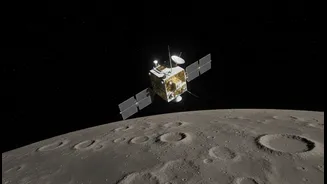
CAPSTONE’s second, and perhaps more revolutionary, objective was to demonstrate the Cislunar Autonomous Positioning System (CAPS). This technology is designed to allow spacecraft to navigate autonomously. Instead of only talking to Earth, CAPSTONE communicated directly with another spacecraft, NASA's Lunar Reconnaissance Orbiter (LRO), to determine its own position. By sending a signal to LRO and measuring the response, CAPSTONE's onboard software could calculate its location relative to the LRO, a process known as peer-to-peer navigation. This successful demonstration proved that future lunar missions can navigate independently, freeing up the Deep Space Network for more critical science data transmissions and enabling spacecraft to react quickly without waiting for instructions from ground control.
Paving the Way for a Lunar Future
The success of the CAPSTONE mission is a foundational step for the entire Artemis program and beyond. By validating the fuel-efficient NRHO, it has given mission planners confidence in the design for the Lunar Gateway, which will serve as a home and laboratory for astronauts in lunar orbit. Furthermore, by proving that an autonomous, GPS-like navigation system is feasible at the Moon, CAPSTONE has unlocked the potential for a more crowded and complex lunar environment. Future missions can be more independent, safer, and more efficient. This small, cost-effective satellite has provided crucial data that will support not just the return of astronauts to the surface, but the development of a sustainable, long-term human and robotic presence on and around the Moon.