




A Launch of High Hopes
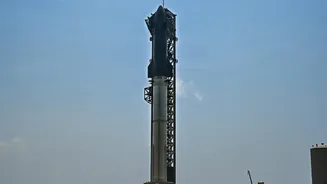
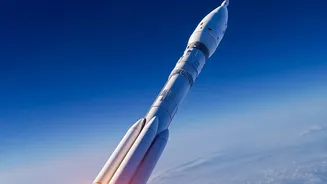
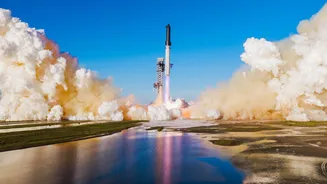
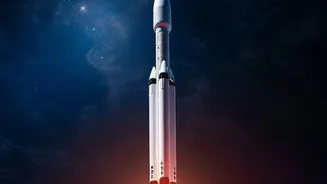
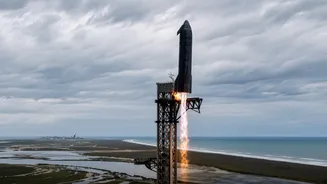
On Friday, November 13, 2026, the 15th test flight of SpaceX's Starship rocket lifted off from the company's Starbase facility in Texas. The mission's ambitious goal was to launch the Starship upper stage into orbit and then recover both the Super Heavy
booster and the ship itself by catching them with the launch tower's giant mechanical arms, nicknamed 'Mechazilla'. The launch itself was a spectacle of power, with all 33 Raptor engines on the Super Heavy booster firing to propel the world's largest rocket toward space. Separation of the two stages occurred flawlessly just over two minutes into the flight, with the Starship continuing its journey toward orbit while the booster began its descent back to Earth.
The Super Heavy's Fiery Setback
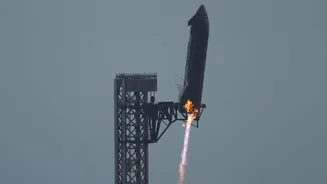
The mission's first major challenge came during the Super Heavy booster's return. The plan was for a precise, propulsive landing back at the launch site, where the 'chopstick' arms of the tower would catch it. However, an issue arose during the descent. An automated alert for low fuel mass triggered a safety abort. Instead of attempting the risky tower catch, the booster's systems autonomously diverted it to a safe splashdown zone in the Gulf of Mexico. Moments before hitting the water, the booster exploded in a massive fireball, a planned event to safely terminate the flight. While the loss of the booster was a significant setback, the autonomous safety decision to protect the launch pad was seen as a success in itself.
A Landmark 'Catch' for Starship
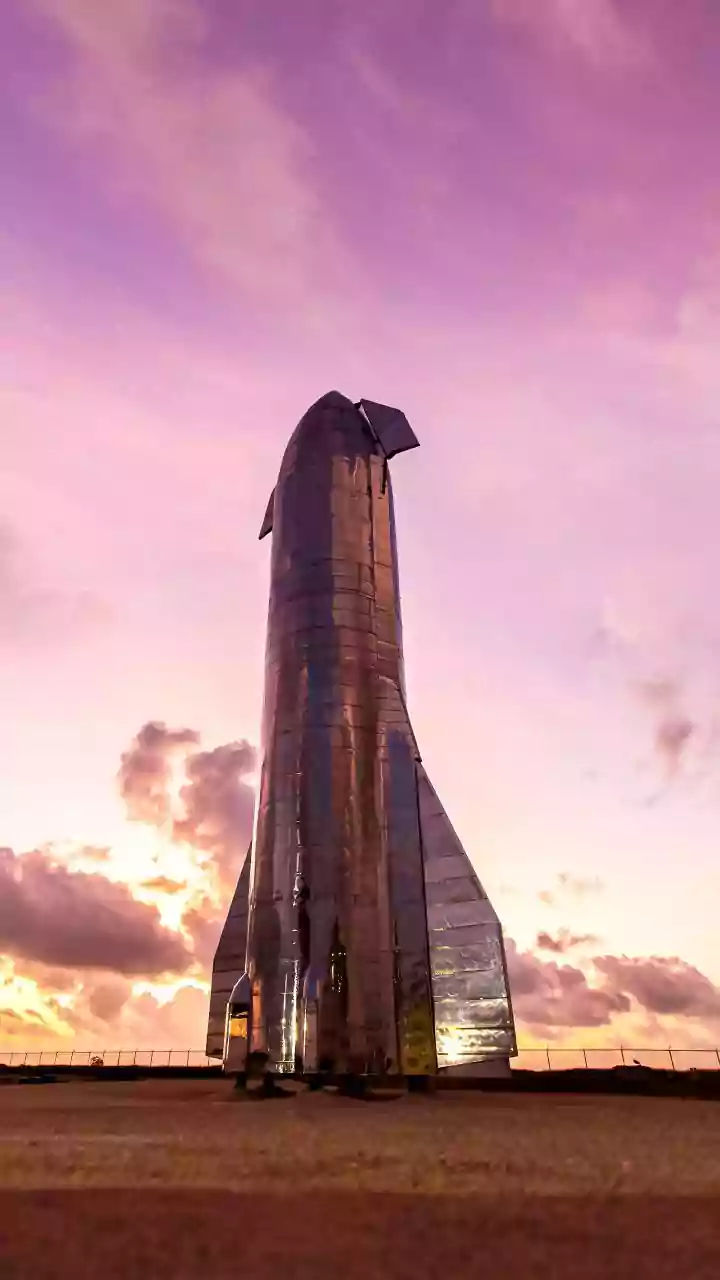
While the booster was lost, the Starship upper stage continued its mission. It successfully reached orbit, deployed a batch of 26 next-generation Starlink satellites, and circled the Earth 14 times over nearly 22 hours. Then came the main event. On Saturday, November 14, the spacecraft performed its deorbit burn and plunged back through the atmosphere. After enduring the intense heat of reentry, the Starship executed a 'belly-flop' maneuver before firing its engines to orient itself vertically. In a historic first, it steered itself perfectly into the waiting arms of the Mechazilla tower, which securely caught the vehicle. It was a breathtaking maneuver that had never been accomplished before with an orbital-class second stage, marking the 'holy grail' of rocketry.
What 'Partial Success' Really Means
In the high-stakes world of rocket development, progress often comes in increments. A flight that accomplishes some primary objectives while failing at others is often deemed a 'partial success'. This flight was the epitome of that term. The loss of the Super Heavy booster prevents full reusability for this mission and represents a costly failure. However, the successful catch of the Starship upper stage is arguably a far more significant achievement. It proves that the most complex and novel part of SpaceX's recovery architecture works. This single success validates a core pillar of the entire Starship program: the ability to rapidly recover and reuse the orbital spacecraft, which is essential for reducing the cost of access to space and enabling future missions to the Moon and Mars. The data gathered from the successful catch is invaluable, far outweighing the loss of the booster, which had already been successfully caught on three previous flights.