





A Seat at the Lunar Table
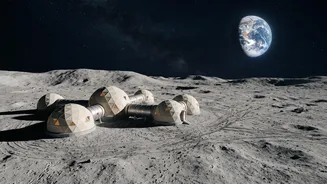
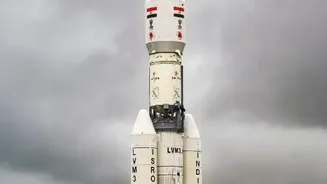
In August 2026, NASA formally invited the Indian Space Research Organisation (ISRO) to join its Moon Base program, building upon India's decision to sign the Artemis Accords in 2023. The Accords are a set of principles for cooperation in the civil exploration
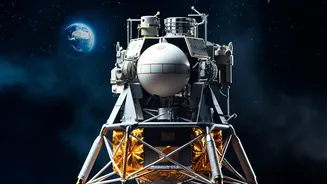
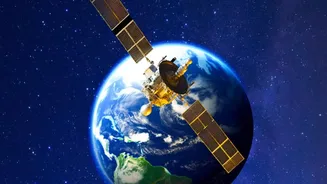
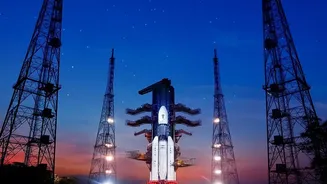
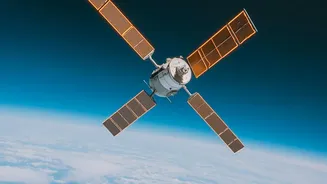
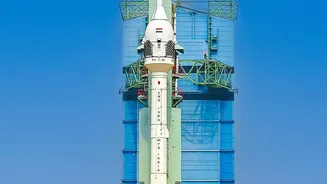
and use of the Moon, Mars, and beyond, establishing a framework for nations to work together peacefully and transparently. By joining this U.S.-led initiative, India has secured a crucial role in the next chapter of human spaceflight, which aims to establish a long-term human presence near the lunar south pole. This is not just a symbolic gesture; it is an invitation to co-develop, innovate, and contribute to the infrastructure that will support future astronauts, scientists, and explorers on another world. This partnership leverages the success of previous collaborations like the NISAR satellite mission and acknowledges India's proven capabilities, highlighted by the historic Chandrayaan-3 landing.
More Than Just Astronauts
When we think of space jobs, the first image is often an astronaut in a spacesuit. But building and sustaining a lunar outpost requires a vast and diverse workforce on Earth. The Artemis program will create demand for a wide array of specialists, and India's partnership means Indian talent will be in the running. We will see a surge in demand for aerospace engineers, software developers, and flight systems engineers to design and operate spacecraft and their components. Scientists in fields like geology and physics will be needed to analyze lunar samples and data. Furthermore, establishing a habitat requires experts in robotics, life-support systems, materials science for building structures, and power systems like solar arrays. The project will also need project managers, logistics experts, and telecommunications specialists to ensure missions run smoothly from a distance of nearly 400,000 kilometres. This creates a ripple effect, stimulating jobs across dozens of high-tech sectors.
Fuelling India's Private Space Boom
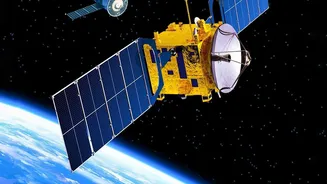
The timing of this partnership is perfect for India's rapidly growing private space industry. The sector has expanded from a handful of startups in the last decade to over 400 active companies today. Government reforms, including the liberalisation of Foreign Direct Investment (FDI) in 2024, have created a fertile ground for growth. Participation in the moon base project will likely translate into lucrative contracts for these private firms. Indian companies focusing on satellite manufacturing, launch vehicle components, propulsion systems, and downstream data analytics are poised to benefit significantly. As NASA and its partners look for cost-effective and reliable solutions, India’s reputation for frugal innovation makes its private sector an attractive supplier. This influx of international collaboration and investment will accelerate the industry's growth, which is already projected to reach nearly $44 billion by 2033.
The Ripple Effect on Education and Innovation
A grand national project like contributing to a moon base has the power to inspire an entire generation. The collaboration is expected to create a massive downstream impact on STEM (Science, Technology, Engineering, and Mathematics) education across India. Universities and technical institutes will likely see increased enrollment in aerospace, robotics, and astrophysics courses as students aspire to join the space industry. This partnership fosters a culture of innovation, pushing academia and industry to solve complex challenges, from creating radiation-shielding materials to developing closed-loop life support systems. The joint NASA-ISRO mission to the International Space Station, planned for 2024, is another stepping stone in this collaborative journey, providing invaluable experience in human spaceflight. By aligning with global standards through the Artemis Accords, India ensures its students and professionals are trained for the future global space economy, not just its domestic needs.