
The Challenge of Faint Light
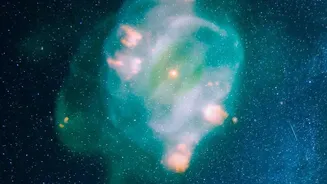
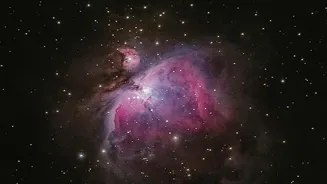
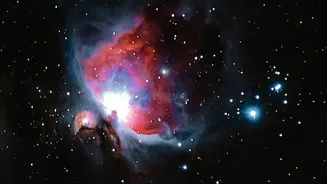
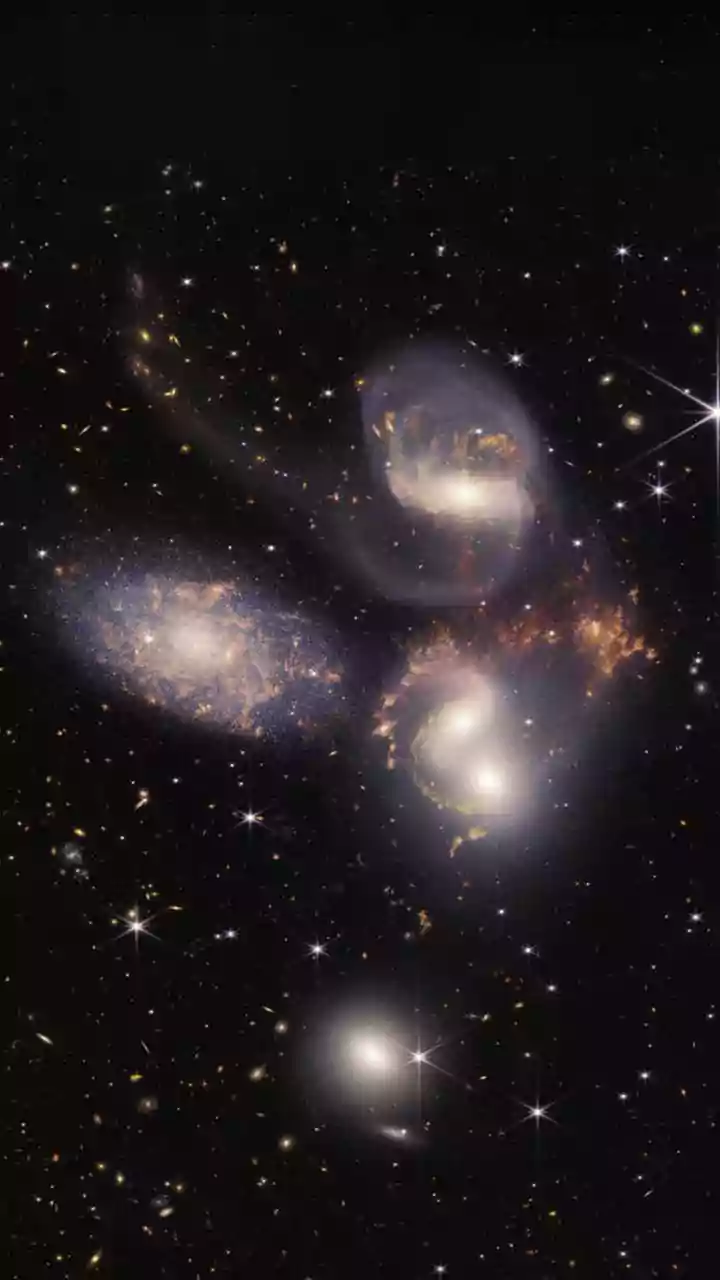
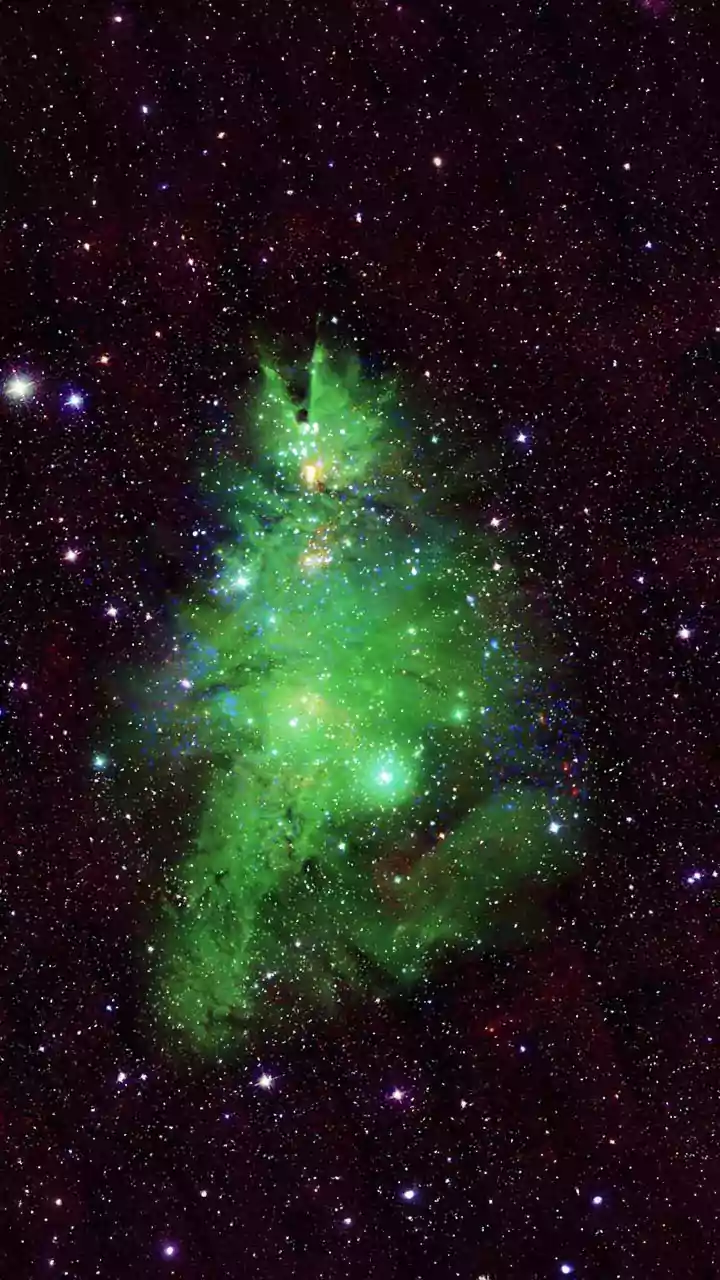
The fundamental problem with seeing deep space objects like the Andromeda Galaxy or the Orion Nebula is their incredible distance. The light travelling from them is ancient and extremely faint by the time it reaches us. Our eyes, as remarkable as they
are, can't gather enough of this light to resolve more than a faint smudge, if that. A camera sensor, however, can act like a light bucket. By using a long exposure—keeping the camera's shutter open for an extended period—it can continuously collect photons. The longer it collects, the more 'signal' from the distant object it can record, slowly building up an image that would otherwise be invisible.
Earth’s Inconvenient Rotation
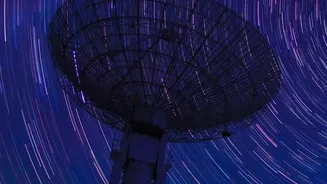
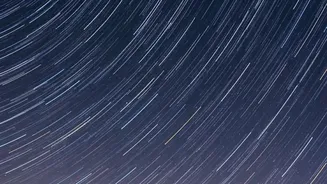
So, the solution is just to point a camera at the sky and leave the shutter open for half an hour, right? Not quite. There's a major hurdle: the Earth is spinning. From our perspective, this makes the stars appear to move across the sky. If you take an exposure longer than a few seconds, those pinpoint stars will turn into blurry streaks or trails. This is the astrophotographer's biggest enemy. While star trails can be a beautiful artistic effect, they completely ruin any attempt to capture a sharp, detailed image of a deep-space object. To solve this, you need a way to counteract the Earth's rotation.
The Telescope Mount’s Crucial Role
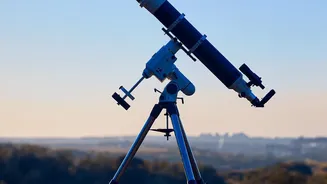
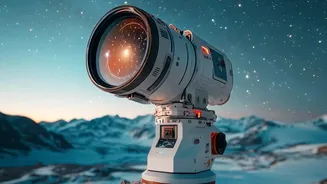
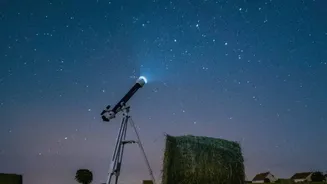
This is where the hero of our story enters: the equatorial mount, also known as a star tracker. Unlike a standard camera tripod that moves up-down and left-right, an equatorial mount is designed to align with the Earth's axis of rotation. Once properly set up through a process called polar alignment—which often involves pointing it at Polaris, the North Star—the mount can rotate your camera at the exact same speed as the Earth, but in the opposite direction. This clever movement effectively cancels out the planet's spin from your camera's point of view, keeping the stars perfectly stationary in the frame. This allows for incredibly long exposures, turning minutes of light-gathering into tack-sharp images.
The Magic of Stacking
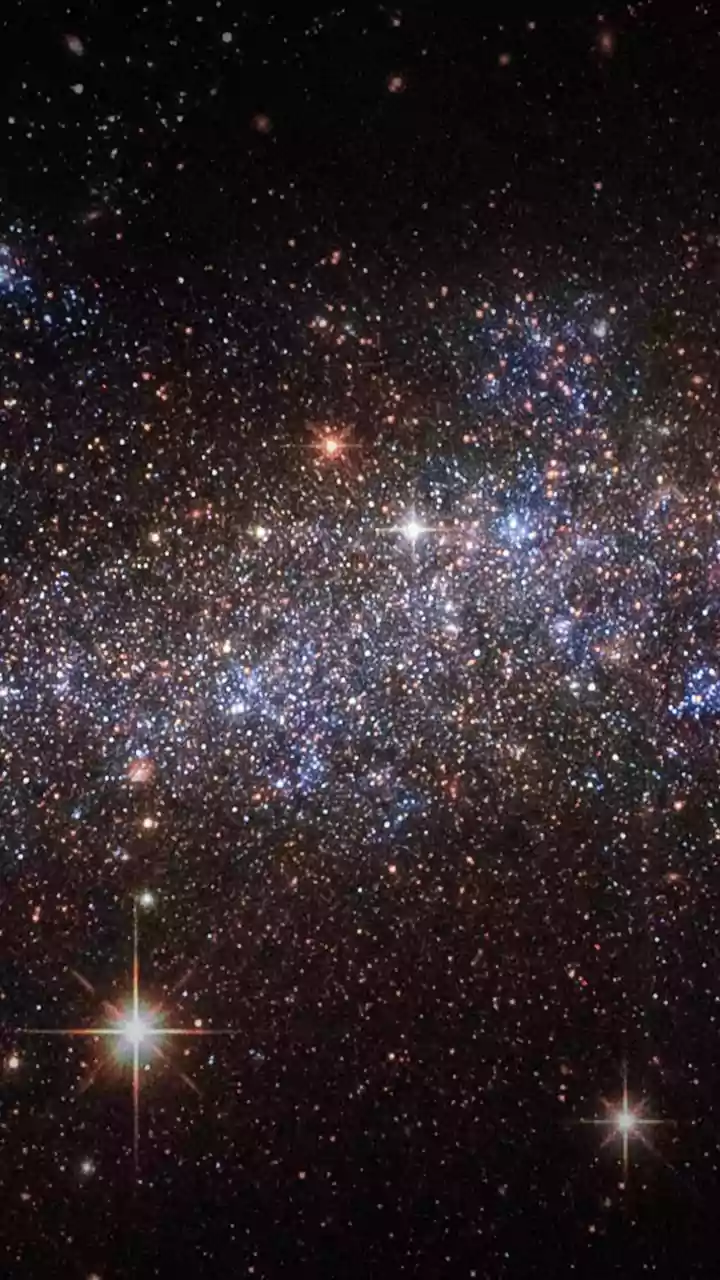
Even with a tracking mount, a single very long exposure can have issues. Digital 'noise', which looks like grainy static, can build up from the camera's sensor heat. The modern solution is a technique called image stacking. Instead of taking one 30-minute exposure, a photographer might take sixty 30-second exposures. Specialised software then aligns all these individual photos and averages them together. The 'signal'—the light from the galaxy or nebula—is the same in every frame, so it gets stronger. The noise, however, is random in each frame, so when averaged, it cancels itself out. This dramatically increases what is known as the signal-to-noise ratio (SNR), resulting in a final image that is smooth, clean, and incredibly detailed.