






The Game Changer: Baahubali Series
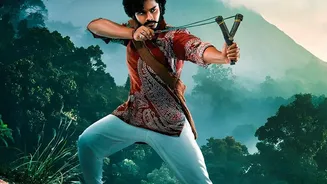
Before S.S. Rajamouli's epic duology, the idea of a “pan-Indian” film was more of an exception than a rule. But 'Baahubali: The Beginning' (2015) and its sequel, 'The Conclusion' (2017), changed everything. These films were not merely dubbed; they were cultural
events marketed aggressively across the nation. With grand visuals rooted in Indian mythology, breathtaking battle sequences, and a story of betrayal and revenge that felt both epic and deeply personal, 'Baahubali 2' became the first Indian film to gross over ₹1,000 crore. It proved that audiences nationwide were hungry for grand-scale storytelling that celebrated Indian ethos, regardless of the original language. Suddenly, regional cinema was no longer regional; it was Indian cinema at its most spectacular.
The Rebel Underdog: Pushpa: The Rise
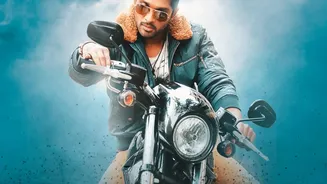
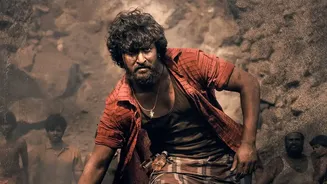
If 'Baahubali' was about kings and gods, Sukumar's 'Pushpa: The Rise' (2021) was defiantly about the common man. Allu Arjun’s portrayal of a gritty, morally ambiguous red sandalwood smuggler resonated powerfully with audiences, especially in the Hindi-speaking belt. The film’s raw energy, swaggering dialogue, and viral music became a cultural phenomenon. 'Pushpa' didn't rely on pristine VFX but on a charismatic, anti-hero protagonist whose rise from poverty felt both aspirational and transgressive. Its unexpected blockbuster success proved that a strong, localized story with a magnetic lead performance could capture the nation's imagination, creating a new template for pan-Indian stardom.
The Global Bromance: RRR
S.S. Rajamouli did it again with 'RRR' (2022), but this time he took the pan-Indian formula global. The fictional tale of two real-life revolutionaries, played with electrifying chemistry by Jr. NTR and Ram Charan, was a spectacle of hyper-masculine energy and anti-colonialist fervor. The film's action sequences were inventive and gravity-defying, but its core was a powerful emotional story of friendship and sacrifice that connected universally. 'RRR' didn't just become a domestic blockbuster, crossing the ₹1,200 crore mark; it became an international sensation, winning an Oscar and proving that Indian action epics had a place on the world stage.
The Dark Empire: K.G.F. Series
Prashanth Neel’s 'K.G.F: Chapter 1' (2018) and 'Chapter 2' (2022) brought Kannada cinema to the forefront of the pan-Indian movement. Starring Yash as the formidable Rocky Bhai, the films crafted a stylish, dark, and violent world of gold mines and gangsters. The distinctive visual palette, relentless pace, and elevation of its hero to a near-mythical status created a cult following. 'K.G.F: Chapter 2' in particular had a monstrous opening, shattering records to become one of the highest-grossing Indian films ever. It demonstrated that a unique directorial vision and world-building, combined with a larger-than-life hero, could create a cinematic experience that felt fresh and utterly compelling to millions.
The Dystopian Successor: Salaar
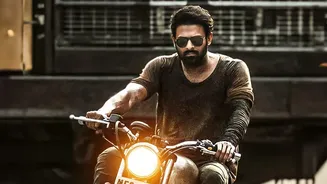
Following his 'K.G.F' success, director Prashanth Neel delivered 'Salaar: Part 1 – Ceasefire' (2023). The film reunited him with 'Baahubali' star Prabhas, creating immense hype. True to Neel's style, 'Salaar' presented a dark, gritty, and intensely violent world, distinct from the mythological fantasy of 'Baahubali'. The film's staggering opening day collections confirmed that the audience appetite for high-octane, star-led spectacles was far from over. It cemented the formula of combining a major star with a director known for a unique vision, ensuring that even amidst a crowded market, a well-executed action epic can still draw massive crowds nationwide.