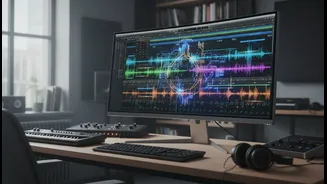









The Unseen Labour of a Song
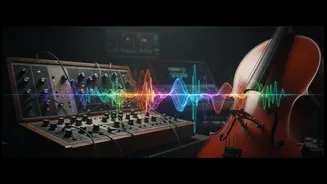
Before a song reaches your ears, it goes through a labour-intensive phase that listeners never see: audio tracking and editing. This is the meticulous process of recording and refining every individual instrument and vocal line. For decades, this has involved
countless hours of painstaking work. Imagine a vocalist records a verse ten times to get the perfect delivery. A producer then has to listen to every single take, identify the best words or phrases from each, and manually slice and stitch them together into one seamless performance—a process called 'comping'. Similarly, a live drum recording might have slight timing imperfections that require a producer to manually adjust hundreds of individual drum hits to lock them into the song's groove. This work is tedious, repetitive, and can consume days, turning creative momentum into a grind.
Your AI Production Assistant
This is where AI tools are changing the game. They act as incredibly fast and efficient assistants, automating the most repetitive parts of the audio tracking and editing process. Instead of manually comping vocals, AI-powered tools can now analyze multiple takes and suggest a polished, cohesive vocal track in minutes. Some tools can even generate realistic harmonies and backing vocals from a single voice recording, a task that would have previously required hiring more singers or spending hours recording layers. Similarly, AI can intelligently detect and correct timing issues in drum performances, or even separate a fully mixed song into its individual components—vocals, drums, bass, and instrumentals—with surprising accuracy. This process, known as stem separation, was once the stuff of science fiction but is now accessible to any creator.
From Tedious Hours to Creative Minutes
The time saved is staggering. Some reports indicate that tasks like vocal editing can be reduced by as much as 60-80%. An audio engineer who might have spent an entire day manually cleaning up background noise and editing a podcast recording can now achieve cleaner results in a fraction of the time using AI-driven restoration tools. This is not just about working faster; it's about reclaiming creative energy. The hours saved from mind-numbing technical tasks are hours that can be reinvested into what truly matters: songwriting, experimenting with new sounds, and refining the emotional core of the music. It shifts the producer's role from a technical labourer to a creative director, focused on vision rather than minutiae.
True Democratisation of Music
This efficiency is the engine of democratisation. Historically, producing a professional-sounding track required access to expensive recording studios, session musicians, and highly skilled audio engineers. These resources were often out of reach for independent artists, especially in a diverse and sprawling music scene like India's. AI tools level this playing field. An aspiring artist in a small town can now use AI-powered software on a modest laptop to achieve a level of polish that once required a significant budget. By lowering the financial and technical barriers to entry, AI empowers a new generation of creators to produce and release high-quality music on their own terms, bypassing traditional industry gatekeepers.
A Tool, Not a Replacement
Despite fears of AI making music soulless, the reality in the studio is far more nuanced. Most producers see these as assistive tools, not replacements for human creativity. AI is excellent at executing technical tasks based on data, but it doesn't have taste, cultural context, or emotional intent. An AI can align a drum beat, but it can't decide if a slightly off-kilter groove feels more human and exciting. It can generate a chord progression, but it can't write a lyric that perfectly captures a feeling of heartbreak or joy. The artist is still firmly in the driver's seat, making the crucial creative decisions. The technology simply handles the grunt work, freeing the creator to focus on their unique artistic vision and expression.