







The Problem with a Single Number
For years, the advice has been simple: calculate your target grams of protein per day and hit it. While total daily protein is certainly the most important factor for building and repairing tissue, focusing on this single metric can be misleading. It
overlooks three critical elements that determine how effectively your body uses the protein you consume: the quality of the protein, its timing around activity, and how it's distributed throughout your day. Imagine your body is building a house; just delivering all the bricks (total protein) to the site at once isn't efficient. You need the right kind of bricks (quality), delivered when the workers are ready (timing), and in manageable loads (distribution).
Not All Protein Is Created Equal
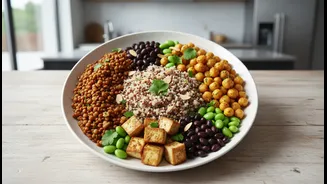
Protein is made up of building blocks called amino acids. There are 20 different types, nine of which are 'essential' because our bodies can't produce them; we must get them from food. 'Complete proteins' contain all nine essential amino acids in sufficient amounts. These are typically found in animal products like fish, poultry, eggs, and dairy. 'Incomplete proteins', which include most plant-based sources like beans, lentils, and grains, may be low in one or more essential amino acids. This doesn't make them inferior, but it does mean you need to be strategic. By combining different plant sources—like the classic Indian pairing of dal (lentils) and rice, or beans on toast—you can create a complete amino acid profile, ensuring your body has everything it needs for tissue repair and growth.
The 'Leucine Trigger' and Spreading It Out
One of the most crucial essential amino acids for muscle growth is leucine. Think of it as the ignition key for muscle protein synthesis (MPS), the process of building new muscle. Research shows that you need to consume a certain amount of leucine in a single meal—around 2.5 to 3 grams for most adults—to maximally stimulate this process. This is known as the 'leucine threshold'. Once you hit it, consuming more protein in that same meal doesn't provide much additional muscle-building benefit. This is why distributing your protein intake evenly across the day is so effective. Aiming for 25-40 grams of high-quality protein at each of your 3-4 daily meals is a practical way to ensure you hit the leucine threshold multiple times, keeping MPS elevated throughout the day. A breakfast with low protein followed by a huge protein-heavy dinner is less effective for muscle maintenance and growth than having a balanced amount at each meal.
The Anabolic Window Is Wider Than You Think
The idea of a 30-minute 'anabolic window' after a workout, where you must consume a protein shake or risk 'wasting' your session, is largely a myth. While it's true that your muscles are sensitised to protein intake after exercise, this window of opportunity is much larger, lasting for several hours. What matters more is your overall protein distribution. If you had a protein-rich meal a few hours before your workout, there's no frantic rush. The amino acids are already circulating. However, if you train in a fasted state, such as first thing in the morning, having a protein-rich meal soon after becomes more important to kickstart the recovery and rebuilding process.
Your Protein Needs Change with Time
A one-size-fits-all approach to protein doesn't work because our needs evolve. Active individuals need more protein for muscle repair and growth, with recommendations often ranging from 1.2 to 2.2 grams per kilogram of body weight. Age is another significant factor. Starting around age 30, we naturally begin to lose muscle mass in a process called sarcopenia. Furthermore, as we get older, our bodies can become less responsive to protein intake, a phenomenon known as 'anabolic resistance'. This means older adults, particularly those over 65, may need to consume more protein per meal—around 35-40 grams—to achieve the same muscle-building response as a younger person.