


How Yoga Unlocks Flexibility
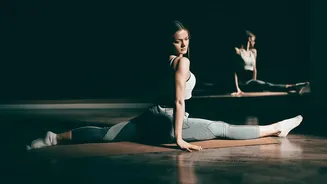
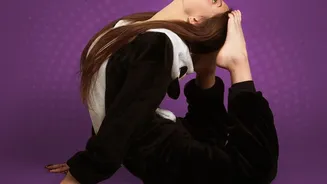
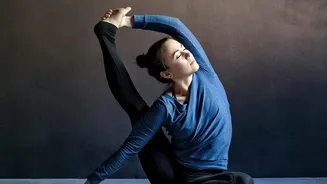
One of the most celebrated benefits of yoga is its ability to enhance the body's range of motion. This isn't just about being able to touch your toes; it's about moving with greater ease and reducing the risk of injury in daily life. Yoga achieves this
through a combination of physical and physiological mechanisms. When you hold a yoga posture, or 'asana', you are applying a gentle, sustained stretch to your muscles. Over time, this encourages the muscle fibres to lengthen, a change known as plasticity. But yoga works on more than just muscles. It also targets the fascia, a web-like connective tissue that surrounds all your muscles and organs. When you are sedentary, this fascia can become stiff and sticky, limiting movement. The varied, multi-directional movements in yoga help to hydrate and release this tissue, breaking up adhesions and restoring suppleness.
The Power of a Calm Nervous System
Flexibility isn't purely mechanical; your nervous system plays a crucial role. When you try to stretch a muscle too quickly or forcefully, your body initiates a 'stretch reflex' to protect the muscle from tearing, causing it to tighten. Yoga helps you bypass this reflex through slow, controlled movements paired with deep, rhythmic breathing. This mindful breathing activates the parasympathetic nervous system, which sends a signal to your brain that you are safe. In this relaxed state, your muscles are more willing to release, allowing you to move deeper into a stretch without resistance. Over time, this process retrains your body's response, making a greater range of motion feel comfortable and accessible.
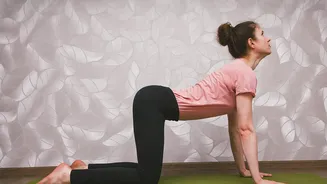
Cat-Cow Stretch (Marjaryasana-Bitilasana)
This gentle, dynamic flow is an excellent way to warm up the spine and is perfect for starting your practice. Begin on your hands and knees in a 'tabletop' position, with your wrists directly under your shoulders and knees under your hips. As you inhale, drop your belly towards the mat, lift your chest and gaze, and arch your back into Cow Pose. As you exhale, round your spine towards the ceiling, tucking your chin to your chest, like a cat stretching its back. Continue flowing between these two poses for 5-10 breaths, synchronizing your movement with your breath. This movement improves spinal flexibility and can help relieve tension in the neck and back.
Downward-Facing Dog (Adho Mukha Svanasana)
Perhaps one of the most recognized yoga poses, Downward-Facing Dog is a full-body stretch that targets the hamstrings, calves, and shoulders while lengthening the spine. From your tabletop position, tuck your toes, lift your hips up and back, forming an inverted 'V' shape with your body. Spread your fingers wide and press firmly into your hands. It’s okay if your heels don't touch the ground; you can keep a slight bend in your knees to prioritize a long, straight spine. Hold for 5 deep breaths, gently 'pedalling' your feet by bending one knee and then the other to deepen the calf stretch.
Child's Pose (Balasana)
Child's Pose is a resting posture that offers a gentle stretch for the hips, thighs, and lower back. It's a wonderful pose to come to whenever you need a break. From your tabletop position, bring your big toes to touch, sit your hips back onto your heels, and fold your torso forward, resting your forehead on the mat. Your arms can be stretched out in front of you or rested alongside your body with the palms facing up. Focus on your breath, allowing your back to expand with each inhale and soften with each exhale. This pose helps to release tension and calm the nervous system.
Seated Forward Bend (Paschimottanasana)
This pose provides a deep stretch for the entire back side of the body, especially the hamstrings and lower back. Sit on the floor with your legs extended straight out in front of you. You can sit on a folded blanket to help tilt your pelvis forward. Inhale to lengthen your spine, and as you exhale, begin to hinge forward from your hips, not your waist. Walk your hands forward along your legs. Stop when you feel a comfortable stretch, without rounding your back too much. Hold for 5-8 breaths, allowing gravity to gently deepen the pose.