




A New Eye in a Unique Orbit
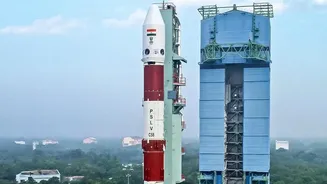
In the early hours of September 4, the Indian Space Research Organisation (ISRO) successfully launched the Earth observation satellite EOS-05 from the Satish Dhawan Space Centre in Sriharikota. Carried aboard a Geosynchronous Satellite Launch Vehicle
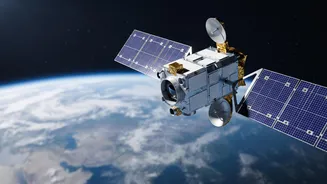
(GSLV-F17), the 2,367 kg satellite was precisely placed into its intended orbit. What makes EOS-05 special is its destination: a geosynchronous orbit approximately 36,000 km above the Earth. Unlike satellites in lower orbits that pass over a location periodically, a satellite in this high orbit moves at the same speed as the Earth's rotation. This allows it to stay parked over the same broad geographical region, providing continuous and near-real-time observation of the Indian subcontinent.
What Can This 'Space Eye' See?
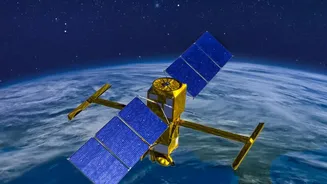
EOS-05 is designed as a state-of-the-art imaging satellite. It carries advanced multi-band imagers capable of capturing high-resolution pictures of the Earth's surface across various spectral bands, including visible, near-infrared, and thermal. This technology allows it to see far more than a standard camera. The satellite can image a selected area every five minutes and scan the entire Indian landmass every 30 minutes, with a spatial resolution of about 42 metres. This persistent gaze is invaluable for monitoring rapidly developing events and changes on the ground, effectively giving India an unblinking eye that watches over national interests.
A Boost for National Security
One of the most critical applications for EOS-05 is in the domain of national security. Its ability to provide frequent, high-resolution imagery of border areas and surrounding regions offers a significant strategic advantage. The satellite can be tasked to monitor specific areas of interest, providing crucial data and intelligence for defence and security agencies. This capability for persistent surveillance strengthens India's monitoring of its frontiers and provides a powerful tool for strategic planning and response, complementing the existing network of lower-orbit surveillance satellites.
Helping with Disasters and Development
Beyond its strategic importance, EOS-05 is a powerful asset for civilian applications that affect millions of Indians. Its near-real-time imaging is a game-changer for disaster management. The satellite can track the development of cyclones, monitor the spread of floods and forest fires, and help authorities plan and execute relief operations more effectively. Furthermore, its data will support agriculture by monitoring crop health and water resources. It will also aid in environmental assessment, natural resource management, and urban planning, making it a versatile tool for national development.
A Milestone for ISRO
The successful launch is a major achievement for ISRO, marking its first successful mission of 2026 and putting behind the disappointment of a similar mission failure in 2021 (GSLV-F10/EOS-03). The GSLV rocket successfully carried its heaviest payload to date, demonstrating the increasing capability and reliability of India's indigenous launch vehicle program. This mission was the 19th flight for the GSLV and the 107th launch from Sriharikota. With EOS-05 now in orbit, India joins a select group of nations with the capability to operate a sophisticated imaging satellite from a high geosynchronous orbit, reinforcing its status as a major space power.