





A New Mission: Inspiring the Next Generation
Recent events, such as the National Space Technology Conclave hosted by Chandigarh University in collaboration with ISRO, have brought together India's top space scientists, industry leaders, and students under one roof. The primary goal of such conclaves
is to create a direct bridge between the architects of India's space policy and the young minds who will execute future missions. By providing students a platform to engage with leaders from ISRO, IN-SPACe, and private sector giants, these events aim to demystify space science and foster a scientific temperament from an early age. Initiatives like ISRO's YUVIKA program, a two-week residential course for school students, further underscore this commitment by offering hands-on experience and mentorship to nurture curiosity long before university.
Beyond Government: Fueling a Private Space Race
The emphasis on youth is directly linked to India's strategic pivot towards a privatised space ecosystem. The Indian Space Policy 2023 officially opened the door for private companies to participate in end-to-end space activities, from building satellites to launching rockets. This policy shift aims to grow India's share of the global space economy from 2% to 10% by 2030. To achieve this, India needs more than just a government agency; it needs a dynamic, innovative, and competitive private industry. Startups like Agnikul Cosmos, Skyroot Aerospace, and Pixxel are already making waves. Conclaves and government initiatives are designed to create a pipeline of talent for these companies, encouraging young researchers not just to join ISRO, but to become space entrepreneurs themselves, thereby accelerating innovation.
From Classroom Theory to Launchpad Reality
The opportunities being highlighted are tangible and diverse. They are no longer confined to theoretical research. Through dedicated programs, students can now participate in real-world projects. ISRO's Student Satellite Programme, for example, mentors university teams in designing, building, and launching their own satellites. So far, 17 student satellites have been authorized, with 11 already launched successfully. Furthermore, the government has established Space Technology Incubation Centres (S-TICs) across the country to help students turn their innovative ideas into space-grade components with expert mentorship and seed funding. These initiatives ensure that young researchers gain practical skills in fields like satellite systems, propulsion, AI, and payload development, making them industry-ready.
Securing India's Future in the Cosmos
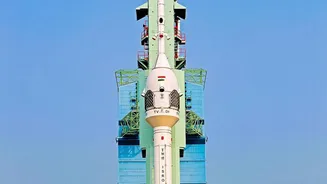
Ultimately, the focus on young researchers is about securing India's long-term strategic interests. As nations like the US and China expand their space assets, India needs to accelerate its own technological development to remain competitive. This requires a consistent flow of highly skilled engineers, scientists, and innovators. By engaging talent early, India aims to build a self-reliant and robust workforce capable of tackling ambitious future projects like the Gaganyaan human spaceflight mission and the proposed Bharatiya Antariksha Station (Indian Space Station). The government's push, facilitated by agencies like IN-SPACe, is a clear signal that it sees its young population as the most critical asset in its mission to become a dominant power in the global south for space technologies.