






The Policy Shift Fueling Private Ambition
The game-changer for India's space sector arrived in June 2020, when the government opened the doors for private companies to participate in all aspects of space activities. This led to the creation of the Indian National Space Promotion and Authorisation
Centre (IN-SPACe), which acts as a single-window agency to promote, authorise, and supervise private players. The goal is to transition ISRO's role from being the sole operator to a facilitator and pioneer of advanced research, focusing on national security missions, deep space exploration, and human spaceflight. Meanwhile, private firms are encouraged to handle mature activities like manufacturing operational launch vehicles and satellites. This strategic shift is designed to multiply the country's space capabilities and accelerate economic growth.
Satellites: A Manufacturing Hub in the Making
One of the most significant opportunities lies in satellite manufacturing. India aims to become a global hub for producing satellites, particularly smaller ones. With liberalised Foreign Direct Investment (FDI) rules now allowing up to 74% FDI via the automatic route for satellite manufacturing and operations, the sector is primed for investment. Private companies like Azista BST Aerospace, which has established a large private satellite factory in Ahmedabad, Dhruva Space, and Stellarix Space are already making headway. Their focus extends from building entire satellites to producing critical subsystems and payloads. This creates a robust domestic supply chain and positions Indian companies to compete for international contracts in the booming small satellite market.
Launch Services: Riding on Reliability
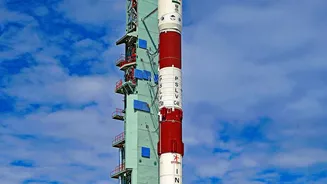
ISRO's launch vehicles, especially the Polar Satellite Launch Vehicle (PSLV), are globally renowned for their reliability and cost-effectiveness. The new policy framework enables private companies to not only use ISRO's launch facilities but also to manufacture these proven rockets. Technology for the Small Satellite Launch Vehicle (SSLV) has already been transferred to Hindustan Aeronautics Limited. Furthermore, a new generation of startups is developing its own launch vehicles. Companies like Skyroot Aerospace and AgniKul Cosmos are at the forefront of this private launch revolution. In July 2026, Skyroot successfully launched its Vikram-1 rocket, making it India's first private company to achieve an orbital launch and signaling a new era of commercial launch services from Indian soil.
Downstream Applications: Space-Tech for the Masses
Perhaps the largest economic potential lies in downstream applications—the services and products derived from satellite data. This sector transforms raw satellite imagery and signals into valuable insights for countless industries. Key areas include precision agriculture, where data can monitor crop health and optimise resource use; disaster management, providing critical information during floods and earthquakes; and urban planning. Other major growth areas are satellite communications, which promise to bring high-speed internet to remote areas, and navigation services. The market for these applications is projected to grow significantly, attracting investors and fostering innovation as more satellites are launched and data becomes more accessible.